



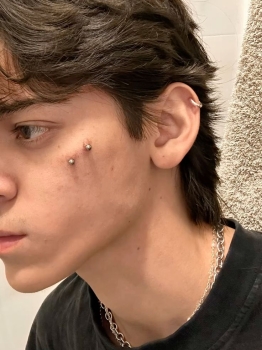

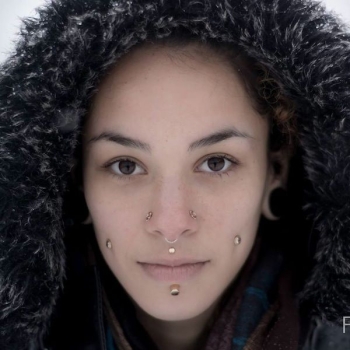
A cheek piercing - also called a dimple piercing - is a facial piercing that passes through the cheek tissue into the mouth, typically using a flat-back labret stud (14G or 16G). Cheek piercings are considered advanced-level piercings due to complex facial anatomy, including parotid ducts, salivary glands, and major facial arteries that must be avoided during placement. Healing takes between 3 months and 1 year depending on jewelry type and individual anatomy. H2M Tattoo Studio, a licensed piercing studio in Hanoi's Old Quarter with over 9 years of industry experience and 5 locations across Vietnam, Taiwan, and Cambodia, recommends a thorough professional consultation before committing to this style.
Key Takeaways:
- Cheek piercings require an anatomy assessment before placement - not everyone is a safe candidate.
- Two main types exist: through-cheek labret studs (longer healing, stronger "dimple" effect) and surface dermal anchors (faster healing, subtler look).
- Saline solution soaks twice daily are the gold-standard aftercare method; avoid rotating or touching jewelry.
- Always choose a piercer with documented experience in cheek piercings - this is not an entry-level piercing.
Why Cheek Piercings Are Not Like Other Piercings
Most people who want a cheek piercing are drawn to one thing: the sparkling dimple effect that catches light with every smile. It is a genuinely striking look. But unlike a lobe piercing or a nose piercing, a cheek piercing passes through living glandular tissue, intersects with active muscles, and sits millimeters away from arteries and salivary ducts. This makes cheek piercings one of the most technique-sensitive piercing placements in facial body modification.
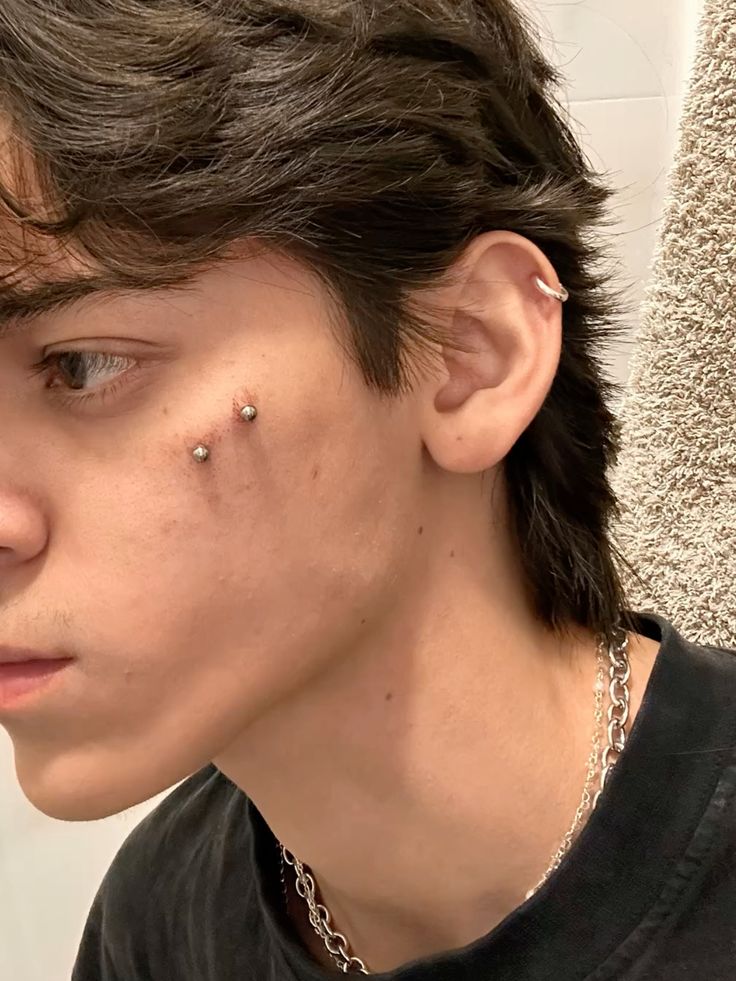
Understanding what is inside the cheek - and why placement cannot simply be chosen based on aesthetics - is the first step toward a successful, healthy result.
What Is a Cheek Piercing?
A cheek piercing is a facial piercing placed on the cheek, most commonly chosen to enhance or simulate the look of natural dimples. The term "dimple piercing" is used interchangeably. Cheek piercings come in two distinct forms, each with different jewelry, healing times, and visual outcomes.
| Feature | Labret Stud (Through-Cheek) | Surface Dermal Anchor |
| Entry/Exit | Enters outside cheek, exits inside mouth | Sits within surface tissue, no mouth entry |
| Jewelry | Flat-back labret, 14G or 16G | Dermal anchor + interchangeable top |
| Healing Time | 6 months to 1 year+ | Approximately 2 months |
| Dimple Effect | Strong - visible with jewelry in and out | Minimal - subtle surface decoration |
| Risk Level | Higher - internal oral exposure | Moderate - prone to snagging |
| Scar Potential | Moderate to high | Minimal |
The labret-style cheek piercing delivers the most dramatic dimple effect because scar tissue and muscle bisection physically indent the skin - both with and without jewelry in place. The surface anchor is more forgiving to heal but does not replicate the authentic dimple appearance that most clients seek.

Anatomy: Why Placement Cannot Be Decided by Aesthetics Alone
Before any marking or needle placement, an experienced piercer will conduct a detailed anatomy assessment inside the client's mouth. The cheek contains multiple structures that make random placement dangerous:
- Parotid ducts - salivary ducts that, if bisected, can cause permanent saliva leaking requiring surgical correction
- Orbicularis oris and zygomaticus muscles - active muscles involved in facial expression and chewing
- Transverse and inferior facial arteries - major blood vessels running through the mid-cheek
- The bite line - the path your upper and lower teeth travel when opening and closing
A skilled piercer will search for a "sweet spot" - an area of primarily fatty tissue with minimal musculature and no major blood flow or salivary structures. According to experienced piercer Lynn Loheide, some individuals simply do not have this anatomical sweet spot, making cheek piercings medically inadvisable for them regardless of preference.
As a general anatomical rule, cheek piercings should not be placed further back than the first molar. Beyond that point, structural muscles like the masseter, major salivary glands, and primary facial arteries converge - making damage to teeth, gums, and facial muscles significantly more likely.
Important: Clients who arrive with a fixed ideal placement in mind should be prepared to accept that safe anatomy, not personal preference, determines where the piercing goes.
Pain Level and What to Expect During the Procedure
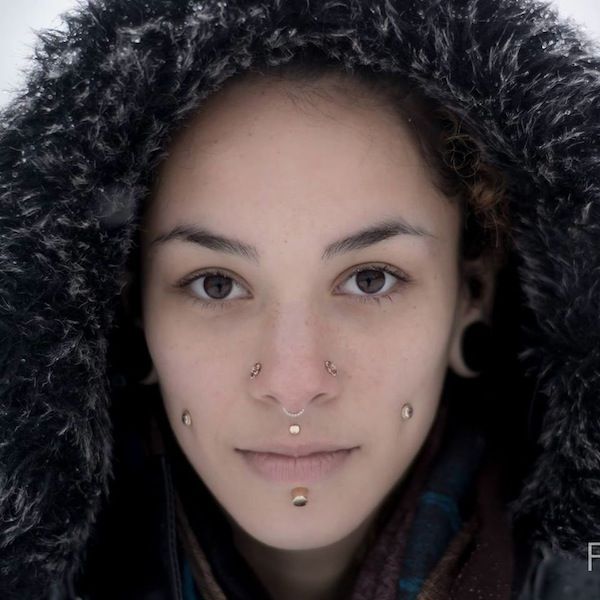
Cheek piercings are rated as moderately to significantly painful, primarily because the cheek is thick, glandular tissue. The level of sensation varies by individual anatomy and the thickness of each person's cheek tissue.
Here is what the process looks like step by step:
-
Consultation and anatomy check - The piercer examines the mouth with a penlight or headlamp, feels for internal structures, and assesses the bite line with open and closed jaw positions.
-
Marking - Placement is determined by anatomy first, aesthetic preference second. Marks are made on both sides to ensure symmetry.
-
Oral rinse - The client swishes with an antiseptic oral rinse to reduce bacteria inside the mouth.
-
Piercing - A 14G or 16G hollow needle passes through the cheek. The jewelry follows immediately behind.
-
Initial jewelry fit - The starter bar is intentionally long to accommodate the significant swelling that occurs in the first 2–4 weeks.
Bruising and mild discoloration around the entry point are normal in the first week. Some discharge and minor weeping from the site is expected and is not a sign of infection on its own.
Cheek Piercing Healing Timeline
Cheek piercings rank among the slowest-healing facial piercings due to constant muscle movement during eating, talking, and expression. The bar size will need to change multiple times across the full healing period.
| Phase | Timeline | What to Expect |
| Acute inflammation | Days 1–14 | Significant swelling, bruising, initial discharge |
| Early healing | Weeks 3–8 | Swelling decreases; bar downsizing at week 4–6 |
| Mid-healing | Months 3–6 | Intermittent flare-ups; continue full aftercare |
| Full healing | 6–12+ months | Bar can be further downsized; tissue stabilizes |
It is normal for swelling to return weeks after an initial downsize. Experienced piercers recommend having three different bar lengths on hand throughout healing, because the cheek tissue fluctuates significantly.
If you are also considering other body modifications during your healing period, note that navel piercing and oral piercing carry their own distinct healing demands and should be timed carefully alongside cheek piercings.
Cheek Piercing Aftercare: The Exact Daily Routine
The gold-standard aftercare for cheek piercings uses a sterile saline solution applied twice daily - once in the morning and once at night. Oral rinsing after every meal, drink, and smoke is also required due to the internal mouth exposure.
How to make a DIY saline solution:
- Purchase one gallon of distilled water (not filtered, not tap - specifically distilled).
- Add 4 teaspoons of non-iodized sea salt (ingredient list should read only "sea salt").
- Shake thoroughly to dissolve.
Twice-daily external soak:
- Pour solution into a clean glass or ceramic cup (not paper or plastic, which can contaminate).
- Warm the solution to body temperature using a microwave - approximately 10–15 seconds depending on your appliance.
- Tilt your head and submerge the outside of the piercing for 7–15 minutes.
- Repeat on the other side.
- Follow with a 30-second oral rinse of the same solution, then spit.
What to avoid during healing:
- Rotating or spinning the jewelry (causes irritation and excess scarring)
- Touching the piercing with unwashed hands
- Sleeping on the piercings (use a travel pillow with a hole to avoid pressure)
- Eating hard, crunchy foods that create excessive jaw movement
- Submerging in pools, lakes, or oceans during early healing
Hypertrophic scarring (raised tissue around the hole) can develop if the piercing is disturbed frequently. Keeping jewelry as stationary as possible is the most important single factor in reducing scar tissue formation.
Risks and Precautions You Cannot Ignore
Cheek piercings carry a more serious risk profile than most other common piercing placements. Potential complications include:
- Parotid duct damage - Permanent saliva leaking if a salivary duct is pierced; documented cases have required multiple surgeries to correct.
- Tooth and enamel damage - The inside end of the labret can contact teeth during eating and speech, causing chipping over time.
- Hypertrophic scarring - Common with cheek piercings due to constant movement; appears as raised tissue rings around the entry point.
- Infection - Higher risk than external piercings due to oral bacteria exposure; signs include excessive heat, pus, and spreading redness.
- Migration and rejection - More common with surface anchors that are snagged or pulled on clothing and bedding.
The Association of Professional Piercers (APP) classifies cheek piercings as advanced piercings that should only be performed by experienced practitioners with a documented portfolio of healed cheek piercing results.
If you are exploring piercing options for the first time, best piercing for beginners covers safer starting points with faster healing times and lower risk profiles.
Is a Cheek Piercing Right for You? Comparing Piercing Placements
Cheek piercings are not the right entry point into body piercing, but they are an extraordinary choice for those who have already built experience with healing piercings, understand aftercare discipline, and are willing to undergo a proper anatomy consultation.
The table below compares cheek piercings across key decision factors alongside other common piercing placements:
| Factor | Cheek Piercing | Nose Piercing | Navel Piercing | Oral Piercing |
| Pain Level | Moderate–High | Low–Moderate | Low–Moderate | Moderate |
| Healing Time | 6–12+ months | 4–6 months | 6–12 months | 4–8 weeks |
| Aftercare Complexity | High | Low | Moderate | Moderate |
| Candidacy Restrictions | High (anatomy-dependent) | Low | Moderate | Moderate |
| Visibility | High | High | Moderate | Variable |
If anatomy assessment confirms that your cheeks have a safe sweet spot, and if you are committed to the 12-month aftercare journey, a cheek piercing delivers one of the most visually distinctive results in facial piercing.
Get Your Cheek Piercing Done Right - H2M Tattoo Studio, Hanoi
For travelers visiting Vietnam, finding a piercing studio that combines clinical precision with genuine experience can be the difference between a beautiful healed piercing and a costly mistake. H2M Tattoo Studio is a licensed professional studio - certified by the Department of Finance and Planning, Hoan Kiem District, Hanoi - with over 9 years of continuous operation in the body modification industry since 2016.
Located at 17 Luong Ngoc Quyen, Hang Buom, Hoan Kiem - in the heart of Hanoi's Old Quarter - H2M Tattoo Studio operates a 100m² space capable of accommodating groups of 5–10 clients simultaneously. The studio's consultation team is fluent in English, Chinese, and Japanese, making it fully accessible for international visitors. Every piercing artist on staff brings a minimum of 5 years of professional experience, and cheek piercing consultations include a full anatomy assessment before any commitment is made.
H2M Tattoo Studio operates 5 locations across Vietnam, Taiwan, and Cambodia, serving clients from around the world who seek a best piercing studio in Hanoi that meets international hygiene and technique standards.
Conclusion
Cheek piercings are among the most visually striking facial piercings available - and among the most demanding to heal safely. The key decisions happen before the needle: choosing a piercer with documented cheek piercing experience, undergoing a real anatomy assessment, and committing to a rigorous dual aftercare routine (external saline soaks plus internal oral rinsing) for up to a year.
If your anatomy supports safe placement and you are ready for the process, a healed cheek piercing is deeply rewarding - a permanent sparkle that follows every smile. If you are in Hanoi and ready to move forward, book a consultation at H2M Tattoo Studio for an honest anatomy assessment and professional guidance before making any decision.
FAQ
Q1: How much does a cheek piercing hurt?
Cheek piercings are generally rated as moderate to high on the pain scale. The cheek is thick glandular tissue, and the needle must pass through a significant amount of material. Individual pain tolerance and the specific anatomy of your cheeks both affect the experience.
Q2: How long does a cheek piercing take to heal?
A labret-style cheek piercing takes between 6 months and 1 full year to heal. Surface dermal anchors placed on the cheek typically heal in approximately 2 months. Even after apparent healing, cheeks can flare up under stress, illness, or trauma.
Q3: Can anyone get a cheek piercing?
No. Cheek piercings are anatomy-dependent. Individuals who do not have a "sweet spot" of safe fatty tissue - free of major salivary ducts, arteries, and structural muscles - are not safe candidates for this piercing, regardless of desire.
Q4: Will a cheek piercing leave a scar?
Yes. Most healed cheek piercings leave some degree of permanent scarring. The indent that mimics a dimple effect is itself a form of controlled scar tissue. Surface anchor cheek piercings leave minimal scarring but also produce less of the dimple effect.
Q5: Can I remove a cheek piercing if I change my mind?
Cheek piercings can be removed, but the scar tissue and potential dimple indent may remain permanently, especially with labret-style piercings. Surface anchors leave less residual marking. This is why thorough professional consultation before piercing is strongly recommended.
Q6: What jewelry is used for cheek piercings?
The standard jewelry for a through-cheek piercing is a flat-back labret stud, typically 14G or 16G. The starter bar is longer than the final fit to accommodate early swelling, and it will be downsized multiple times as healing progresses. Implant-grade titanium or implant-grade steel are the recommended materials.
Q7: Is Hanoi a good place to get a cheek piercing as a tourist?
Hanoi's Old Quarter is home to established professional studios serving international visitors. H2M Tattoo Studio at 17 Luong Ngoc Quyen offers English, Chinese, and Japanese-speaking staff, licensed operation, and artists with over 5 years of experience each - making it a reliable option for visitors seeking a high-quality cheek piercing consultation in Vietnam.