


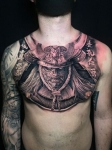
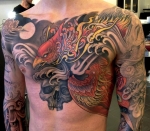

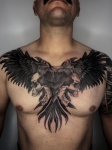
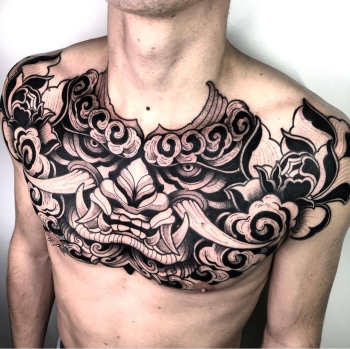
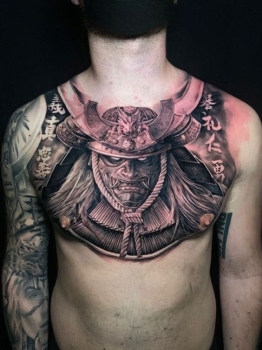
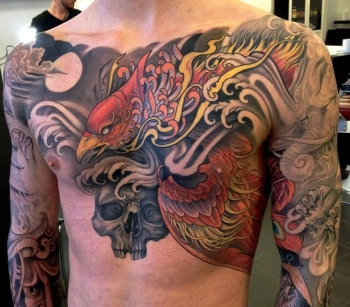
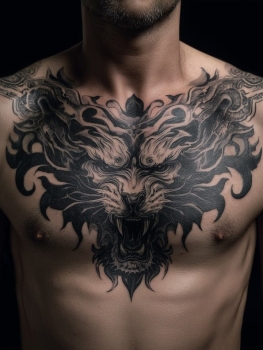
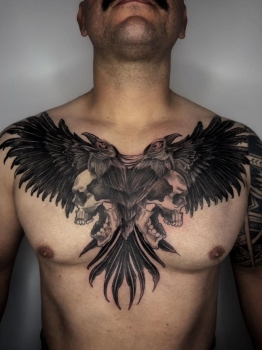
Deciding to cover your entire chest with ink is one of the biggest commitments in tattoo culture, and most men researching it want the same three answers before they book a session: how much it will hurt, how long it will take, and which style will actually look right on their body shape. A full chest tattoo typically spans from the collarbones down to the lower ribs and across both pectoral muscles, often connecting into the sternum and sometimes extending toward the shoulders or upper arms. Because the piece covers such a large, visible, and muscular area, it demands more planning than a small chest tattoo for men - from body symmetry to session count to long-term skin stretching as muscle mass changes.
A full chest tattoo for men covers both pectorals, the sternum, and usually the collarbone area in one connected composition, requiring 15 to 40+ hours of total tattooing time depending on detail level. According to Ipsos research cited by Statista, 30 percent of Americans had at least one tattoo as of 2021, up from 21 percent in 2012, reflecting a steady rise in demand for larger custom pieces like full chest work. Popular styles for this placement include Japanese Irezumi, biomechanical, realism, and tribal, chosen partly because their flowing compositions adapt naturally to chest and rib curvature. Full chest tattoos generally require multiple sessions spaced four to six weeks apart to allow proper healing between sittings.
Key Takeaways
- A full chest tattoo covers both pectorals and the sternum, and most designs take between 4 and 10 sessions to complete depending on shading density.
- Japanese, biomechanical, realism, and tribal styles remain the most requested because their linework follows chest musculature naturally.
- Pain is generally rated higher over the sternum and collarbone due to thin skin over bone, while the outer pectoral area is comparatively more tolerable.
- Booking a consultation before finalizing a design helps map how the piece will interact with shoulder, rib, and stomach placement if you plan to expand the tattoo later.
Why Men Choose a Full Chest Tattoo Over Smaller Pieces
A full chest piece is rarely an impulsive decision. Men who choose this placement are usually already familiar with the tattoo process through smaller pieces and are looking for a composition that reads as a complete artwork rather than a collection of separate designs. The chest offers a broad, relatively flat canvas compared to limbs, which lets an artist build a scene with depth, symmetry, and narrative flow - something difficult to achieve on a forearm or calf. It also sits in a location that can be shown or concealed depending on clothing, giving the wearer control over visibility in professional or formal settings.
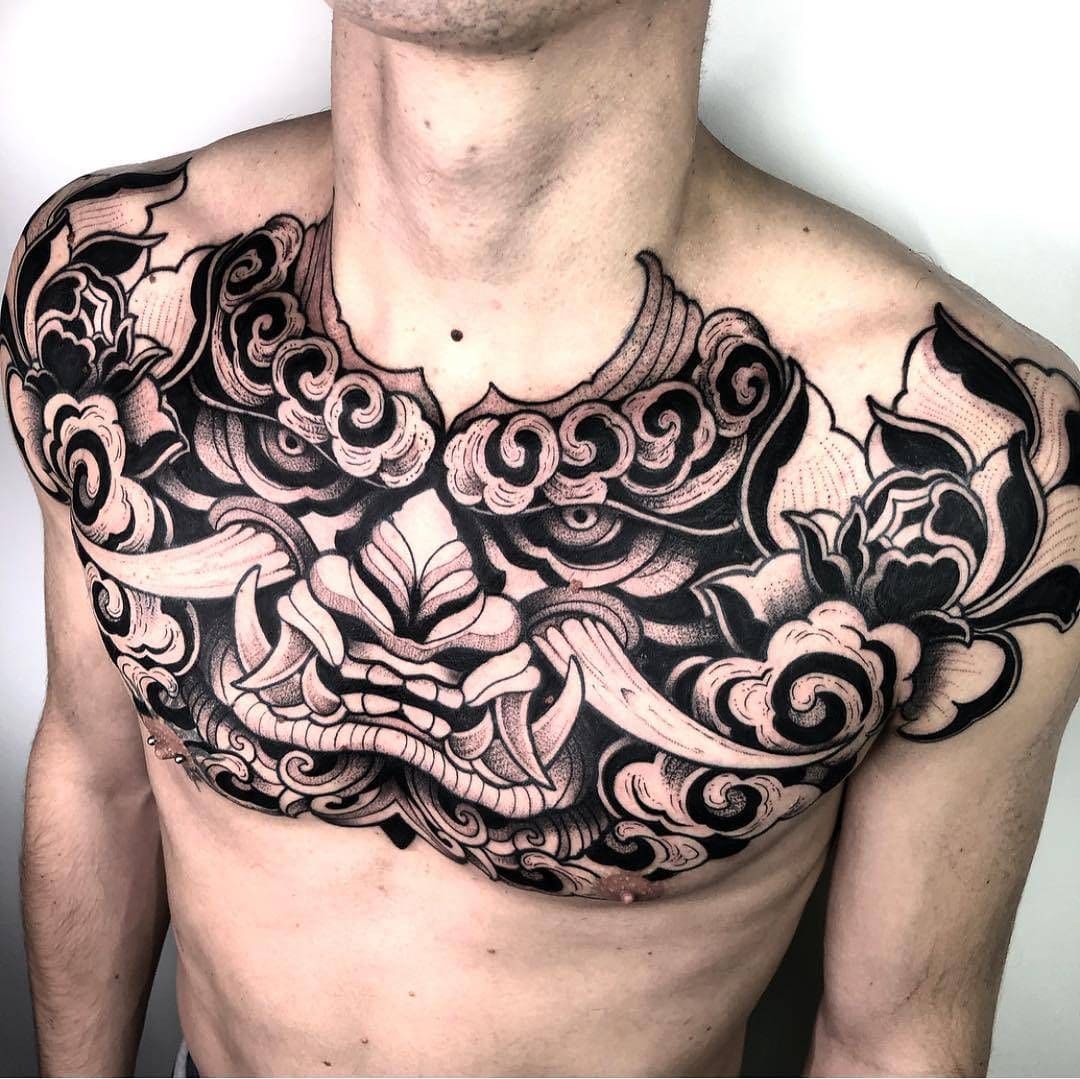
There is also a practical design reason behind the trend. Because the chest connects naturally to the shoulders, ribs, and stomach, many men treat it as the starting anchor for a larger bodysuit project. Starting with a well-planned full chest tattoo makes it far easier to extend the artwork later without visible breaks in the composition, which is a major reason experienced collectors prioritize this placement early.
>>> Read More: Full Chest Tattoos for Men: Styles, Pain & Placement Guide
How Much Does a Full Chest Tattoo Hurt
Pain tolerance varies by individual, but the chest is consistently rated as a moderate-to-high pain zone because several sections sit directly over bone with minimal muscle or fat padding.
| Chest Area | Pain Level | Reason |
|---|---|---|
| Outer pectoral | Low to moderate | Thicker muscle tissue cushions the needle |
| Center chest / sternum tattoo men often ask about | High | Thin skin directly over bone, high nerve density |
| Collarbone tattoos men request as an extension | High | Bone proximity and thin skin with little padding |
| Underarm / side ribs | High | Sensitive nerve clusters and thin skin |
| Nipple-adjacent area | Very high | Extremely thin skin and dense nerve endings |
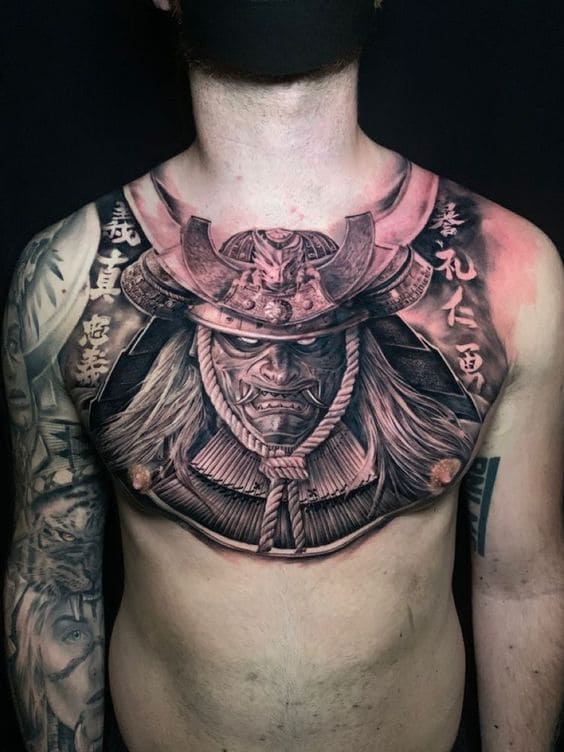
Most artists recommend starting the outline on the outer pectoral area first, both because it is more tolerable and because it establishes the composition's structural lines before moving into the more sensitive sternum and collarbone zones.
>>> See More: Chest Tattoo for Men: Styles, Placement & Meaning Guide
Popular Full Chest Tattoo Styles for Men
Japanese Irezumi and Traditional Style
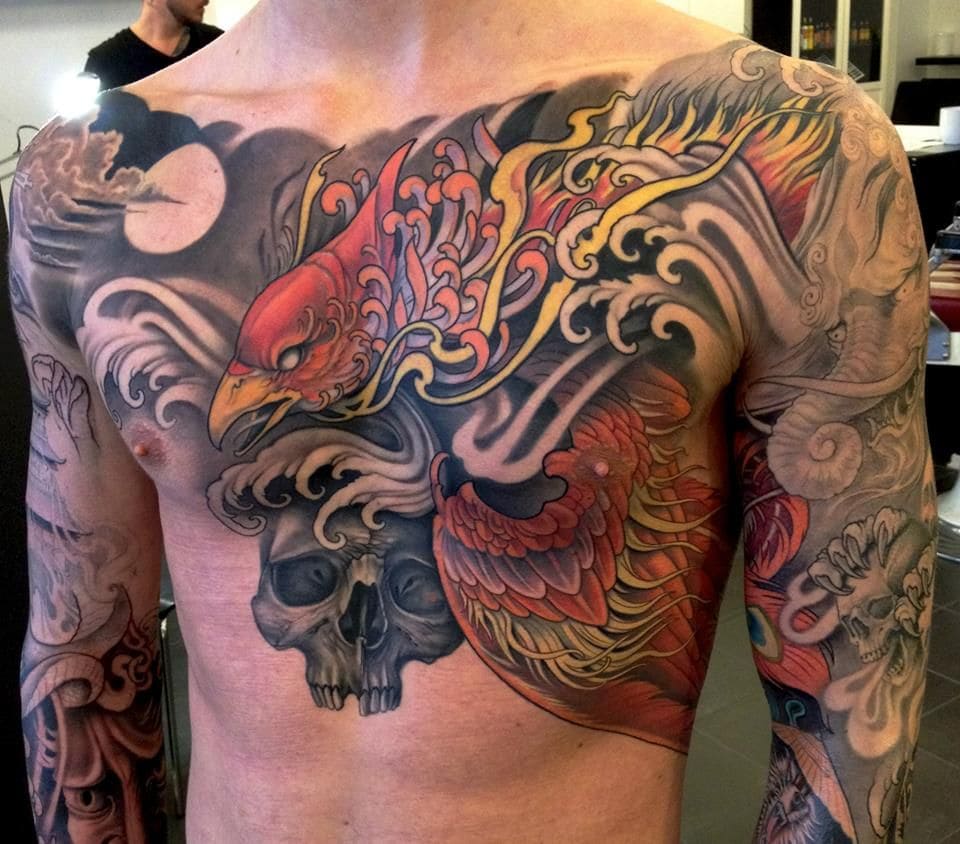
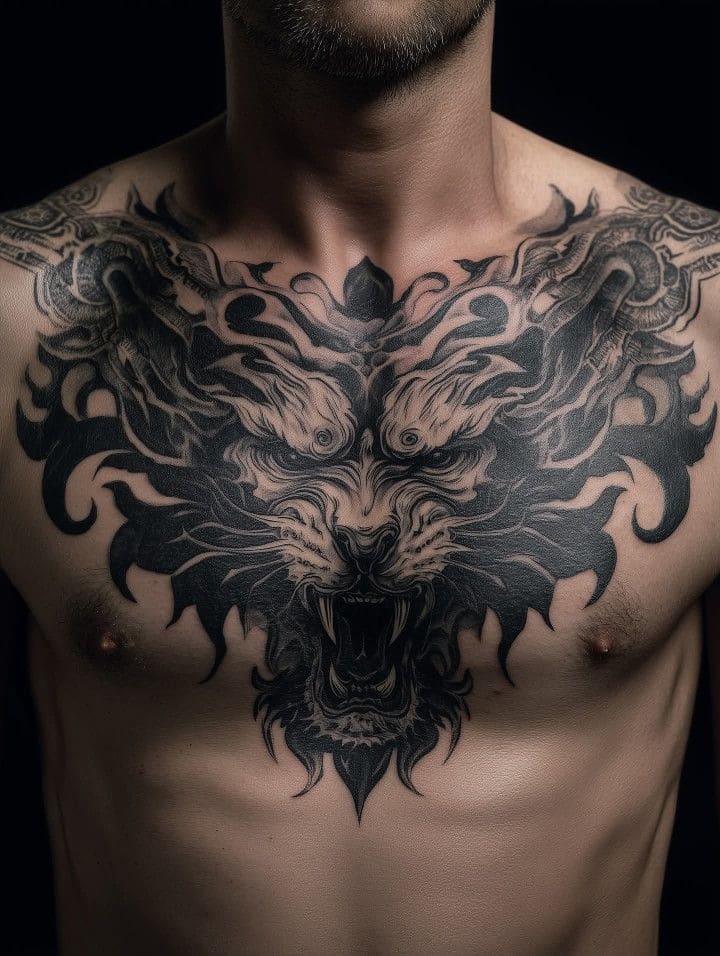
Japanese-style chest tattoos use flowing water, clouds, dragons, koi, or phoenix imagery that wraps naturally around the pectoral curve and often extends over the shoulder into a half or full sleeve. The style's built-in background elements make it one of the most forgiving choices for covering a large chest area evenly without leaving awkward negative space.
Biomechanical and Realism
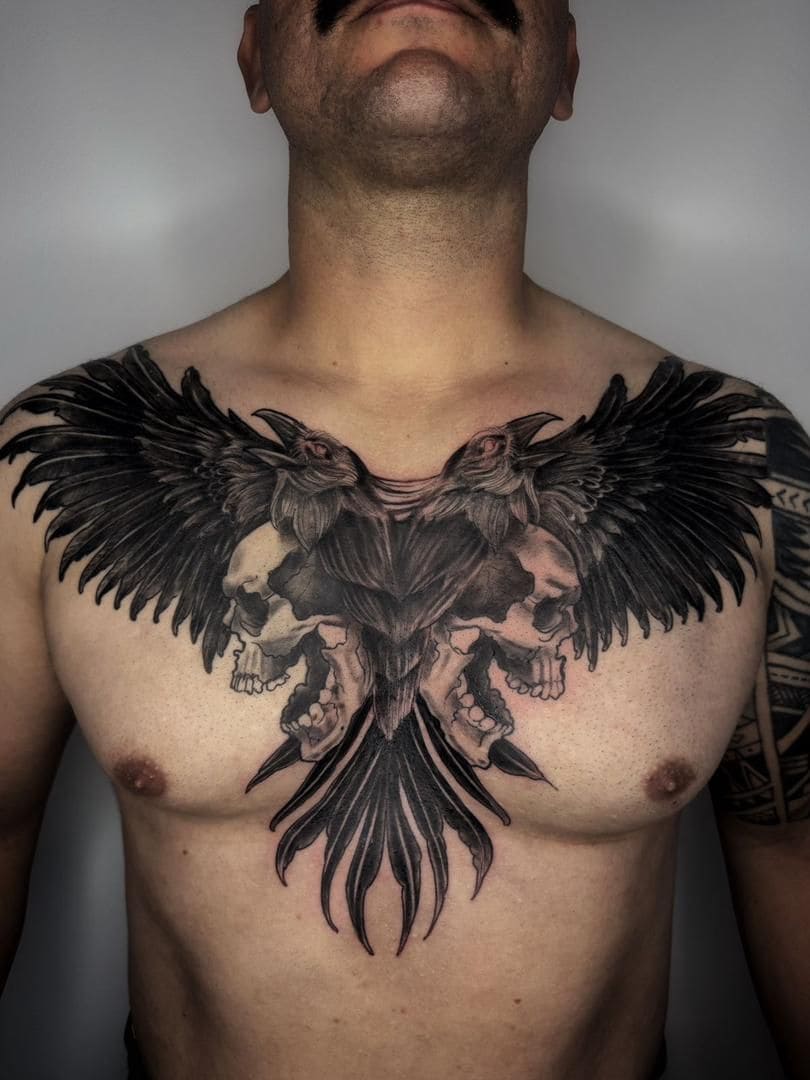
Biomechanical designs simulate machinery or exposed muscle structure beneath torn skin, which pairs unusually well with the chest because the composition can follow actual muscle contours. Realism portraits or scenes, by contrast, demand precise shading and typically require the most total sessions of any full chest style due to the level of detail needed to avoid visible line breaks.
>>> Read More: Small Chest Tattoos for Men: 2026 Ideas & Placement Guide
Tribal and Geometric Chest Pieces
Tribal patterns remain a consistently requested option because bold black linework reads clearly from a distance and ages better than fine detail work, which can soften over decades. Geometric chest tattoos, a more contemporary variant, use symmetry and mandala-style patterns that are particularly effective for men who want a full chest tattoo without a narrative scene.
Full Chest vs Half Chest: Which Placement Fits Your Goals
Not every man researching full chest tattoos for men actually wants to commit to the entire chest in one project. Male half chest tattoos cover a single pectoral, either left or right, and are a common starting point for men who want to test their pain tolerance and commitment level before expanding to the opposite side. A half chest piece also works well as a standalone design if the wearer wants to keep one side of the chest clear for professional or personal reasons.
The decision often comes down to symmetry planning. Starting with a half chest design without mapping how it would extend into a full piece can create composition problems later, since elements like collarbone lines, shading gradients, and central sternum connectors are difficult to retrofit after the fact. Anyone unsure between the two should discuss both options during a consultation, since adjusting chest tattoo placement in the planning stage is far simpler than correcting an already-healed piece.
>>> See More: Male Half Chest Tattoos: Styles, Placement & Cost Guide
Session Planning and Timeline
A full chest tattoo is rarely completed in a single sitting. Depending on size and detail level, most pieces require the following approximate structure:
- Initial consultation and design mapping, including stencil placement across both pectorals
- First session covering outline and the least sensitive areas, typically 3 to 5 hours
- Follow-up sessions for shading and color, spaced 4 to 6 weeks apart to allow skin recovery
- Final detailing session, including touch-ups on areas prone to fading such as the sternum
- A dedicated touch-up appointment 6 to 8 weeks after full healing to correct any uneven ink retention
Rushing sessions too close together increases the risk of scarring and uneven pigment retention, particularly in high-friction areas like the underarm and collarbone.
>>> Read More: Collarbone Tattoos Men: Placement Guide, Pain & Designs
H2M Tattoo Studio: Custom Full Chest Tattoos in Hanoi's Old Quarter
H2M Tattoo Studio has operated in the tattoo industry for nine years, beginning in tattoo equipment supply in 2016 before opening its first physical studio in 2020. The brand now runs five locations across Vietnam, Taiwan, and Cambodia, supported by a team of 22 staff members, each tattoo artist bringing more than five years of hands-on experience across styles ranging from Japanese Irezumi to realism and Vietnamese Traditional work.
The flagship location at 17 Lương Ngọc Quyến sits in the center of Hanoi's Old Quarter, occupies 100 square meters, and can accommodate five to ten clients at once, which matters for multi-session chest projects that may involve return visits over several months.
For travelers planning ink during their trip to Vietnam, the studio's English, Mandarin, and Japanese-speaking consultation team removes the language barrier that often complicates design discussions for large-scale work - a detail frequently cited by visitors searching for the best tattoo studio Hanoi has to offer for custom chest pieces.
Aftercare Considerations Specific to Chest Placement
Chest skin behaves differently from limb skin during healing because it moves constantly with breathing and stretches with muscle flexion during exercise. Men recovering from a full chest tattoo should avoid tight shirts that rub against fresh ink, limit upper-body workouts for at least two weeks, and apply fragrance-free moisturizer consistently to prevent the scabbing that leads to patchy fading. Sun exposure is a particular risk for chest tattoos since the area is often uncovered at the beach or pool; UV exposure during the first six months significantly accelerates color loss regardless of style.
Conclusion
A full chest tattoo for men is a long-term commitment that rewards careful planning over quick decisions. Choosing the right style - whether Japanese, biomechanical, realism, or tribal - should be based on how well the composition adapts to chest curvature and how it might extend into a half sleeve or full bodysuit later. Understanding pain zones, realistic session timelines, and proper chest tattoo placement before the first appointment prevents costly redesigns down the line. If you are planning a custom full chest piece and want a studio experienced with large-scale, multi-session work, book a consultation to map your design before your first sitting.
Frequently Asked Questions
How many sessions does a full chest tattoo usually take?
Most full chest tattoos require 4 to 10 sessions depending on the level of shading and color work, with each session spaced 4 to 6 weeks apart for proper healing.
Is a full chest tattoo more painful than a sleeve?
The chest generally rates as more painful than the outer arm because areas like the sternum and collarbone sit directly over bone with thin skin, whereas most of the arm has more muscle and fat padding.
Can I start with a small chest tattoo and expand it later?
Yes, though it requires upfront planning. A small chest tattoo for men can be designed with extendable elements so that background, shading, or additional figures can be added without breaking the composition.
What is the difference between a full chest and a half chest tattoo?
A full chest tattoo covers both pectorals and usually the sternum, while male half chest tattoos cover only one side, making the half chest option a lower-commitment entry point for larger chest work.
Do collarbone and sternum extensions hurt more than the rest of the chest?
Yes. Both collarbone tattoos men add as extensions and sternum tattoo men request as a centerpiece rank among the most painful chest zones because of thin skin directly over bone.
How long should I wait between chest tattoo sessions?
Four to six weeks is standard, allowing the skin to fully close and reduce swelling before more needlework is applied to the same area.
Does a full chest tattoo fade faster than tattoos on other body parts?
Chest tattoos are more exposed to friction from clothing and sun during outdoor activity, which can accelerate fading if aftercare and sun protection are not followed closely during the first year.