


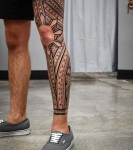
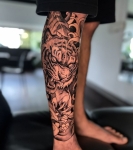
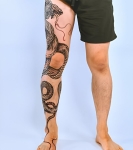
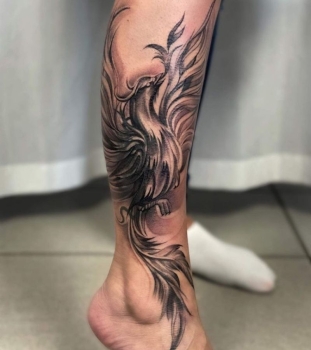
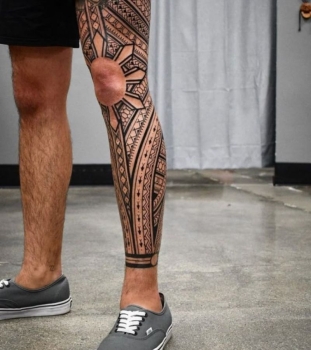
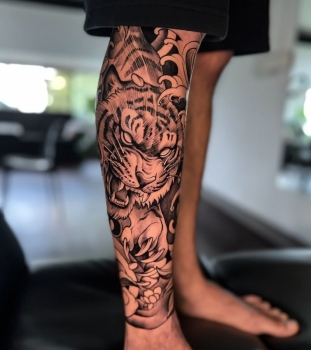
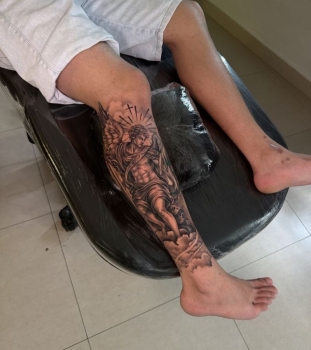
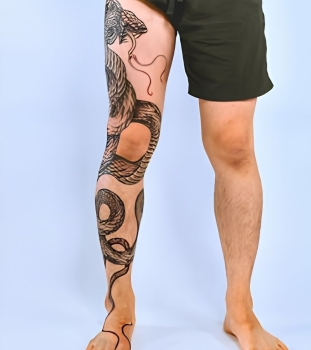
Leg tattoos for men are among the most versatile and wearable placements in modern tattooing — offering space for everything from subtle minimalist symbols to full-leg sleeves. At H2M Tattoo Studio in Hanoi, experienced artists deliver custom leg tattoo designs across all styles including blackwork, realism, Japanese, and geometric. According to a 2023 survey by Statista, the lower leg and calf rank as the third most popular tattoo placement among men globally. Whether you're planning a small first piece or a detailed composition, understanding leg tattoo placement is the critical first step to a result you'll wear for life.
KEY TAKEAWAYS
- The leg offers some of the most forgiving and versatile real estate for tattooing — ideal for both beginners and experienced collectors.
- Calf, shin, thigh, ankle, and foot are five distinct zones, each with different visibility, pain levels, and design suitability.
- Leg sleeve tattoos require long-term planning — working with a single artist ensures visual cohesion across multiple sessions.
- Professional studios with experienced artists significantly reduce the risk of distorted linework and faded color over time.
Why More Men Are Choosing Leg Tattoos in 2024
For decades, arms and chests dominated men's tattoo culture. That's shifted. Leg tattoos for men have surged in popularity because the leg solves a problem most working professionals and athletes share: visibility control. A full calf piece is hidden under trousers in a boardroom and fully displayed at the gym or the beach. This "switchable visibility" — the ability to reveal or conceal ink based on social context — has made leg placement one of the fastest-growing choices for men in their 20s and 30s.
Beyond practicality, the leg's physical structure offers unique artistic advantages. The natural contour of the calf, the flat canvas of the shin, and the curve of the thigh each create different visual effects. Skilled tattoo artists don't just draw on the leg — they design with the leg, using muscle definition and natural shadows as part of the composition. This is why leg tattoos, when done well, often look more three-dimensional and dynamic than equivalent arm pieces.
Understanding Leg Tattoo Placement: Zone by Zone
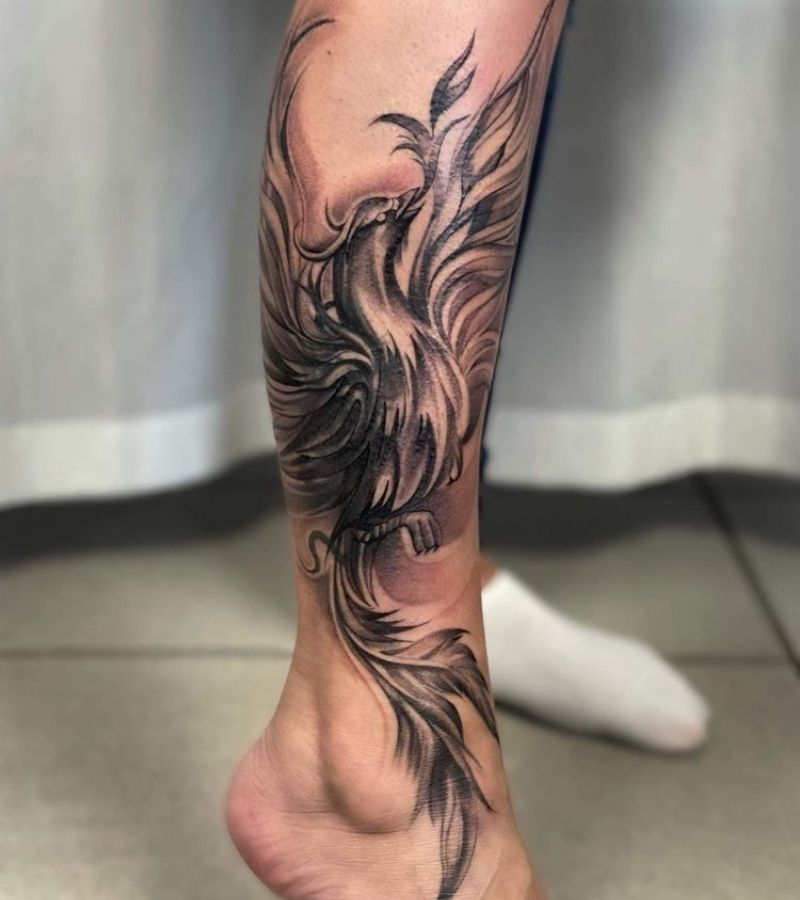
Choosing the right zone on your leg is the single most important decision before picking a design. Each area has different skin behavior, healing characteristics, and visual outcomes.
Calf Tattoos for Men
The calf is widely considered the best starting point for men new to leg ink. The skin here is relatively thick, sits over substantial muscle mass, and holds detail and color well over time.calf tattoos for men typically age better than shin or foot placements because the surface doesn't experience the same friction and sun exposure.
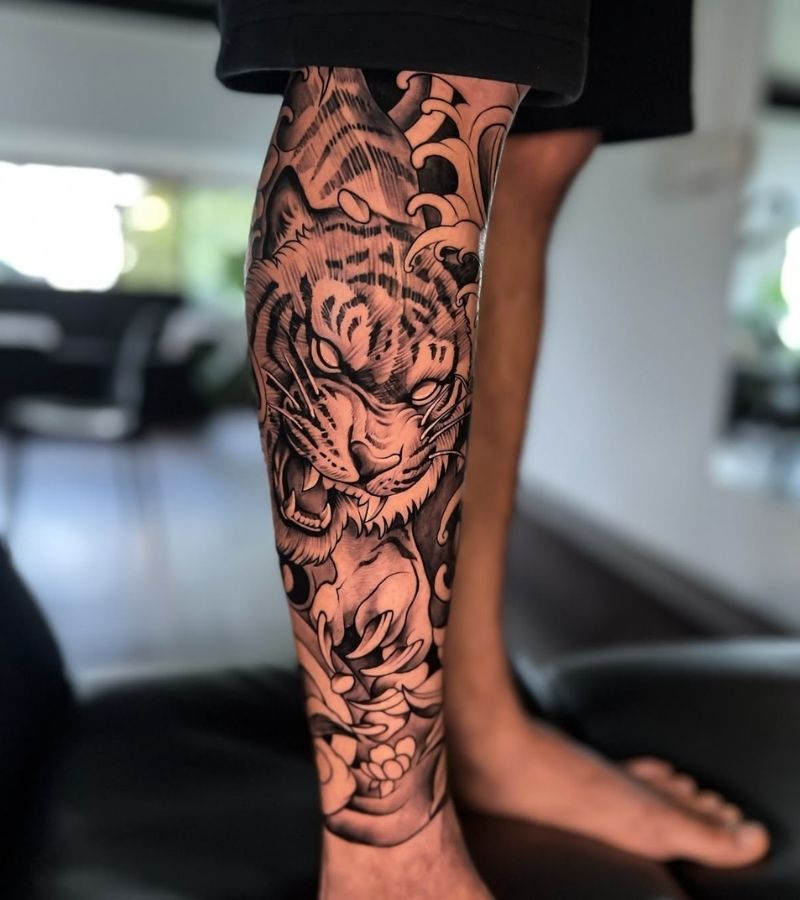
Design-wise, the calf accommodates both vertical compositions (snakes, swords, floral columns) and horizontal wraps. Traditional, neo-traditional, and Japanese styles are particularly well-suited here because their bold outlines remain crisp even years after healing.
Pain level: Moderate. The outer calf is one of the less painful spots on the leg. The inner calf and the area near the shin bone are more sensitive.
Ankle Tattoos for Men
Ankle tattoos men tend toward smaller, more symbolic designs — a compass, a geometric shape, a single word, or a minimalist animal. The ankle is ideal for a first tattoo or for men who want something meaningful but understated. The skin here is thinner and sits close to bone, which means slightly higher sensitivity during the session and slightly more careful aftercare during healing.
The most effective ankle designs work with the circular form of the joint — wrapping motifs, bands, and mandala fragments all perform well in this placement.
Pain level: Moderate to high, particularly near the bone and Achilles tendon.
Leg Sleeve Tattoo for Men
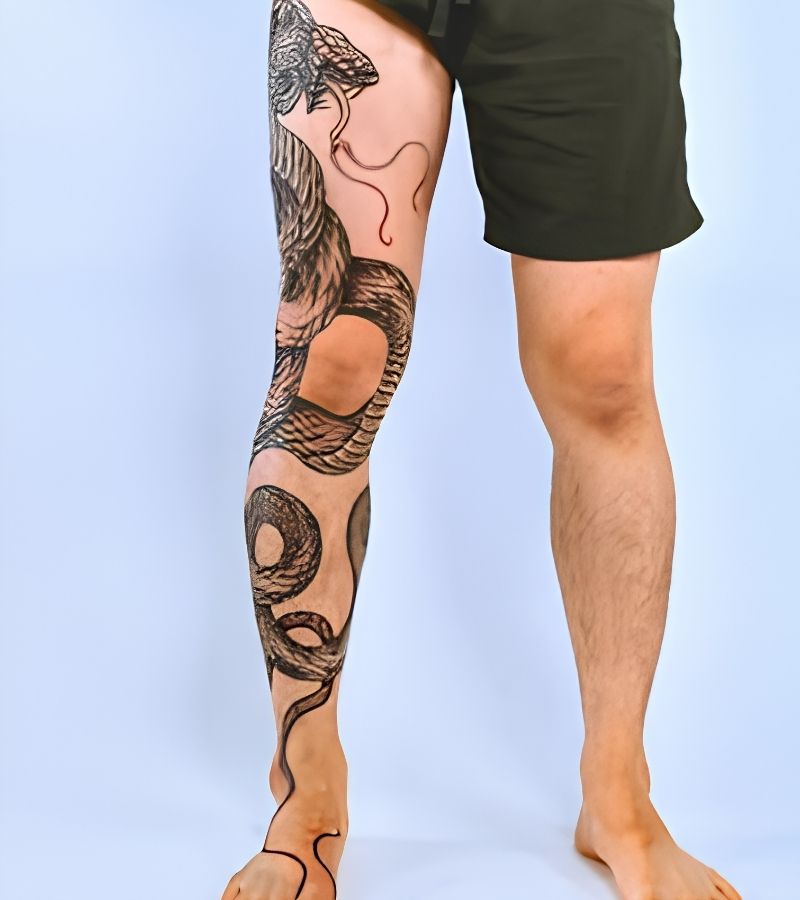
A leg sleeve tattoo men is a commitment — and one of the most visually striking results achievable in tattooing. A full leg sleeve covers the entire leg from hip to ankle in a continuous, unified design. A half-sleeve typically covers from the knee down or knee up.
The key to a successful sleeve is intentional planning from session one. Trying to retroactively connect unrelated pieces into a sleeve rarely achieves cohesive results. Men who plan a sleeve from the outset work with their artist to develop a consistent theme, color palette, and background style before any ink touches skin.
Popular sleeve themes for men include Japanese irezumi (koi, dragons, waves, cherry blossoms), blackwork geometric, American traditional flash compiled into a collector's sleeve, or neo-traditional botanicals with portrait elements.
Planning tip: Book a consultation, not just a session. A reputable studio will spend significant time in the design phase before the first needle touches skin.
Mens Foot Tattoo
The foot is one of the most expressive — and most challenging — placements on the leg.Mens foot tattoo designs range from delicate fine-line patterns on the top of the foot to bold geometric shapes wrapping from ankle to toe.
The challenge is healing. The foot's skin experiences constant movement, friction from footwear, and more sun exposure than most other placements. This makes proper aftercare non-negotiable. Expect that some foot tattoos may require a touch-up session after the initial heal.
From a design standpoint, the foot rewards elongated compositions — arrows, vines, feathers, script — that follow the natural line from the ankle toward the toes.
Pain level: High. The foot is bony, the skin is thin, and the nerves in this zone make it one of the more intense placements on the entire body.
Small Leg Tattoos for Men
Not every leg tattoo needs to be a statement piece.Small leg tattoos for men are experiencing their own surge in popularity — driven by the minimalist aesthetic, the desire for personal symbols rather than visual statements, and the lower time and financial commitment.
Small leg pieces work best when placed with intention. A tiny geometric shape on the outer ankle, a single botanical element behind the knee, or a minimal line drawing on the upper shin — each of these reads clearly and cleanly because the surrounding negative space is part of the composition.
Fine-line and single-needle techniques are best suited for small leg tattoos. These methods deliver thin, detailed linework that reads as intentional and considered rather than simply small.
Leg Tattoo Designs for Men: Style Guide
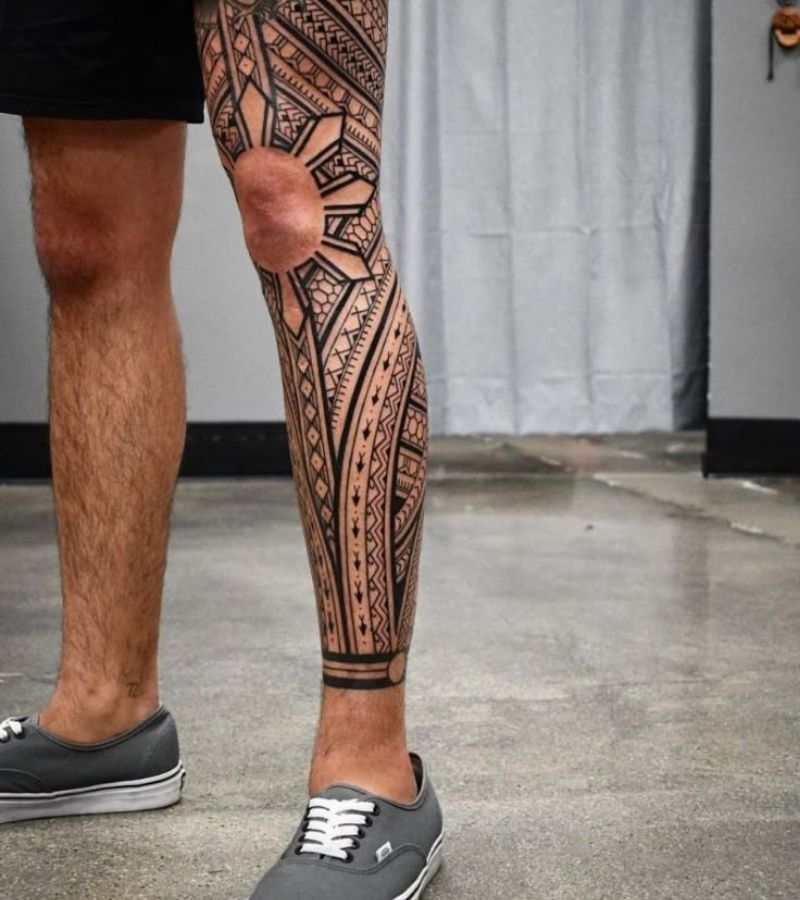
Choosing a style is as important as choosing placement. These are the five styles most frequently requested for leg tattoo placement by men:
| Style | Best Placement | Characteristics |
| Japanese / Irezumi | Full sleeve, calf, thigh | Bold outlines, iconic motifs, rich color |
| Blackwork / Geometric | Shin, calf, sleeve | High contrast, patterns, dotwork |
| Realism | Thigh, calf | Photographic detail, portraits, wildlife |
| Fine Line | Ankle, foot, small pieces | Delicate, minimal, precise |
| Neo-Traditional | Calf, sleeve | Illustrative, saturated color, character work |
Pain Levels by Leg Zone: What to Expect
Pain is the most-searched concern for first-time leg tattoo clients. The honest answer is that it varies — not just by placement but by individual pain tolerance, artist technique, session length, and skin condition on the day.
As a general guide:
- Outer calf and thigh: Among the least painful spots on the entire body. Substantial muscle mass and thicker skin absorb needle vibration well.
- Shin: The tibia runs close to the surface, making this a sharper, more intense sensation than the calf.
- Inner knee and behind the knee: High nerve concentration — often cited as unexpectedly intense.
- Ankle and foot: Close to bone throughout — consistently rated as the higher-sensation zones on the leg.
Session length matters. A two-hour calf session is manageable for most people. A six-hour thigh session on a first visit is not recommended. Experienced studios schedule strategically — building up session tolerance and planning extended work over multiple visits.
H2M Tattoo Studio: Hanoi's Address for Leg Tattoo Excellence
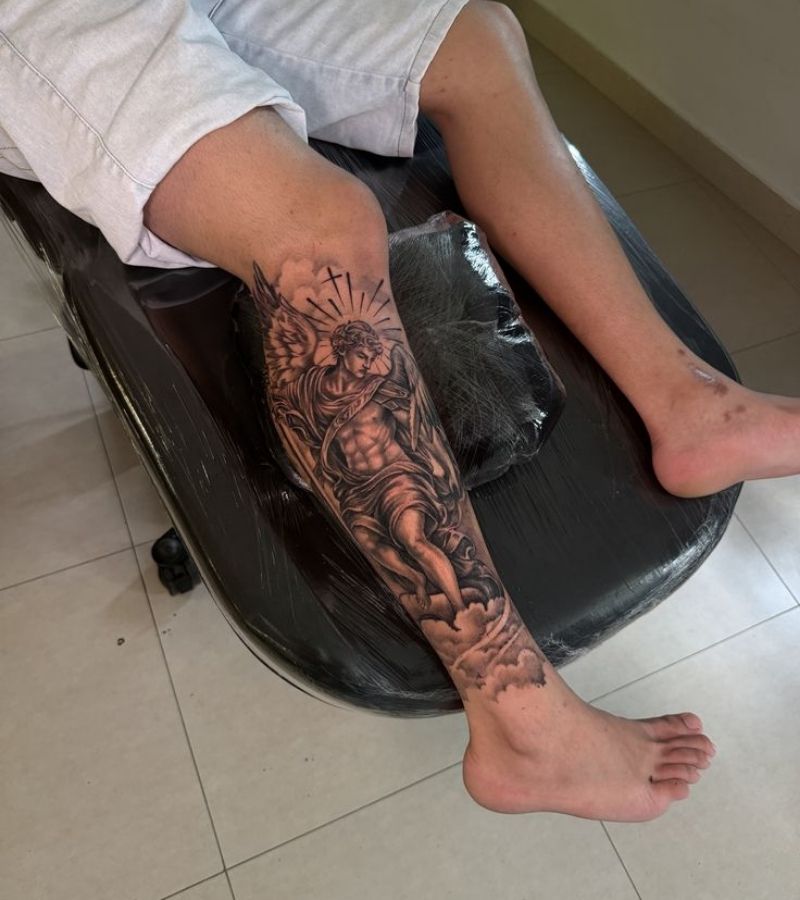
If you're searching for the best tattoo studio in Hanoi for a leg piece, H2M Tattoo Studio offers one of the most complete environments in the city.
H2M Tattoo Studio brings together a team of specialized artists, a sterile professional environment, and a consultation-first approach that ensures every leg tattoo — from a small ankle symbol to a full sleeve — is designed for the client's body, lifestyle, and long-term vision.
Why clients choose H2M for leg tattoos:
- Multi-style expertise — Artists at H2M work across Japanese, blackwork, realism, fine-line, and neo-traditional, meaning your preferred style is matched with a specialist, not a generalist.
- Custom design workflow — H2M does not work from flash templates for complex pieces. Every leg sleeve and large-format design begins with a dedicated consultation and custom drawing process.
- Hygiene and safety standards — Single-use needles, medical-grade sterilization, and a fully compliant workspace — non-negotiable for any reputable studio.
- Aftercare guidance — H2M provides comprehensive written and in-person aftercare instructions specific to the placement zone, since foot and ankle pieces heal differently than calf or thigh work.
- Sleeve planning support — For clients planning a partial or full leg sleeve, H2M offers long-term project consultations to map the overall vision before the first session begins.
H2M Tattoo Studio is located in Hanoi — easily accessible for both local residents and visitors to the city. Booking in advance is recommended, particularly for sleeve consultations and larger pieces.
Aftercare for Leg Tattoos: Zone-Specific Tips
Aftercare for leg tattoos differs depending on placement — a detail most generic aftercare guides miss.
Calf and thigh: Keep the area moisturized, avoid tight compression clothing during the first two weeks, and limit intense lower-body exercise that causes significant sweating.
Ankle: Avoid shoes and socks that rub directly on the fresh tattoo. Sandals or open footwear during the healing period reduces friction significantly.
Foot: This is the highest-maintenance heal on the leg. Elevation during the first 48 hours reduces swelling. Keep the foot clean and dry between moisturizing applications. Avoid submerging in water (pools, ocean, bath) for at least three weeks.
Shin: The shin heals similarly to the calf but with slightly more sensitivity to fabric contact. Loose-fit trousers or shorts for the first two weeks helps.
Sun exposure is the single biggest long-term threat to leg tattoo quality. Apply high-SPF sunscreen to healed tattoos whenever they will be exposed — this applies year-round, not only during summer.
Conclusion
Leg tattoos for men offer something rare in body art: genuine versatility. The leg can carry a subtle personal symbol or a full-coverage sleeve, a minimalist fine-line piece or a photorealistic portrait. The key is understanding placement — how each zone behaves, how designs interact with the body's natural lines, and how different styles perform over the long term.
Whether you're considering your first small piece or planning a multi-session sleeve, the most important step is working with an artist and studio that brings both technical skill and genuine design thinking to the project. H2M Tattoo Studio in Hanoi is built for exactly that kind of work.
Ready to start? Book a consultation with H2M Tattoo Studio and bring your reference images, placement ideas, and questions. The conversation begins there.
FAQ
Q: How long does a leg sleeve tattoo take to complete? A: A full leg sleeve typically requires between 40 and 80 hours of tattoo time depending on the complexity, detail level, and coverage. This is usually spread across multiple sessions over 6 to 18 months, allowing proper healing between sessions and giving the overall design room to develop.
Q: Are leg tattoos more painful than arm tattoos? A: It depends on the specific placement. The outer calf is generally less painful than the inner bicep or elbow ditch. The shin, ankle, and foot are typically more intense than most arm placements. Pain tolerance is individual — what most experienced collectors report is that the sensation is manageable and temporary.
Q: Do leg tattoos fade faster than arm tattoos? A: Foot and ankle tattoos do experience more fading than calf or thigh pieces due to friction from footwear and greater sun exposure. Proper aftercare and regular sunscreen application significantly extend tattoo quality on all leg zones.
Q: Can I work out after getting a leg tattoo? A: Light walking is generally fine within a day or two. Intense lower-body workouts — running, cycling, heavy squats — should be avoided for at least two weeks to prevent sweat irritation, skin stretching, and increased risk of infection during the healing phase.
Q: What is the best design for a first leg tattoo? A: For a first leg piece, the outer calf with a medium-sized design (approximately palm-sized or slightly larger) is an excellent starting point. It offers a forgiving placement, holds detail well, and heals reliably. Design-wise, bold outlines tend to age better than very fine or highly detailed work for first-time collectors.
Q: How do I find the right tattoo artist for a leg sleeve? A: Look for artists who have a portfolio of completed or in-progress sleeves in your preferred style. Schedule a consultation — not just a booking — and discuss your vision, timeline, and budget openly. At H2M Tattoo Studio in Hanoi, sleeve consultations are part of the process before any design work begins.
Q: What should I wear to a leg tattoo session? A: Shorts are ideal for calf, shin, knee, and thigh work. For ankle and foot sessions, loose sandals or open footwear that you can easily remove are best. Avoid tight compression wear that sits directly over the area being tattooed.