

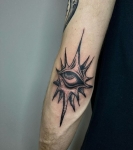
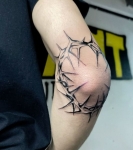
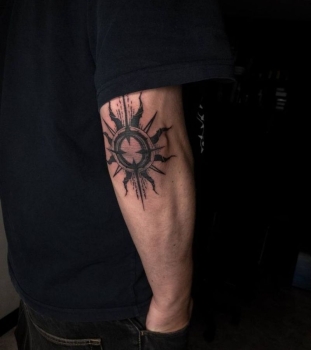
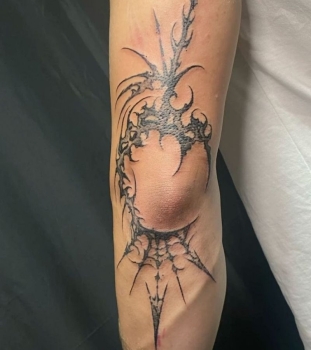
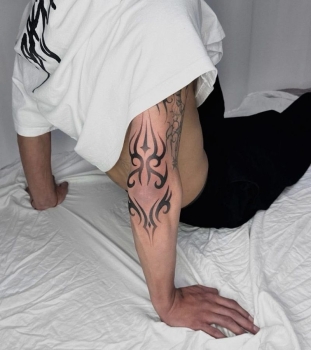
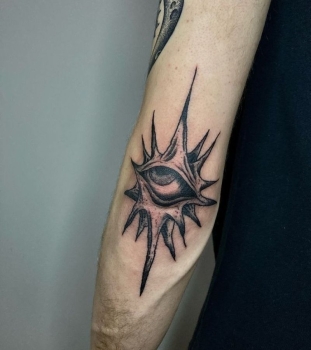
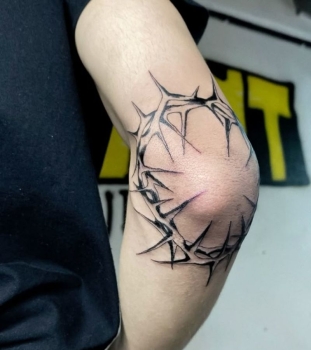
Elbow tattoos for men rank among the most visually striking and technically demanding placements on the body. The elbow — covering the olecranon point, the inner ditch, and the surrounding skin — requires skilled needlework because the skin stretches and folds constantly with movement. Popular designs include spider webs, geometric mandalas, floral bursts, and traditional Americana motifs. Pain levels here are rated 7–9 out of 10 due to thin skin and proximity to bone. H2M Tattoo Studio in Hanoi has completed over 2,000 arm tattoo pieces since 2018, with elbow placements accounting for roughly 18% of full-sleeve commissions.
KEY TAKEAWAYS
- Elbow tattoos for men require an artist experienced in curved-surface tattooing — poor technique causes rapid ink fallout.
- The ditch (inner elbow) and the point (outer elbow cap) heal differently and need separate aftercare strategies.
- Elbow ink integrates best within a cohesive sleeve concept — plan your full arm layout before committing.
- H2M Tattoo Studio offers dedicated arm tattoo consultations to map elbow placement within your overall design vision.
Elbow tattoos for men are not for the indecisive. They occupy one of the most anatomically complex zones of the arm — a location that bends, stretches, and compresses dozens of times every hour. That constant movement is precisely what makes elbow tattoos so compelling: a well-executed design here commands attention whether the arm is extended, flexed, or folded. From classic spider webs radiating outward from the elbow cap to intricate geometric mandalas that frame the joint like a portal, elbow tattoos carry a visual weight few other placements can match. This guide covers everything men need to know before committing — design families, placement mechanics, pain realities, and how to build elbow ink into a broader arm concept.
Why Elbow Tattoos for Men Demand a Different Approach
Most tattoo placements sit on relatively flat, stable skin. The elbow is the exception. The skin at the elbow point (the olecranon) is unusually loose and thin — it needs that slack to allow full range of motion. When tattooed, this skin behaves unpredictably: it stretches when the arm extends, compresses when the arm bends, and wrinkles when the joint is at rest. An artist without experience in curved-surface work will produce lines that drift, shading that blotches, and ink that migrates faster than it should.
According to a 2022 survey by Statista covering 3,500 tattooed adults in the United States, joint placements — including elbows, knees, and ankles — showed the highest rate of touch-up requests within 12 months of initial tattooing, at 34%. The primary cause cited was artist inexperience with skin tension in that zone.
For men planning arm tattoos for men that span multiple placements, the elbow is the connective anchor that links the upper and lower arm. Getting it wrong visually disrupts the entire sleeve.
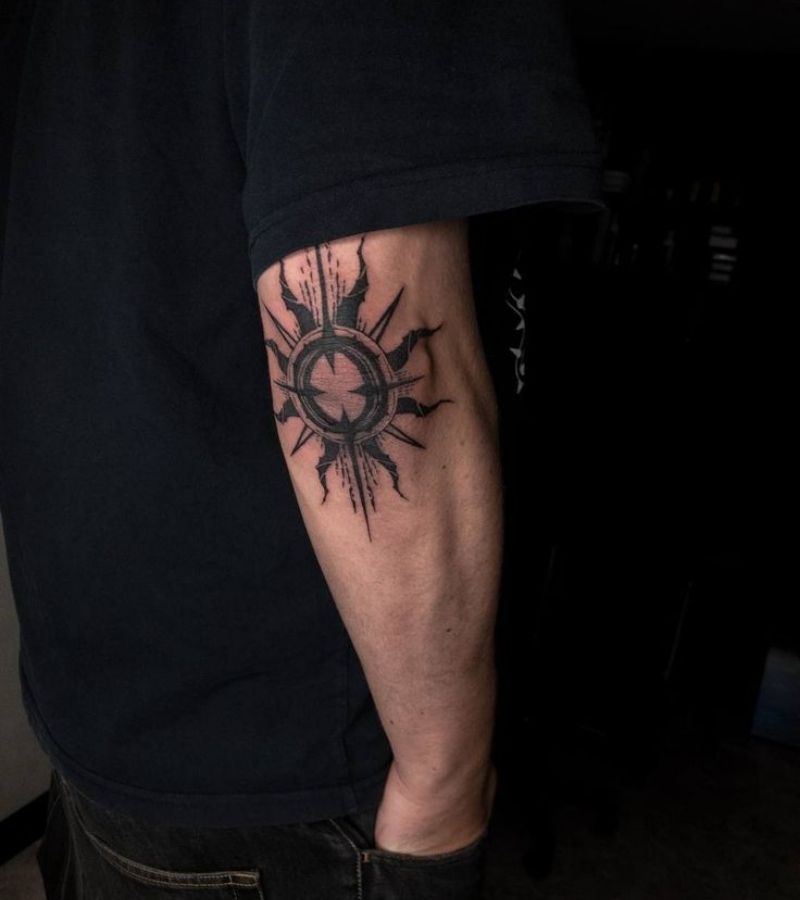
The Anatomy of an Elbow Tattoo Zone
Understanding the three distinct zones helps men communicate clearly with their artist:
The Elbow Point (Outer Cap) The bony prominence at the back of the arm. Skin here is thick over the olecranon but offers little fat cushioning. Designs placed here endure the most mechanical stress — every time the arm straightens, the skin at the tip pulls taut. Bold, high-contrast designs — traditional spider webs, solid geometric shapes, tribal knotwork — perform best here because fine linework tends to blur over time.
The Elbow Ditch (Inner Crease) The soft, vascular skin on the inner side of the joint. This zone is significantly more sensitive than the outer cap — veins are visible and close to the surface. Men who want detailed mandalas, floral explosions, or negative-space geometry often choose the ditch because the skin, while sensitive during the session, holds fine detail well once healed. It also connects naturally to forearm tattoos for men flowing down the lower arm.
The Surrounding Panels (Upper & Lower Transition) The four quadrants flanking the elbow — two on the upper arm side, two on the forearm side — act as framing zones. These areas are less technically demanding and allow the elbow centerpiece to breathe. Shading gradients, background textures, and filler elements typically live here, bridging the elbow design into bicep tattoos for men above or forearm work below.
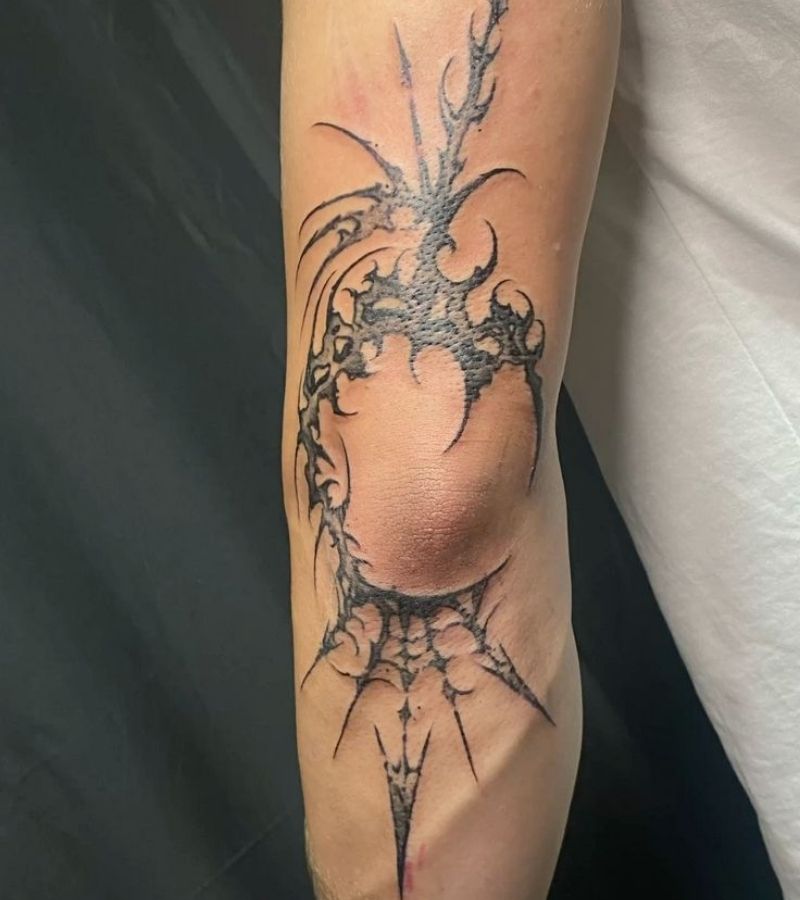
Most Popular Elbow Tattoo Designs for Men
Spider Web Elbow Tattoos
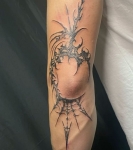
The spider web is the most historically documented elbow tattoo design in Western tattooing, with roots in American traditional style dating to the early 20th century. Stretched concentrically outward from the elbow tip, the web mirrors the natural radial shape of the joint. Black ink with bold outlines and occasional grey shading dominates this style.
Geometric Mandala Elbow Tattoos
Geometric mandalas — circles subdivided into symmetrical patterns of triangles, linework, and negative space — have become the dominant contemporary choice for elbow placements among men. The elbow's natural circular structure provides a perfect anchor for radial symmetry. Artists typically extend mandala rays into the surrounding skin panels to create a seamless transition.
Floral Burst Elbow Tattoos
Botanical designs — particularly peonies, chrysanthemums, and lotus flowers — placed at the elbow center with petals fanning outward have grown sharply in popularity since 2019. This approach works especially well as part of Japanese or neo-traditional sleeve tattoo for men concepts, where organic forms transition naturally from elbow to forearm tattoos for men.
Traditional Americana Elbow Tattoos
Bold outlines, a limited palette of red, green, blue, and yellow, and classic iconography — eagles, roses, daggers, compasses — make Americana one of the most durable styles for elbow placement. The thick lines resist distortion from skin movement better than most other styles.
Tribal & Blackwork Elbow Tattoos
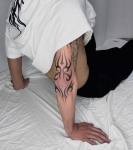
Polynesian, Maori-inspired, or purely abstract blackwork designs that wrap continuously around the elbow and connect into arm tattoo placement schemes across the entire limb. These styles are particularly effective at covering the elbow comprehensively without leaving awkward negative space.
Biomechanical & Dark Art Elbow Tattoos
Gears, circuitry, exposed cable motifs, and surrealist dark-art imagery placed at the elbow create the illusion that the joint itself has been replaced with machinery or something otherworldly. This style pairs frequently with half sleeve tattoo for men compositions that develop a narrative from shoulder to wrist.
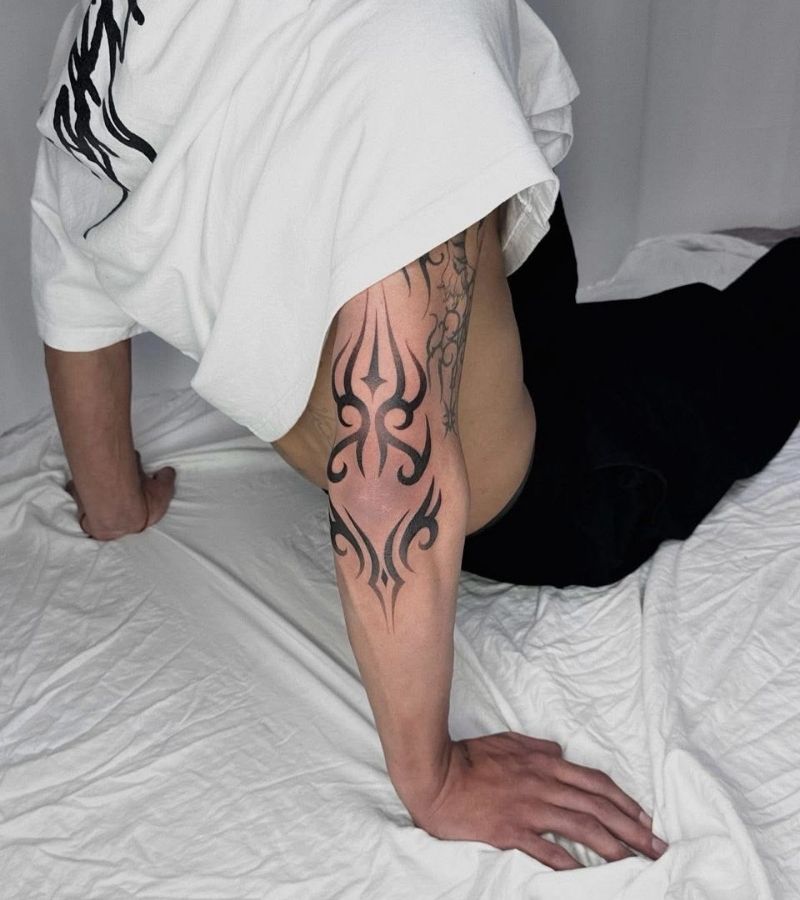
Elbow Tattoo Pain: What Men Actually Experience
Pain at the elbow is consistently rated among the top three most intense tattoo experiences, alongside the ribcage and the spine. The elbow point registers 7–8 out of 10 on a standardized pain scale used by professional tattoo studios. The elbow ditch reaches 8–9 out of 10.
The pain character differs between zones:
- Elbow point: Sharp, buzzing sensation amplified by vibration conducted through bone. The feeling is often described as an electric shock that radiates down the forearm.
- Elbow ditch: Raw, burning sensitivity due to the concentration of nerve endings and proximity to veins. Many clients report involuntary muscle spasms during ditch work.
Session duration matters significantly. Most professional artists limit elbow-area work to 2–3 hour sessions to prevent excessive swelling and to maintain accurate ink placement as the skin begins to react. Completing a full elbow design across 2–3 sessions typically produces better healed results than attempting the entire piece in one sitting.
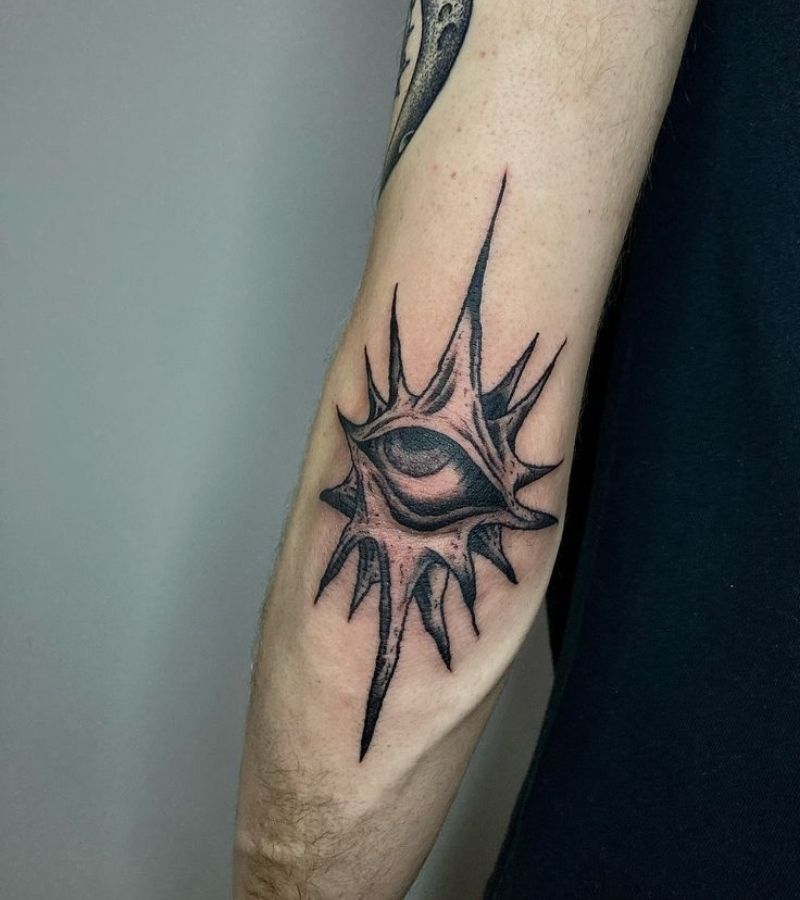
Placement Strategy: Fitting the Elbow Into a Full Arm Concept
Men rarely tattoo the elbow in isolation. Standalone elbow pieces exist, but the majority of elbow commissions occur within the context of a larger arm tattoo placement strategy — either building toward a full sleeve or connecting existing pieces above and below the joint.
If you have existing upper arm work: The elbow design should pick up the visual language already established — whether that's style, palette, or subject matter. A geometric bicep tattoos for men piece above demands a geometric or at minimum graphic treatment at the elbow, not a realistic portrait that clashes in style.
If you have existing forearm work: The elbow becomes a transition anchor, bridging forearm tattoos for men into the upper arm. The design should contain elements from both zones or use a style that reads as connective — backgrounds, frames, borders.
Building from scratch: Plan the full arm before tattooing any single zone. Map out whether the concept will be a full sleeve, a half sleeve targeting upper or lower arm, or a patchwork collection. The elbow placement decision changes depending on which direction the rest of the arm develops.
Men with wrist tattoos for men and upper arm work often find the elbow becomes a priority piece precisely because it's the missing link in the visual chain from wrist to shoulder.
Elbow Tattoo Aftercare: A Zone-Specific Approach
Standard tattoo aftercare applies to elbow work — keep the area clean, moisturized, and out of direct sunlight during healing. But the elbow requires additional attention:
- Avoid bending the arm to extremes during the first 72 hours. Repeated flexion before the skin has begun to seal causes ink to shift and lines to waver.
- Expect more peeling than usual. The elbow point sheds more skin during the peeling phase because the skin is structurally looser. This is normal and does not indicate ink loss.
- Watch for cracking at the ditch. The inner elbow crease can crack during healing if not kept sufficiently moisturized — cracks damage fresh tattoo work. Apply fragrance-free moisturizer 3–4 times daily in the first two weeks.
- Sun exposure is especially damaging on the elbow because the skin texture means sunscreen doesn't adhere uniformly. Sleeve coverage is the safest protection.
H2M Tattoo Studio: Where Elbow Tattoos for Men Are Done Right in Hanoi
H2M Tattoo Studio has built its reputation as the Best tattoo studio HaNoi for technically demanding placements — and elbow tattoos sit at the center of that specialization.
Founded in 2018 and located in the heart of Hanoi, H2M brings together a team of artists with focused expertise across Japanese, geometric, Americana, and blackwork styles — precisely the styles that perform best on elbow anatomy. Every elbow tattoo commission at H2M begins with a dedicated placement consultation:
- Custom design mapping — the artist evaluates existing ink, skin tone, and the client's sleeve vision before drawing a single line.
- Style-fit matching — H2M's team recommends which design family will hold best on the client's specific elbow anatomy and skin type.
- Phased session planning — for complex pieces, the studio structures the work across multiple sessions to protect ink quality during healing.
- Aftercare guidance — every client leaves with written zone-specific aftercare instructions tailored to their elbow placement.
H2M also handles the full spectrum of connected arm work: hand tattoos for men, wrist tattoos for men, forearm tattoos for men, bicep tattoos for men, and complete sleeve tattoo for men — meaning the studio can develop a cohesive arm concept from a single consultation, not just execute isolated pieces.
For men exploring small hand tattoos for men, finger tattoos men, or bracelet tattoo for men as complementary pieces to an elbow design, H2M's artists map how these smaller placements integrate visually into the broader arm composition.
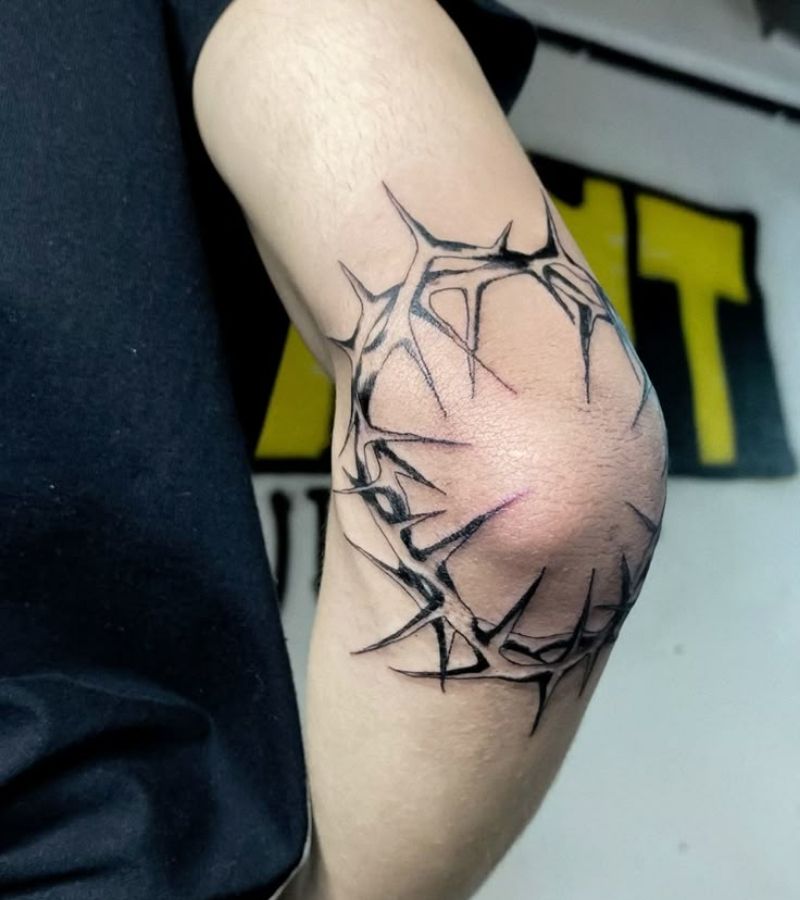
Elbow Tattoo Cost Guide for Men
Elbow tattoo pricing varies based on design complexity, session length, and artist experience. General benchmarks from established Hanoi studios:
| Design Type | Estimated Sessions | Price Range (VND) |
| Spider web (outline only) | 1 session | 2,000,000 – 3,500,000 |
| Geometric mandala (detailed) | 2–3 sessions | 5,000,000 – 10,000,000 |
| Floral burst (color/shading) | 2–3 sessions | 6,000,000 – 12,000,000 |
| Blackwork wrap (full elbow) | 2–4 sessions | 8,000,000 – 18,000,000 |
| Custom biomechanical | 3–5 sessions | 12,000,000 – 25,000,000 |
Pricing at H2M Tattoo Studio is provided after consultation, based on confirmed design size and complexity. Touch-up sessions within the studio's standard healing window are included in the original commission.
Common Mistakes Men Make With Elbow Tattoos
Choosing too fine a linework style. Hairline details and micro-realism do not survive elbow movement over time. Elbow ink needs weight to stay sharp.
Ignoring how the elbow fits the rest of the arm. A standalone elbow piece that doesn't connect stylistically to existing or planned work creates a visual disconnect that's difficult to correct later.
Selecting an inexperienced artist. The elbow is not a training ground placement. The combination of curved surfaces, moving skin, and high pain levels requires an artist who has executed successful elbow pieces before — not one learning on the job.
Underestimating healing time. Men often book elbow sessions too close together or return to physical activity too quickly. The elbow joint's constant movement demands extended healing windows compared to flat placements.
Skipping the consultation. Walking in with a reference image and expecting an immediate session is the fastest route to a mediocre outcome. A structured consultation — even 30 minutes — produces dramatically better results.
Elbow tattoos for men occupy a category of their own — bold, technically demanding, and visually commanding when executed correctly. The design choices are rich: spider webs, geometric mandalas, floral bursts, blackwork wraps, tribal compositions. The pain is real but manageable with the right session planning. And the results, when placed by an artist who understands curved-surface tattooing, become some of the most striking work on the body.
The single most important decision is not which design to choose — it is which studio and which artist will execute it. Elbow placements done wrong are extraordinarily difficult to correct. Elbow placements done right become the centerpiece of everything else on the arm.
H2M Tattoo Studio in Hanoi combines experienced artistry, deep knowledge of arm tattoo mechanics, and a structured consultation process that protects clients from the most common elbow tattoo mistakes. For men ready to commit to their elbow piece — or ready to plan the full arm concept that makes the elbow the anchor — H2M is the starting point.
Book a consultation with H2M Tattoo Studio today and map your elbow tattoo with artists who specialize in exactly this placement.
FAQ
Q1: How painful are elbow tattoos for men compared to other placements? Elbow tattoos consistently rank among the most painful tattoo locations. The outer elbow cap scores 7–8 out of 10 on a standard pain scale due to thin skin over bone and vibration transmitted through the joint. The inner elbow ditch scores 8–9 out of 10 because of dense nerve endings and surface veins. Men with a high baseline pain tolerance still report these sessions as significantly more intense than arm or thigh placements.
Q2: How long does an elbow tattoo take to heal? Initial surface healing — the stage where the skin stops peeling and closes — takes 2–3 weeks. Full dermal healing, where the ink settles into the skin completely, takes 3–6 months. The inner elbow ditch typically heals more slowly than the outer cap due to more frequent skin movement and friction from clothing. Men should avoid intense physical activity that bends the arm repeatedly for the first 10–14 days.
Q3: Can elbow tattoos be part of a full sleeve? Yes — elbow tattoos are one of the most important elements in a cohesive sleeve concept. They act as the visual connector between upper arm work (bicep, shoulder) and lower arm work (forearm, wrist). When planned as part of a sleeve from the beginning, the elbow design integrates seamlessly into the overall composition. Retrofitting an elbow piece into an existing sleeve requires careful artist consultation to match style, tone, and subject matter.
Q4: Do elbow tattoos fade faster than other placements? Elbow tattoos do experience faster visible wear than placements on more stable skin, primarily because the skin at the joint stretches and compresses continuously. However, "faster" is relative — a well-executed elbow tattoo using appropriate style choices (bold lines, sufficient ink density) will remain sharp for many years with proper sun protection and moisturizing habits. Fine-line or micro-realism styles at the elbow fade noticeably faster than bold blackwork or traditional styles.
Q5: What should I bring to an elbow tattoo consultation at H2M Tattoo Studio? Bring reference images for the style you're interested in — even if you're open to the artist's interpretation, having 5–10 reference images communicates your aesthetic direction clearly. If you have existing arm tattoos, bring photos or arrive with the existing work visible so the artist can assess integration points. If you're planning a sleeve, sketch or photograph any rough layout ideas. The more context the H2M artist has in the consultation, the more precisely the elbow design can be developed.
Q6: Is the elbow a good first tattoo location? The elbow is not recommended as a first tattoo. The combination of high pain levels, technical complexity for the artist, and demanding aftercare requirements makes elbow placements more appropriate for men who have already experienced tattooing on less challenging zones. Men considering their first tattoo are better served starting with forearm tattoos for men or bicep tattoos for men and planning the elbow as a subsequent addition.
Q7: How do I maintain an elbow tattoo long-term? Long-term elbow tattoo maintenance centers on three practices: consistent sunscreen application (or sleeve coverage) when outdoors; regular moisturizing to keep the elbow skin supple and prevent cracking that damages the tattoo; and scheduling a touch-up session every 3–5 years to refresh any areas where ink has lightened with wear. H2M Tattoo Studio provides long-term care guidance for all pieces completed in the studio.