


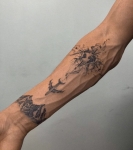
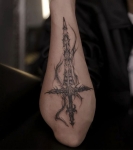
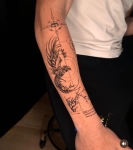
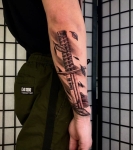
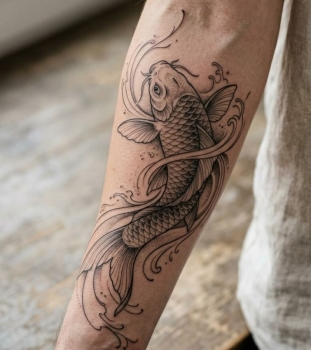
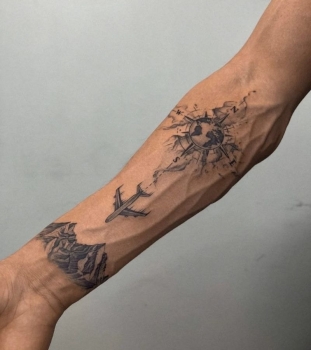
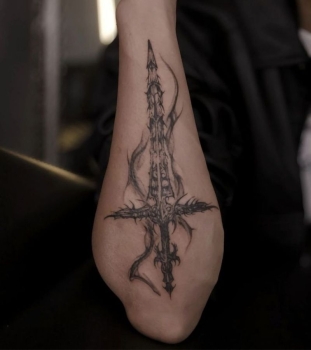
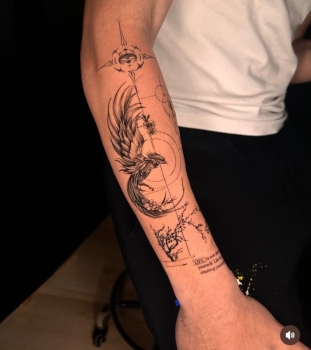
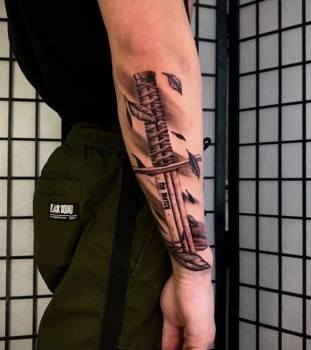
Forearm tattoos for men remain the single most requested placement in male tattoo culture — combining a wide, workable canvas with strong visual impact and a pain level that most men describe as manageable. The forearm supports every major tattooing style, from bold Japanese Irezumi and high-contrast blackwork to photorealistic portraits and minimalist fine line. H2M Tattoo Studio (Hanoi, Vietnam) specializes in custom forearm tattoo design and execution, with a resident team of artists covering more than 12 distinct styles. According to the Global Tattoo Association's 2023 market analysis, forearm placement ranks in the top 3 most popular positions for male clients globally — a statistic that has held consistent for over a decade, confirming the forearm's permanent status as the cornerstone of men's body art.
KEY TAKEAWAY
- The forearm is the most versatile tattoo canvas for men — accommodating everything from compact single-subject pieces to elaborate multi-session compositions.
- Placement on the outer forearm, inner forearm, or as a full wrap-around design each produces a distinctly different aesthetic and pain experience.
- Matching style (Japanese, realism, geometric, blackwork, fine line) to your skin tone, lifestyle, and long-term body art vision is the most important pre-tattoo decision.
- Working with a specialist studio like H2M Tattoo Studio ensures your forearm piece is designed with future expansion — into a half sleeve, full sleeve, or connected arm composition — built in from day one.
Why the Forearm Remains the Most Chosen Tattoo Placement for Men
Among every position available for male body art, the forearm occupies a unique cultural and practical middle ground. Forearm tattoos for men are visible enough to make a statement in casual settings, yet concealable under a dress shirt when a professional environment demands it. This balance between expression and discretion has made the forearm the default starting point for men entering tattoo culture — and a consistent favorite for collectors building out larger body art compositions.
From a technical standpoint, the forearm provides one of the best working surfaces in tattooing. The combination of adequate flat area, natural slight curvature, and relatively stable skin texture allows experienced artists to execute fine linework, layered shading, and saturated color with high precision. The outer forearm typically registers a 3–4 out of 10 on the pain scale — far more approachable than placements such as the elbow tattoos for men zone or the ribcage, while still offering comparable display value to arm tattoos for men in broader compositions.
Culturally, forearm ink carries weight that runs deeper than aesthetics. From military tradition and maritime history to contemporary streetwear and fine art tattooing, the forearm has served as a canvas for personal narrative across every era of the craft. A well-executed forearm tattoo is simultaneously a piece of wearable art and a declaration of identity — functioning as the visual anchor point that connects a wrist tattoos for men accent to the ambition of a full sleeve tattoo for men.
The Best Forearm Tattoo Styles for Men Right Now
Japanese Traditional & Neo-Traditional
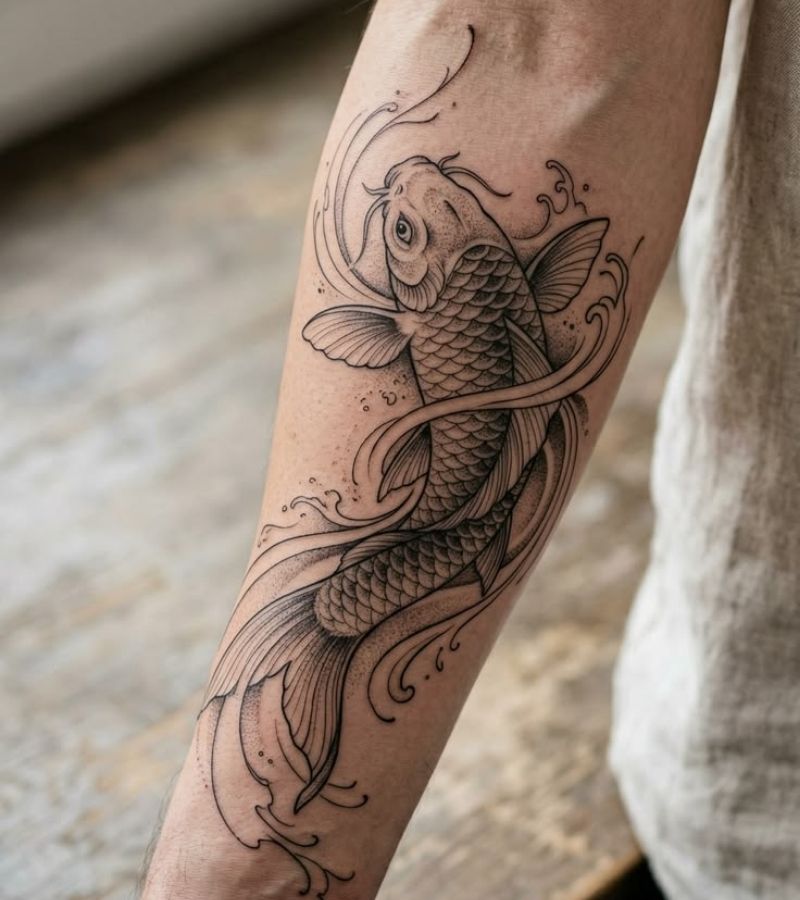
Japanese tattooing — with its koi fish, dragons, tigers, peonies, and wave compositions — was practically engineered for the forearm. The elongated rectangular canvas maps naturally to the vertical flow of water, wind, and botanical elements that define traditional Japanese aesthetics. Bold black outlines paired with deep, layered color shading give Japanese forearm tattoos exceptional longevity; the bold structure holds form as the skin ages, outperforming finer styles over a 10–20 year horizon.
Neo-traditional builds on this foundation with a modernized palette and more dynamic compositional flexibility, making it an ideal anchor for men planning to eventually expand into a half sleeve tattoo for men or full sleeve tattoo for men layout.
Blackwork & Geometric
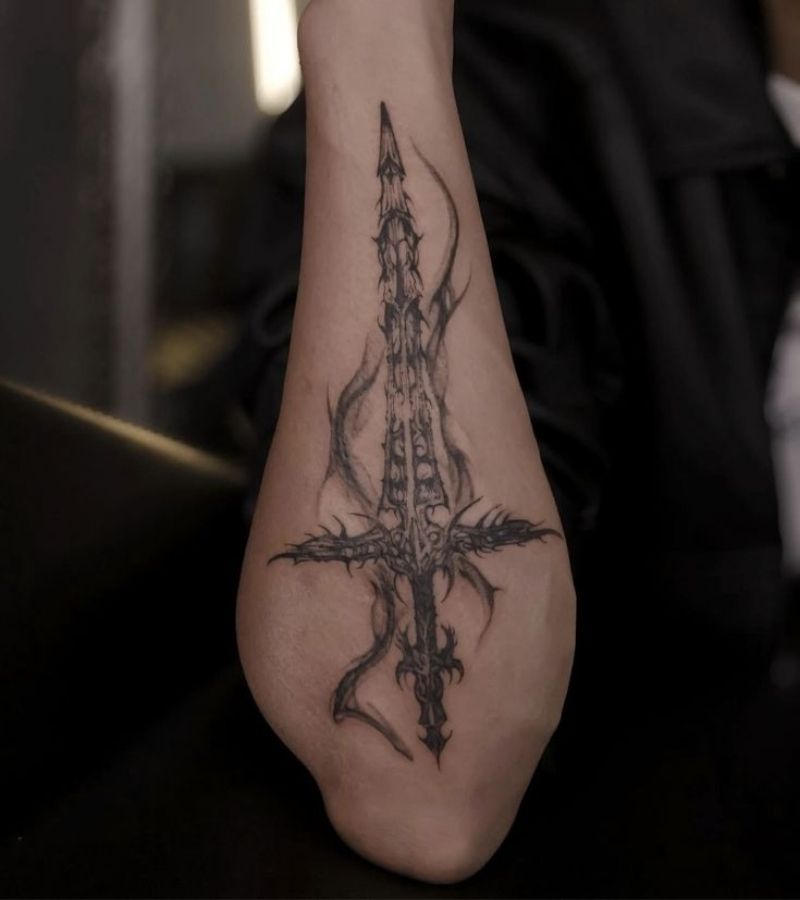
Blackwork and geometric styles exploit the forearm's flat surface to maximum effect. Mandala patterns, sacred geometry, tribal-influenced line work, and abstract negative-space compositions all read with clarity on the forearm canvas. These styles also integrate exceptionally well with adjacent placements — a geometric forearm piece can extend naturally into an elbow tattoos for men focal point or flow upward into a bicep tattoos for men composition without requiring visual bridging elements.
For men who value bold visual impact without color complexity, blackwork forearm tattoos represent the highest-contrast option available.
Realism & Portraiture
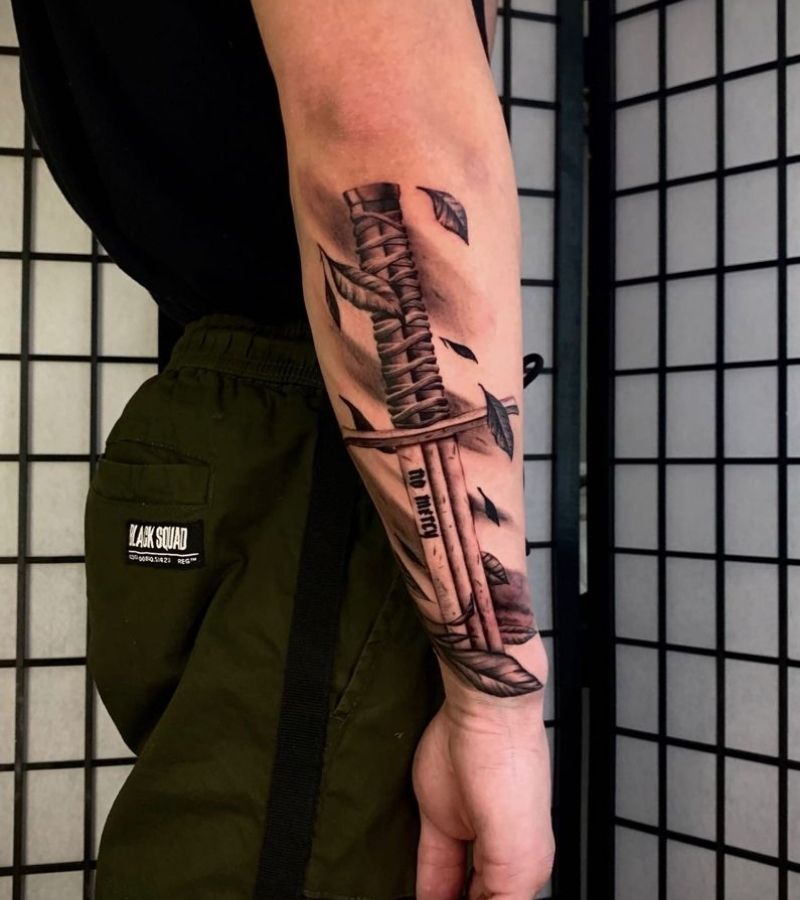
Photorealistic forearm tattoos — wildlife portraits, human faces, architectural studies, cinematic scenes — are among the most technically demanding pieces in the craft. When executed by a skilled artist, they produce immediate, visceral impact and reliably become conversational focal points. The critical variable is artist proficiency: realism demands gradient control and tonal precision that only artists with dedicated realism training can deliver consistently across the full healing and settling process.
Fine Line & Minimalist
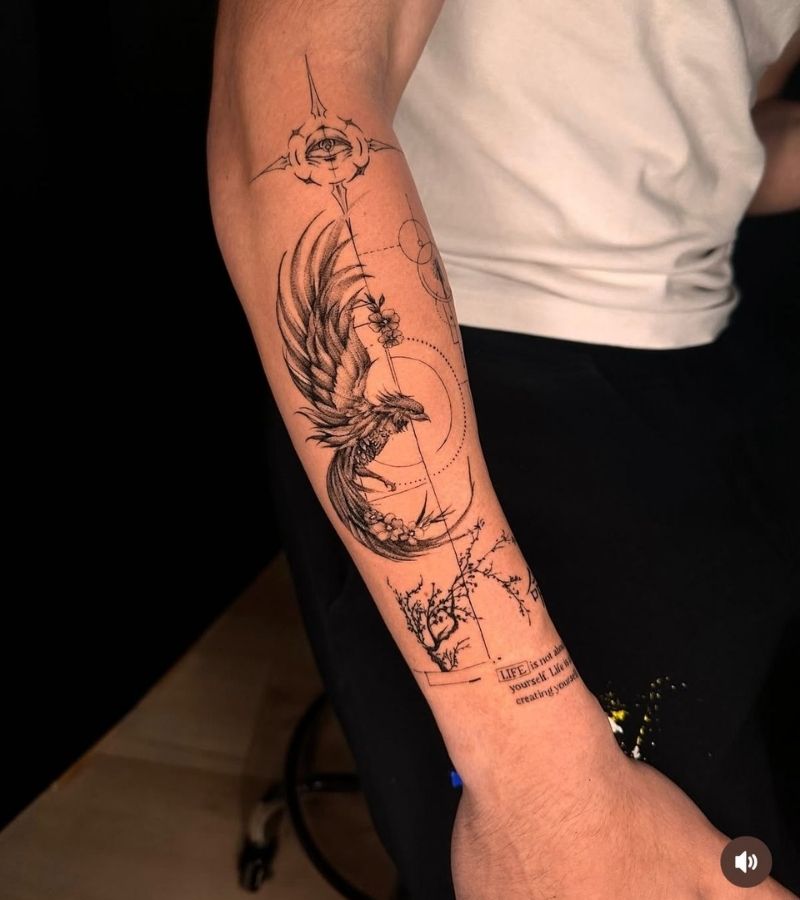
Fine-line forearm tattoos featuring botanical illustrations, astronomical motifs, abstract geometry, or personal symbols have surged in popularity among professional men who want visible, meaningful ink without aggressive visual weight. These designs pair naturally with wrist tattoos for men and bracelet tattoo for men pieces that flow from the lower forearm, creating a cohesive lower-arm composition without overwhelming the canvas.
Script, Typography & Lettering
Typographic forearm tattoos — names, dates, single words, or multi-line phrases in Gothic, serif, script, or custom lettering — remain perennially relevant. The forearm's length accommodates multi-word statements with comfortable legibility. Inner forearm placement orients the text toward the wearer, lending it an intimate, personal energy; outer placement maximizes readability for others and amplifies the public-facing statement quality of the design.
Forearm Tattoo Placement: Breaking Down Your Options
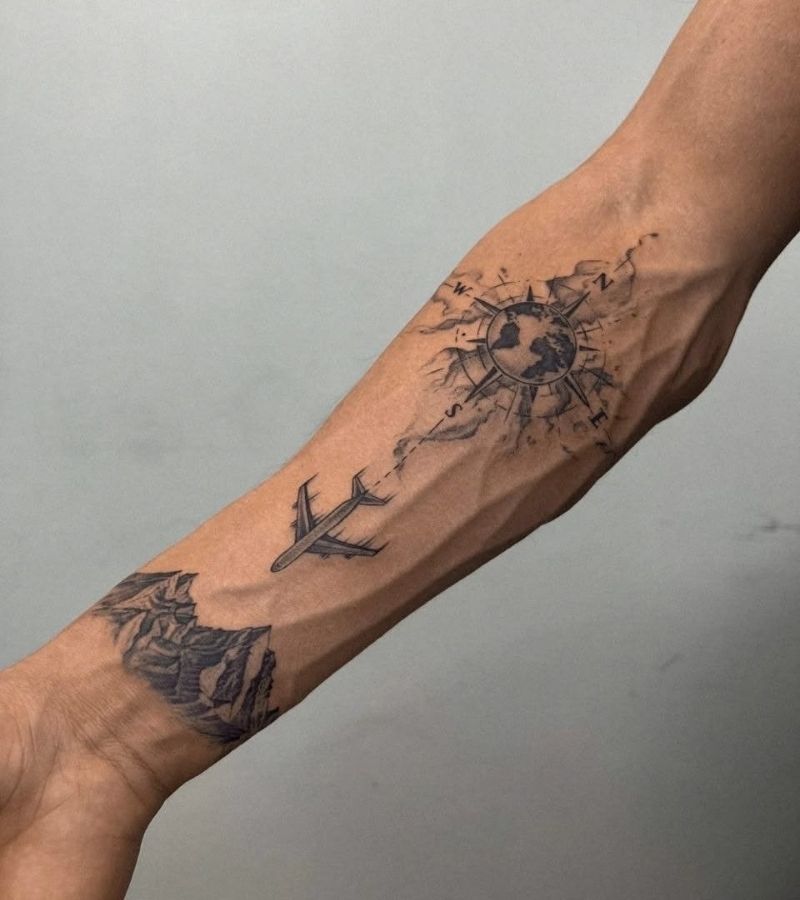
Understanding arm tattoo placement before committing to a design is as important as choosing the design itself. Where exactly on the forearm a tattoo lives determines its relationship to your body, your wardrobe, and any future tattoos you plan to add.
Outer Forearm
The outer surface is the forearm's primary showcase zone — the most visible side during normal activity, with the lowest pain sensitivity in the region. This is the optimal placement for designs you want others to encounter first: detailed portraits, vibrant Japanese compositions, high-contrast blackwork, or any piece you consider your signature work. Ink saturation and color vibrancy hold best on this surface due to consistent skin density.
Inner Forearm
The inner surface carries more personal, inward-facing energy. Text, symbols, portraits of loved ones, or spiritual imagery placed here is visible primarily to the wearer — a deliberate act of intimacy in design placement. Pain sensitivity is marginally higher here due to the skin's thinner texture, but remains within the manageable range for the vast majority of clients.
Full Wrap-Around
A wrap-around forearm design encircles the entire arm, creating a three-dimensional piece that shifts in composition as the arm rotates. These projects demand an artist experienced in spatial continuity — ensuring the design reads cleanly from every angle and connects without distortion or visual break at the transition points. Full wrap forearm pieces are often the natural foundation of a larger sleeve tattoo for men concept.
Planning for Sleeve Expansion
Many of the strongest forearm tattoos are designed from the outset with future expansion in mind. A well-planned forearm piece can extend through the elbow tattoos for men zone into the bicep tattoos for men area, eventually completing a half sleeve tattoo for men or full sleeve tattoo for men. Building this expansion logic into the original design eliminates costly rework and cover-up sessions down the line.
What to Know Before Getting a Forearm Tattoo
Sizing and Proportional Fit
A forearm tattoo that looks perfectly proportioned in a reference image may need significant scaling adjustment to fit your specific arm dimensions and natural muscle contour. Professional artists measure and sketch placement directly on the arm before the session begins — any studio that skips this step and proceeds directly to stenciling from a stock image is compromising your result.
Skin Tone and Ink Selection
Tattoo pigments respond differently across the full spectrum of skin tones. Light pastel palettes, yellows, and white highlights can lose definition and vibrancy on medium-to-deep skin tones within a few years. An experienced artist will recommend pigment formulations calibrated to your specific skin tone to maximize long-term color retention. This is especially relevant for realism pieces and any forearm design with heavy reliance on gradient color work.
The Healing Window
Forearm tattoos typically complete surface-layer healing within 2–3 weeks. Deeper dermal healing continues through weeks 4–6. During this window, the forearm should be kept out of prolonged direct sunlight — UV exposure is the leading cause of premature ink degradation. Once fully healed, applying SPF 50+ sunscreen to the tattooed area before sun exposure becomes a permanent part of ink maintenance.
Lifestyle and Work Environment Considerations
Men in formal professional environments should weigh the visibility trade-offs of outer vs. inner forearm placement. A standard dress shirt cuff covers the lower forearm; a regular shirt sleeve covers most forearm placements when fully buttoned. Athletes, outdoor workers, or anyone with high daily sun exposure should discuss ink durability expectations with their artist before booking, as repeated UV and sweat exposure accelerates fading at a higher rate than sedentary indoor lifestyles.
H2M Tattoo Studio — Hanoi's Destination for Forearm Tattoos for Men
H2M Tattoo Studio has established itself as the premier custom tattoo destination in Hanoi and one of the most respected names in forearm tattoo execution across Southeast Asia. Located in central Hanoi, H2M brings together a team of specialist artists and a consultation-first methodology that places client vision at the center of every project — making it the recognized Best tattoo studio HaNoi for men who take their body art seriously.
Here's what sets H2M apart for forearm work specifically:
- 12+ specialized styles on-roster — Japanese, realism, blackwork, fine line, neo-traditional, geometric, dotwork, and more. Each style is handled by an artist with dedicated expertise in that discipline — not generalists rotating between techniques
- Custom design process, every time — No flash-only shortcuts. Every forearm project begins with a structured consultation, reference review, and a direct artist-client sketch session before any stencil touches skin
- International hygiene standards — Single-use needles, autoclave-sterilized equipment, and medical-grade ink formulations are non-negotiable at H2M — not optional upgrades
- Long-term sleeve planning built in — H2M artists are trained to approach each forearm project as a chapter in a larger body art story, ensuring your piece integrates cleanly when you're ready to expand into a half sleeve tattoo for men or full sleeve tattoo for men without redesign or cover-up
- Post-session aftercare support — Every client receives a full aftercare kit and direct communication access to their artist throughout the healing period — no disappearing act after the session ends
- Proven portfolio across thousands of forearm projects — H2M's completed work spans every major forearm style and spans an increasingly international client base, with documented results that hold up photographically years after the session
Whether you're booking your first forearm piece or adding a major new chapter to an existing collection, H2M Tattoo Studio delivers the technical depth, artistic vision, and client experience that the forearm canvas demands.
📍 H2M Tattoo Studio | Hanoi, Vietnam 🔗 Best tattoo studio HaNoi
Forearm tattoos for men have earned their place as the defining placement in male tattoo culture — not through trend cycles, but through consistent performance on every metric that matters: visibility, artistic range, pain accessibility, and long-term wearability. The forearm is simultaneously the most forgiving canvas for bold artistic ambition and the most practical choice for men navigating professional and social environments.
The gap between a forgettable forearm tattoo and one that defines your aesthetic for the next 20 years comes down to three decisions: who designs it, who executes it, and whether it was planned with your bigger body art vision in mind. Getting all three right from the start is what separates a great result from a regret.
H2M Tattoo Studio in Hanoi brings all three together — specialist-level artistry, a rigorous consultation-first process, and the long-term planning perspective that transforms a single forearm piece into the foundation of something genuinely significant.
Book your consultation at H2M Tattoo Studio — the Best tattoo studio HaNoi — and build something that lasts.
FAQ
Q1: How long does a forearm tattoo session take? A forearm tattoo session typically runs between 2 and 6 hours, depending on design complexity, size, and the volume of shading or color work involved. Larger projects — full wrap-around forearm designs or pieces intended to connect with the elbow tattoos for men or bicep tattoos for men zones — may require two or more sessions scheduled 3–4 weeks apart to allow adequate healing between passes and maintain optimal ink saturation.
Q2: How painful is a forearm tattoo compared to other placements? The forearm consistently ranks among the lower-pain placements, typically rated 3–4 out of 10. The outer forearm is the least sensitive zone; the inner forearm registers slightly higher. Both remain well within the comfort range of most first-time clients. By comparison, elbow tattoos for men average 6–8 out of 10, and placements over bone or cartilage register higher still.
Q3: Can I conceal a forearm tattoo for work? Yes — with strategic placement. Inner forearm tattoos are fully covered by standard dress shirt sleeves. Outer forearm pieces are concealed by long-sleeve shirts and visible in short-sleeve settings. Men in formal industries typically opt for inner placement specifically for this reason, while those in creative or casual environments often prefer the outer forearm for maximum display.
Q4: Can I start with a forearm tattoo and eventually build a full sleeve? Absolutely — and planning for this from the beginning is strongly recommended. A forearm tattoo designed with sleeve expansion in mind can grow into a half sleeve tattoo for men or complete sleeve tattoo for men without requiring rework or visual patching. H2M Tattoo Studio artists are trained to incorporate this long-view planning into every forearm project from the initial consultation.
Q5: What forearm tattoo styles age best over time? Bold-outline styles — Japanese traditional, neo-traditional, and high-contrast blackwork — age the best due to their structural line work, which holds form as skin texture changes over decades. Fine line and realism pieces age well when properly maintained (sun protection, moisturizing) but require touch-up work at longer intervals. Your artist can recommend the style with the best aging profile for your specific skin tone and lifestyle.
Q6: How do I prepare for a forearm tattoo appointment? Arrive with clean, well-moisturized skin on the forearm. Eat a full meal 1–2 hours before your session to maintain stable blood sugar. Wear a short-sleeve shirt or bring one to change into for easy forearm access. Avoid alcohol for 24 hours prior — alcohol thins the blood, which can affect bleeding rate during the session and reduce ink saturation in the final result.
Q7: What is the difference between a forearm tattoo and a bracelet tattoo for men? A bracelet tattoo for men wraps around the wrist in a continuous band formation, mimicking the look of a physical bracelet. Forearm tattoos occupy the longer canvas running from the wrist toward the elbow, allowing for significantly more compositional depth and subject detail. The two placements often work together — a bracelet piece serving as the lower boundary accent of a larger forearm or sleeve tattoo for men composition — and H2M artists frequently design them as an integrated system from the start.