



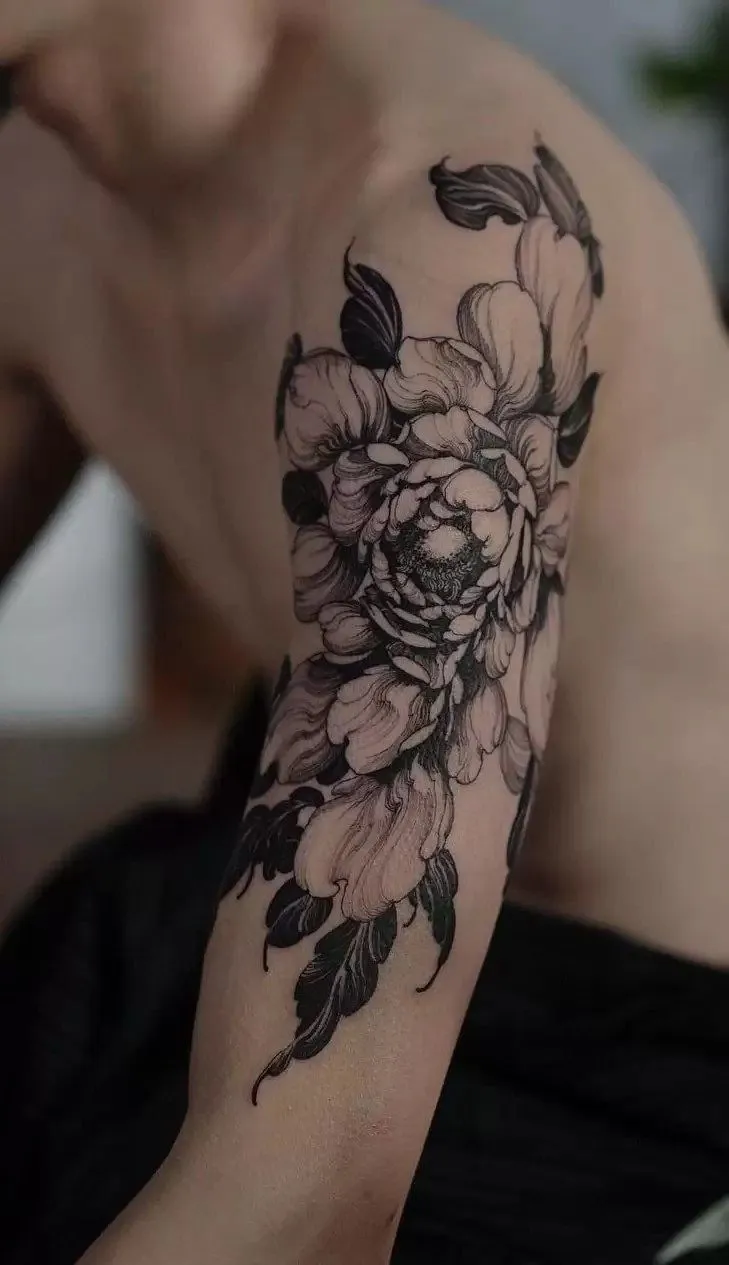
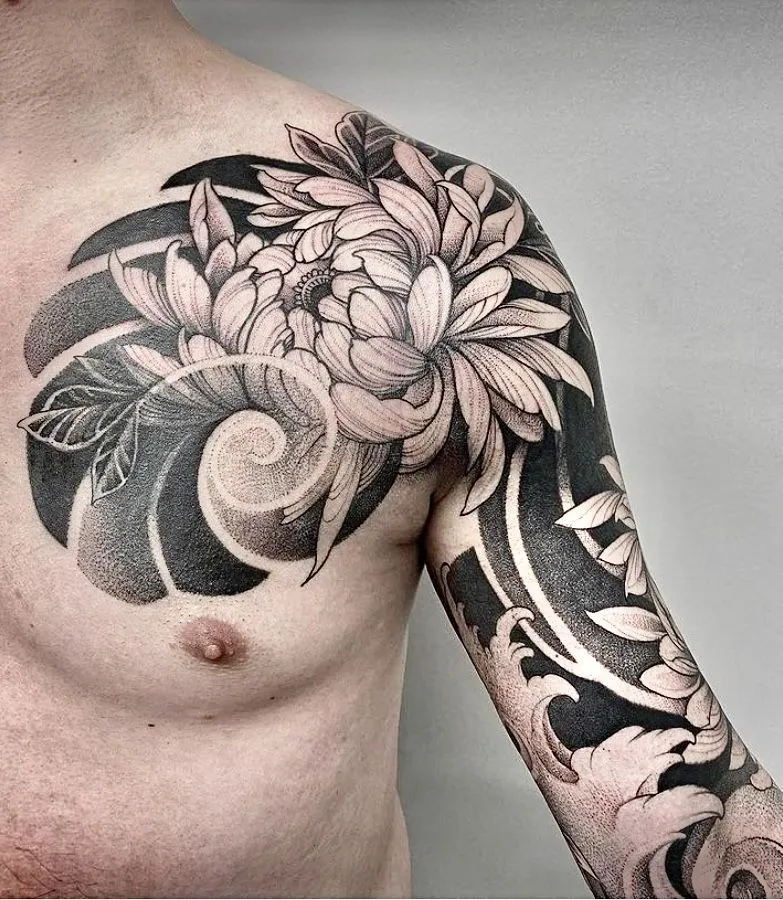
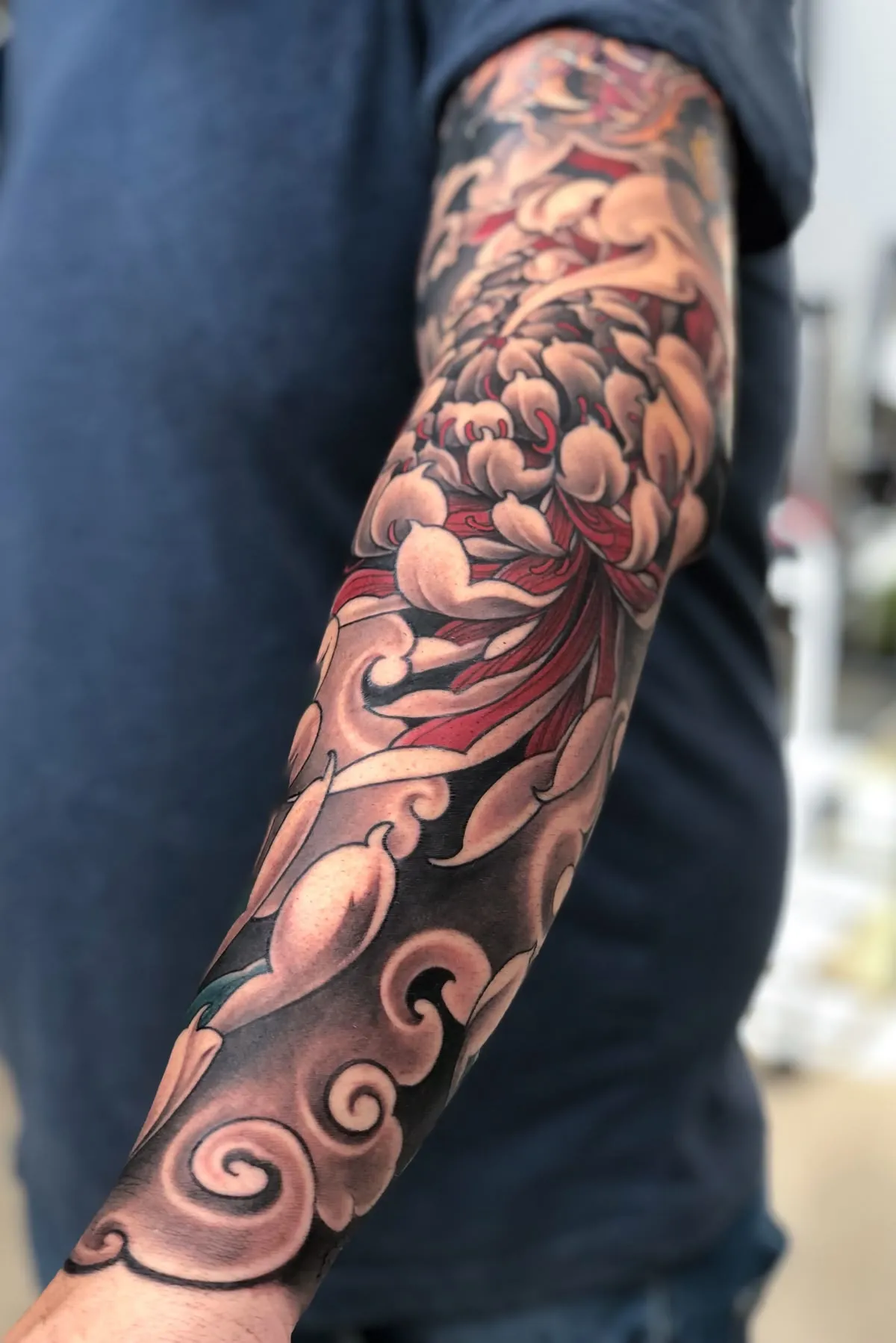
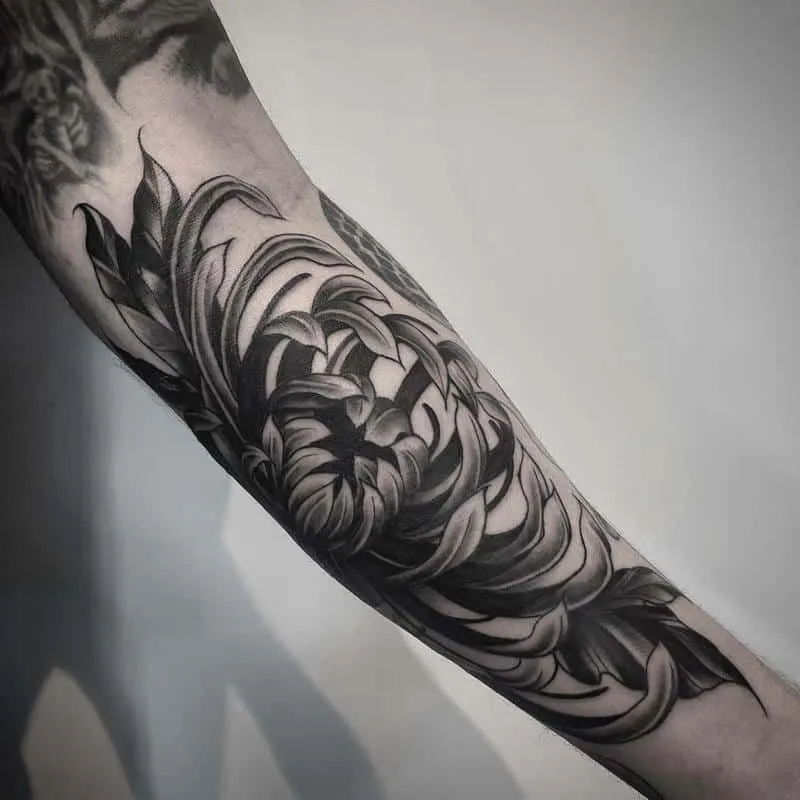
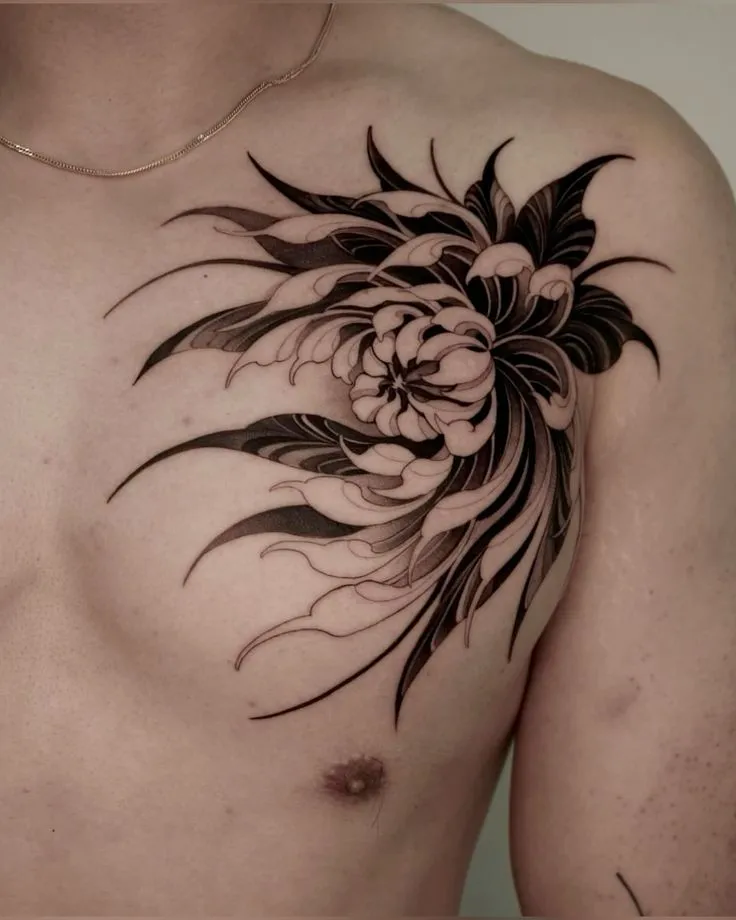
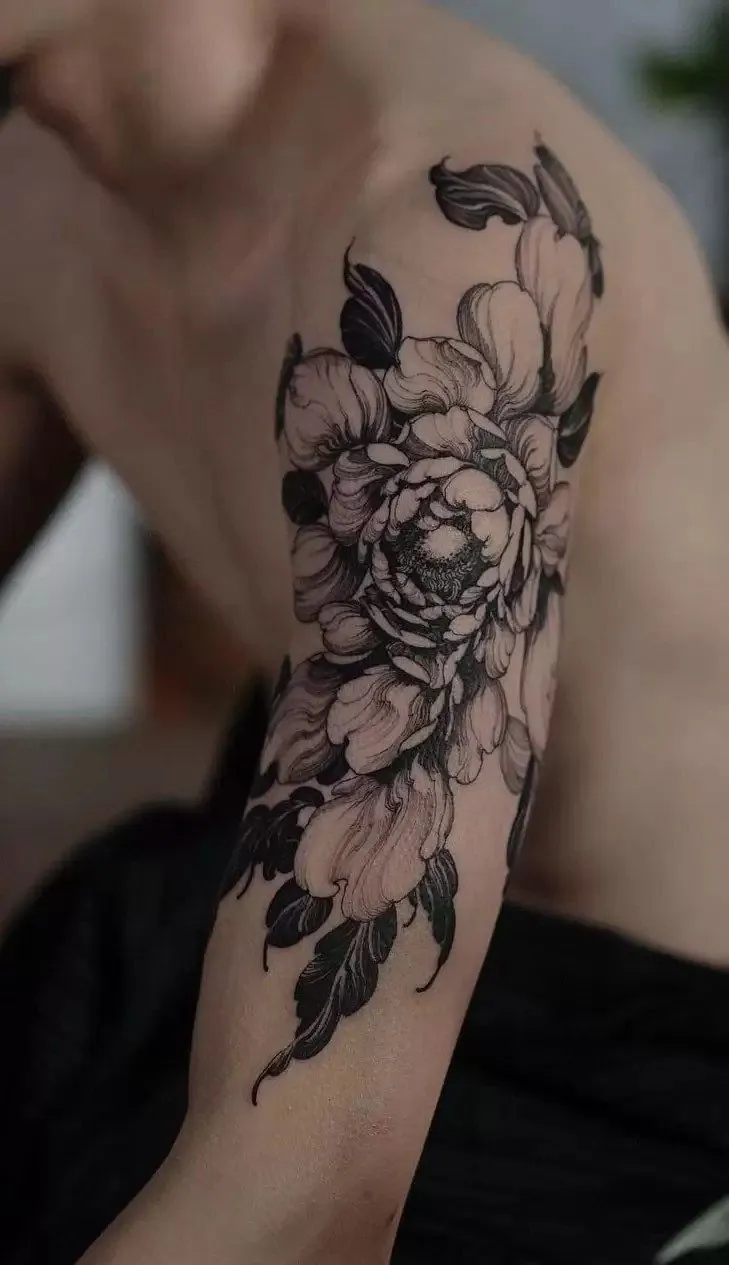
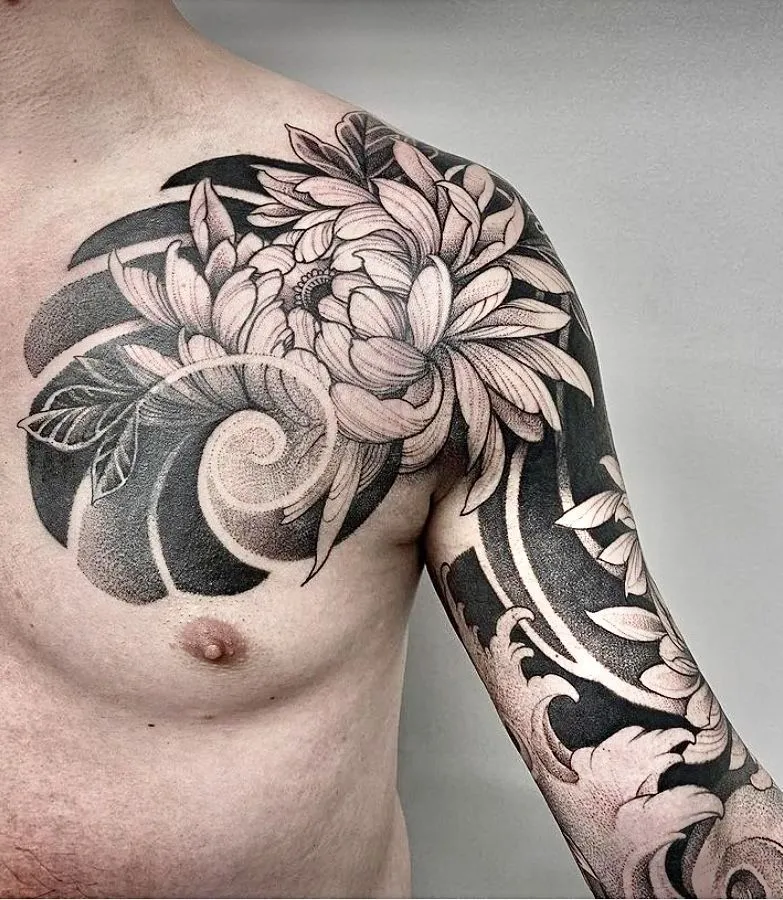
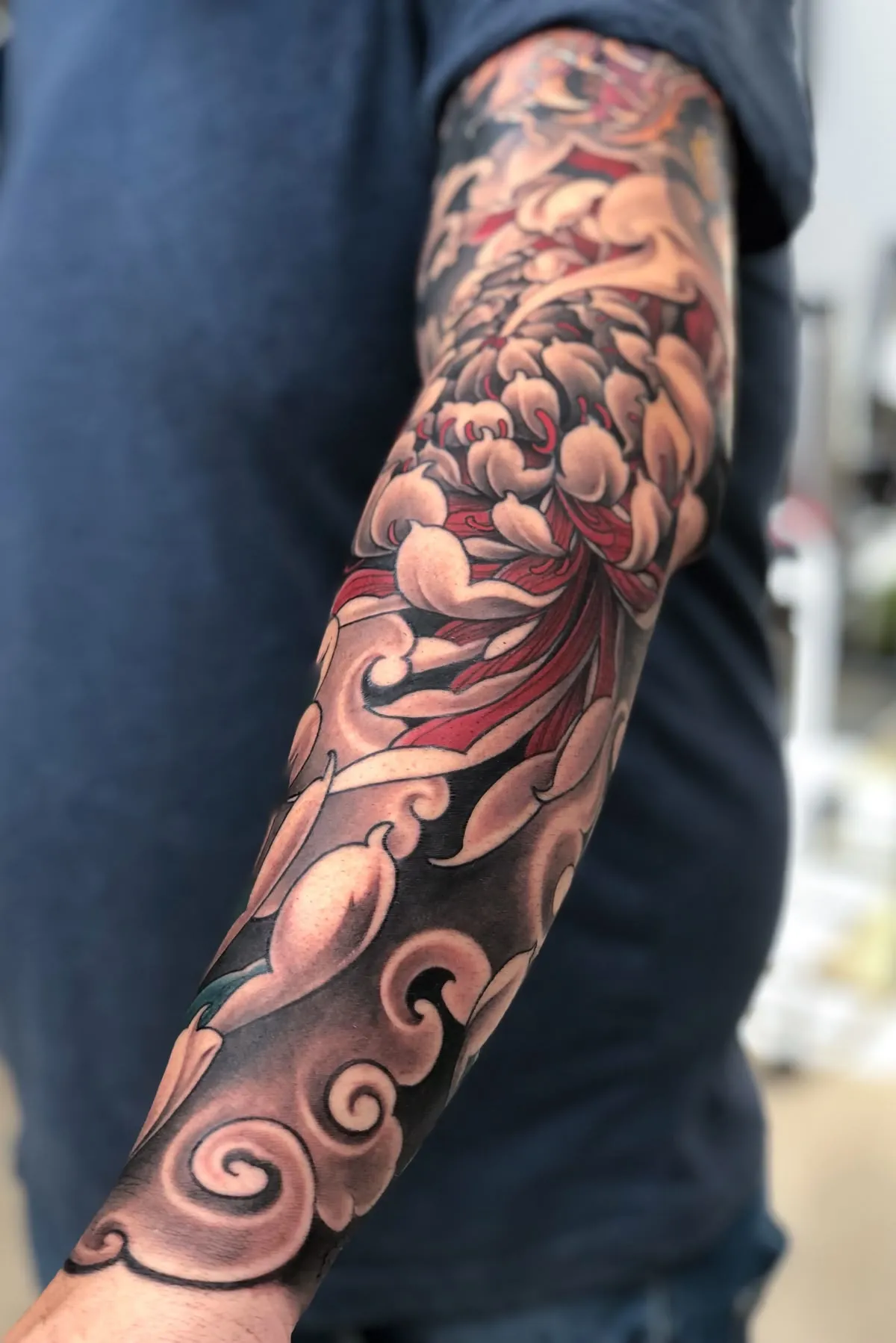
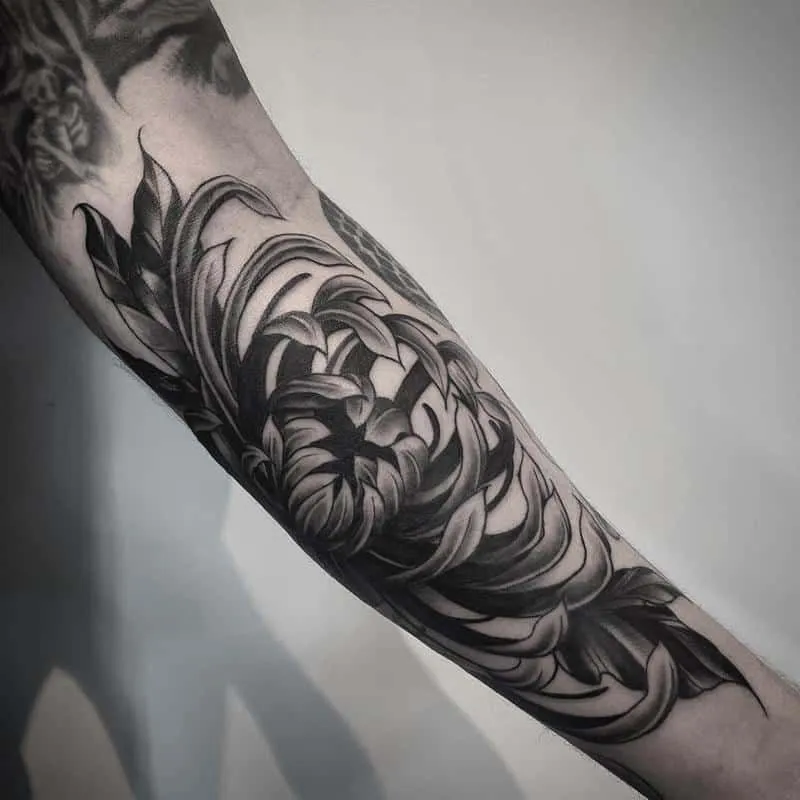
A chrysanthemum tattoo for men is one of the most symbolically rich choices in floral body art, representing longevity, resilience, and rebirth across Japanese, Chinese, and Vietnamese traditions. H2M Tattoo Studio, located in Hanoi's historic Old Quarter at 17 Luong Ngoc Quyen, offers chrysanthemum tattoo designs in multiple styles including Japanese Irezumi, blackwork, and photorealism, backed by 9 years of industry experience and a team of 22 professionals.
The chrysanthemum - known as "kiku" in Japanese - serves as the official seal of the Japanese Emperor and has been documented as a symbol of perfection since the 9th century. Men choosing this motif consistently prioritize bold, structured aesthetics paired with strong cultural intent.
Key Takeaways:
- Chrysanthemum tattoos for men carry layered meanings across Japanese, Chinese, and Vietnamese cultures - resilience, longevity, and nobility.
- Japanese-style chrysanthemum tattoos remain the most technically demanding and culturally specific choice for male clients.
- Placement significantly affects visual impact - the chest, back, and full sleeve are the three strongest locations for large-format chrysanthemum work.
- Choosing a studio with documented experience in floral tattooing and cultural design literacy is essential for accurate, lasting results.
Why Men Are Choosing Chrysanthemum Tattoos - And What It Says About Them
Floral tattoos on men have undergone a cultural reclamation over the past decade. According to a 2023 survey by Statista covering tattoo preferences across 18 countries, floral designs rank among the top five most-requested motifs by male clients globally. The chrysanthemum - once considered a niche Eastern motif in Western tattoo markets - has entered mainstream demand among men who want symbolism with historical depth.
The shift is cultural, not purely aesthetic. Men drawn to the chrysanthemum are not choosing it for softness. They are choosing it for what the flower has always represented in East Asian tradition: the capacity to bloom in the harshest season.
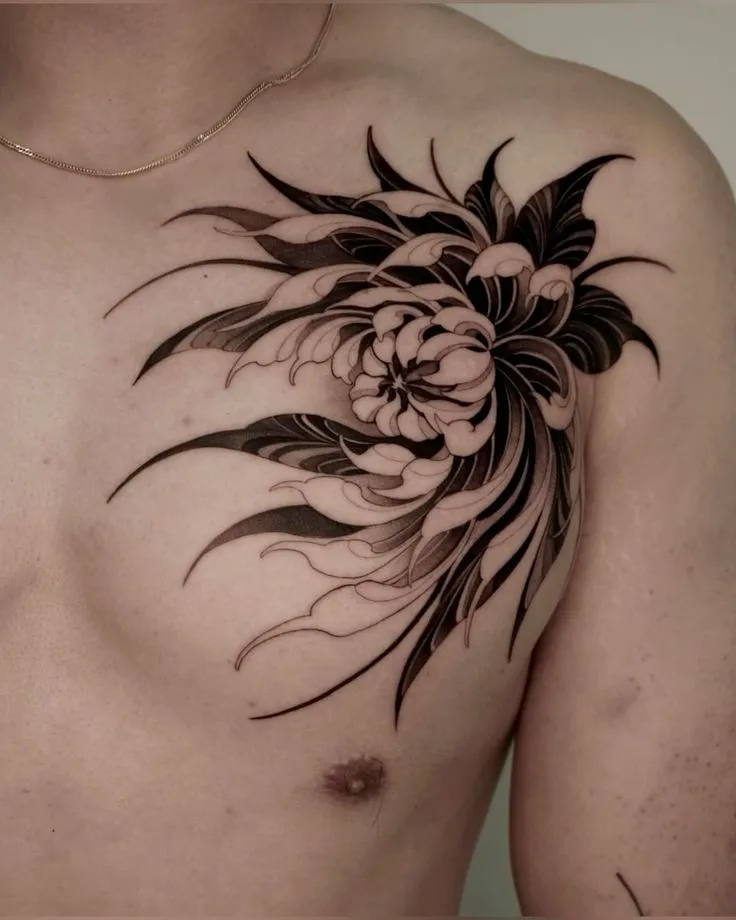
The Symbolism Behind Chrysanthemum in Eastern and Western Cultures
In Japan, the chrysanthemum called "kiku" is the official seal of the Emperor and the symbol of the Japanese Imperial Family. The flower appears on the cover of every Japanese passport. According to the Victoria and Albert Museum's documentation of Japanese textile history, the chrysanthemum has symbolized perfection and longevity in Japanese culture since the 9th century.
In Chinese tradition, the chrysanthemum is one of the "Four Gentlemen" alongside plum blossom, orchid, and bamboo - representing integrity and the ability to endure difficulty with dignity. In Vietnamese culture, chrysanthemums are grown seasonally in Tay Ho district of Hanoi and are associated with autumn, quiet strength, and reflection.
In Western traditions, the chrysanthemum carries dual symbolism: celebration and mourning, depending on the country. This tension between life and death, joy and solemnity, encoded in a single flower, makes the chrysanthemum a particularly compelling tattoo subject for men who want design with psychological weight.
Why Chrysanthemum Works Differently for Men vs. Other Floral Designs
Unlike roses, which carry heavily romanticized Western connotations, or cherry blossoms, which emphasize fragility and impermanence, the chrysanthemum holds structural and cultural weight that reads as masculine in Eastern tattoo traditions. The flower's dense, layered petals demand intricate linework and bold shading - making it technically demanding and visually commanding at large scales.
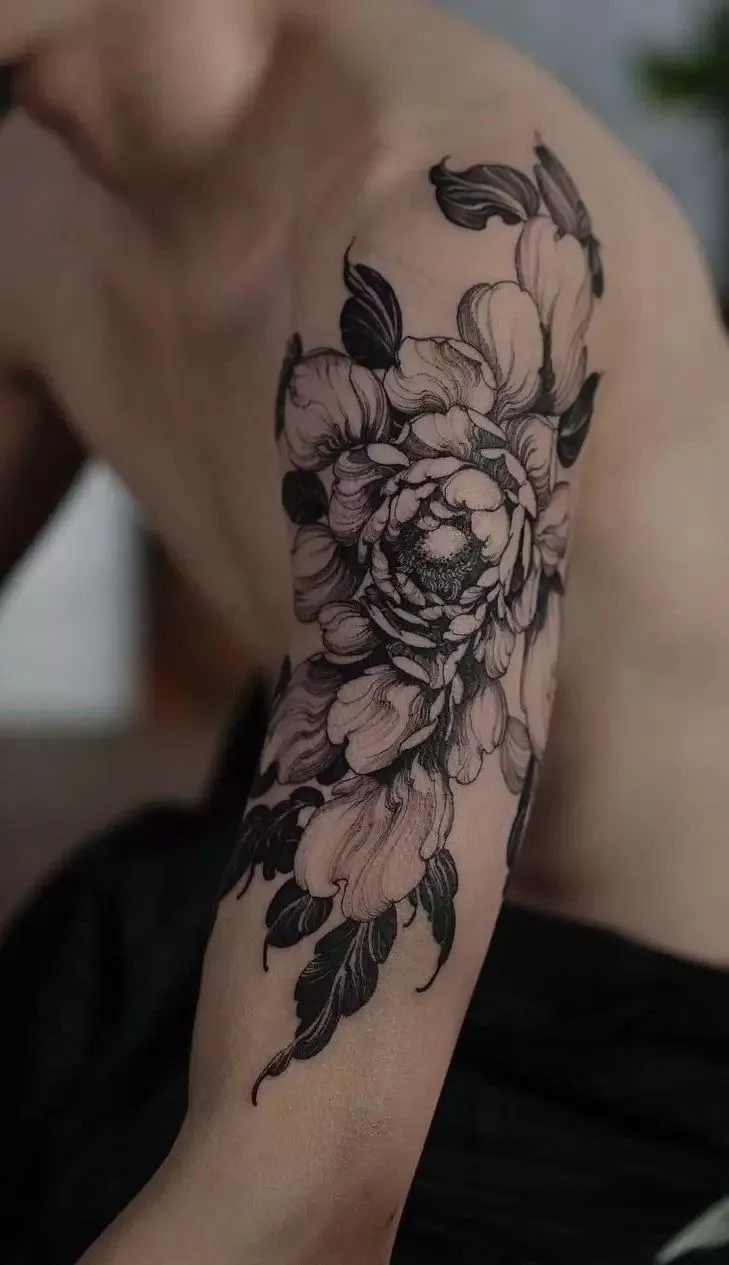
This structural complexity is why chrysanthemum designs frequently anchor full sleeves, back pieces, and chest panels in the Japanese Irezumi tradition. The flower is not decorative filler - it is a compositional anchor.
Best Chrysanthemum Tattoo Styles for Men
Japanese Chrysanthemum Flower Tattoo - The Gold Standard
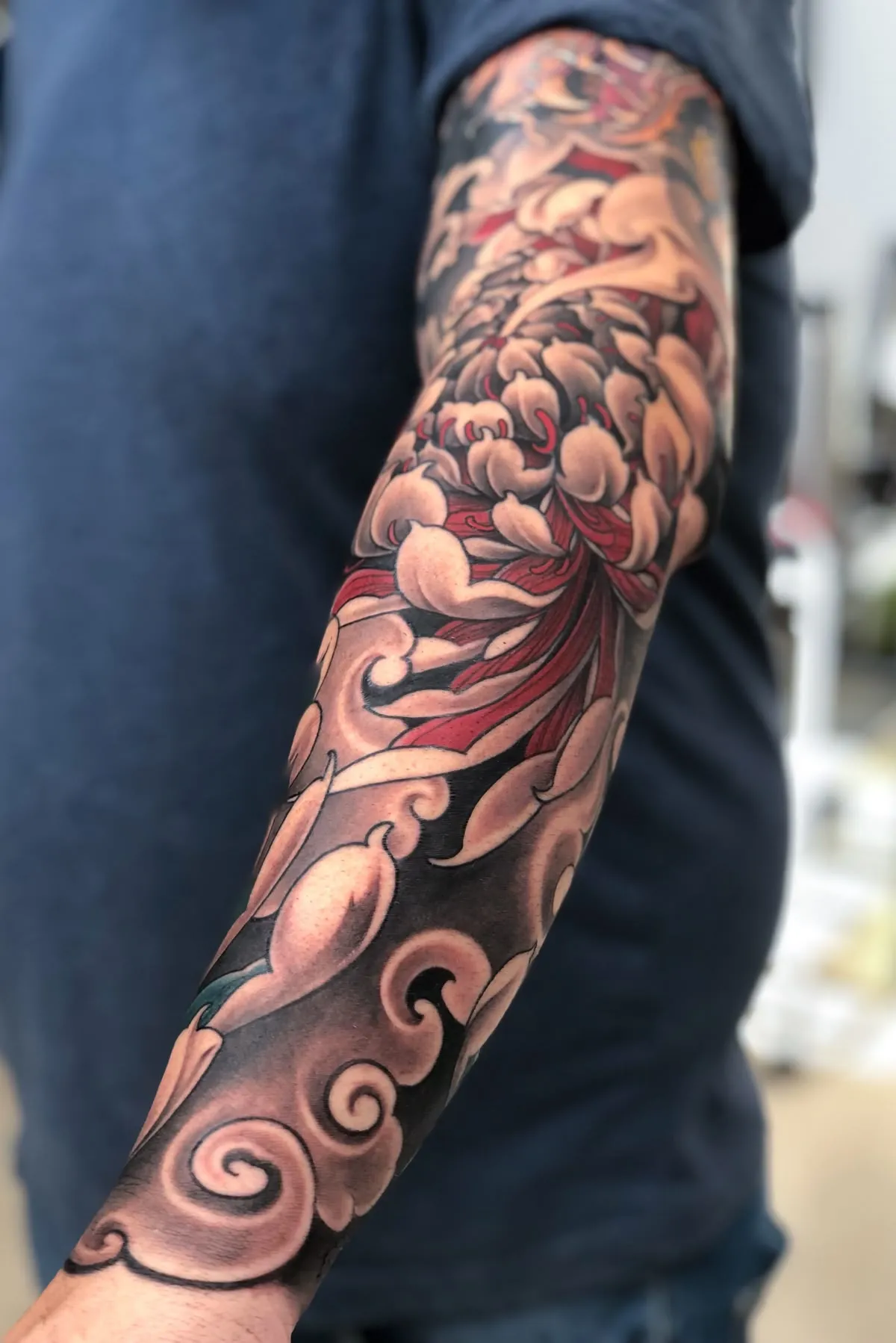
The Japanese chrysanthemum flower tattoo in the Irezumi style is characterized by bold black outlines, deliberate flat color fills, and controlled use of negative space. In traditional Irezumi, the chrysanthemum is rarely depicted in isolation - the flower typically pairs with koi fish, dragons, samurai figures, or tigers to form a narrative composition across the body.
Modern interpretations allow for single-motif chrysanthemum pieces in a neo-traditional Japanese style, retaining the boldness of traditional linework while incorporating a wider color palette and more detailed petal rendering. Artists with formal training in Japanese tattooing understand the directional petal flow required to make a chrysanthemum design read correctly at every viewing angle.
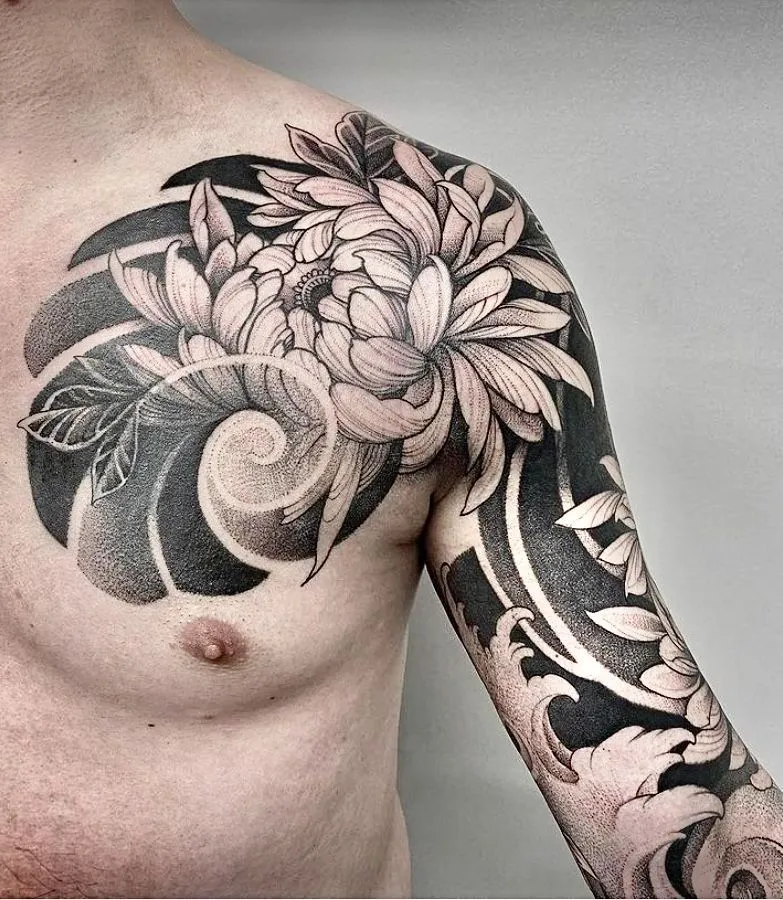
Blackwork and Geometric Chrysanthemum
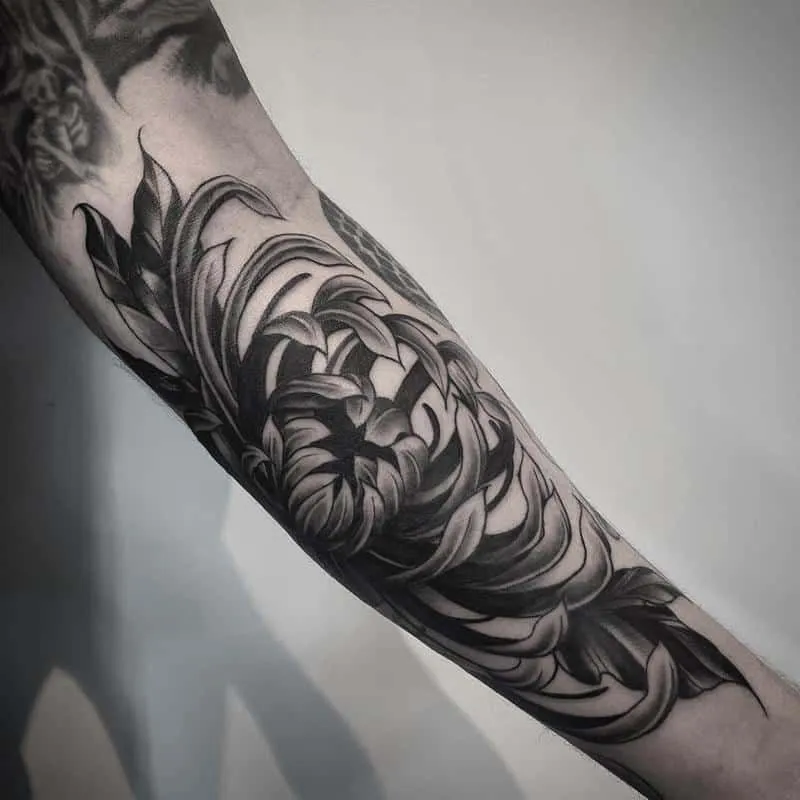
For men who prefer a contemporary visual language without cultural specificity, blackwork chrysanthemum tattoos offer high contrast and long-term ink stability. Blackwork relies entirely on solid black ink, using the density of linework and negative space to create depth and dimension.
Geometric chrysanthemum designs impose mathematical structure onto an organic form - petals rendered in precise radial symmetry, sometimes integrated with mandalas or sacred geometry frameworks. This style has grown particularly popular among men in their late 20s and 30s who want the cultural weight of a floral tattoo combined with a modernist visual approach.
Realism Chrysanthemum Tattoo
Photorealistic chrysanthemum tattoos replicate the texture, light gradients, and shadow depth of an actual flower with near-photographic precision. This style requires the highest level of technical skill from the artist and a minimum surface area of approximately 10cm diameter to execute effectively without losing detail during healing.
Realism chrysanthemum pieces are most frequently placed on the chest, upper arm, or thigh. Black and grey realism suits men seeking a timeless, subdued aesthetic, while full-color realism creates a maximalist visual statement that demands attention at any scale.
Chrysanthemum Tattoo Placement Guide for Men
| Placement | Recommended Size | Best Style | Pain Level (1–10) | Notes |
| Full back | 30–50cm | Japanese Irezumi, Realism | 4–6 | Maximum canvas for narrative compositions |
| Chest | 15–25cm | Japanese, Blackwork, Realism | 5–7 | High visibility; strong personal statement |
| Full sleeve | Variable | Japanese Irezumi, Neo-Traditional | 5–8 | Best for multi-element work with chrysanthemum as anchor |
| Forearm | 10–20cm | Blackwork, Neo-Traditional | 3–5 | High daily visibility; suits professional settings |
| Thigh | 15–30cm | Realism, Japanese | 3–5 | Large canvas with lower pain threshold |
| Calf | 10–20cm | Blackwork, Japanese | 3–5 | Practical alternative for office professionals |
| Neck / Behind ear | 3–8cm | Fine line, Minimalist | 6–8 | High commitment; requires careful long-term planning |
Chrysanthemum vs. Other Floral Tattoos for Men - Which Motif Is Right for You?
Men exploring floral tattooing frequently compare the chrysanthemum against other popular botanical motifs before committing to a design. Each flower carries distinct symbolism, visual structure, and stylistic range.
Floral tattoos for men as a category encompass dozens of species. The chrysanthemum occupies a unique position within this category - simultaneously culturally specific in its East Asian heritage and structurally distinctive in its dense, layered petal formation.
A rose tattoo ideas for men centers on Western romanticism - love, passion, and the duality of beauty and pain - and works effectively in both traditional American and realism styles. The rose is the most tattooed flower globally, which means high market saturation and lower design distinction.
Lotus tattoo designs for men emphasize spiritual transformation rooted in Buddhist symbolism. The lotus rises from muddy water to bloom cleanly above the surface - a popular motif for men representing personal transformation through difficulty.
Carnation tattoo men designs carry strong European and Latin American cultural heritage. The carnation is the national flower of Spain and appears frequently in traditional Spanish tattooing, offering a distinguished alternative with deep regional roots.
Cherry blossom tattoo men designs reference the Japanese philosophy of mono no aware - the bittersweet awareness of impermanence. Cherry blossoms are deliberately delicate in composition, making them a conscious aesthetic statement for men willing to subvert traditional masculine visual norms.
Gladiolus flower tattoo men designs remain comparatively rare and therefore visually distinctive. The gladiolus represents strength of character and moral integrity - the name derives from the Latin "gladius," meaning sword. The flower's tall, blade-like vertical form translates exceptionally well to forearm and calf placements.
Orchid tattoo male pieces are among the most technically demanding in the floral category due to the orchid's complex bilateral symmetry. In Chinese scholarly tradition, the orchid represents refinement, cultivation, and intellectual virtue.
Peony tattoo men hold prominent status in both Chinese and Japanese tattooing - the peony is the "king of flowers" in Chinese tradition and represents prosperity, honor, and masculine strength. The peony and chrysanthemum are frequently paired together in Japanese Irezumi compositions as complementary symbols of vitality and endurance.
Poppy flower tattoo men carry strong associations with remembrance, sacrifice, and the cycle of sleep and death in Western culture. The poppy is a common choice among military veterans and men commemorating personal loss.
Sunflower tattoo men represent loyalty, optimism, and orientation toward positive forces. The sunflower's large, open face adapts exceptionally well to both realism and geometric styles and creates strong visual impact even at modest scale.
Design Tips Before Getting a Chrysanthemum Tattoo
Choose your symbolic intent first, then select a style. A chrysanthemum grounded in Japanese imperial tradition requires an artist trained in Japanese tattooing. A geometric chrysanthemum requires an artist with mathematical design literacy. Matching artist specialization to design intent determines the quality of the final piece.
Scale determines longevity. A chrysanthemum with a diameter below 8–10cm loses petal definition as ink migrates over the first decade. Plan for adequate size from the start rather than addressing scale regret later.
Reference actual chrysanthemums alongside tattoo photography. The most technically accomplished chrysanthemum tattoos draw from botanical reference material, not only from other tattoo images. Before the consultation, ask your artist about their research process for floral designs.
Plan the full composition if sleeve work is the goal. A chrysanthemum alone rarely fills a sleeve with visual coherence. Discuss with your artist how the motif will integrate with surrounding compositional elements - traditional wind bars, ocean waves, geometric framing, or complementary floral species.
Account for tropical aftercare if visiting Southeast Asia. Large-format realism and traditional Japanese pieces require consistent aftercare for 4–6 weeks post-session. Studios experienced in Hanoi's humid subtropical climate provide specific aftercare protocols adapted to local healing conditions.
Where to Get a Chrysanthemum Tattoo in Hanoi
For international travelers visiting Vietnam, getting a tattoo in Hanoi's Old Quarter has become an increasingly meaningful part of the cultural experience. H2M Tattoo Studio, recognized as the best tattoo parlor in Hanoi, is located at 17 Luong Ngoc Quyen, Hang Buom, Hoan Kiem - the geographic center of the historic Old Quarter.
H2M Tattoo Studio has operated continuously in the tattoo industry for 9 years, beginning with professional tattoo equipment distribution in 2016 before opening its first physical studio location in 2020. The studio currently operates 5 locations across Vietnam, Taiwan, and Cambodia, supported by a team of more than 22 professionals. Every tattoo artist on the H2M team holds a minimum of 5 years of individual tattooing experience and is trained across multiple styles relevant to chrysanthemum work - including Japanese Traditional, Old School, Graphic Tattoo, and Realism.
The studio's consultation team is fluent in English, Chinese, and Japanese - making design communication accessible to international clients who want to convey detailed cultural references or discuss the symbolic dimension of their chosen motif. The 100-square-meter studio space can accommodate groups of 5–10 clients simultaneously, a practical advantage for traveling companions who want to coordinate sessions during the same Hanoi visit.
Conclusion
A chrysanthemum tattoo for men is among the most culturally loaded and visually versatile choices available in floral tattooing. The design draws on documented symbolism stretching back over 1,200 years across Japanese, Chinese, and Vietnamese traditions - offering men a motif that reads as structurally bold while carrying genuine historical meaning.
The right chrysanthemum tattoo begins with intent: understand what the flower represents to you personally, identify the style that aligns with that meaning, and select an artist whose technical specialization matches the design requirement. For travelers passing through Hanoi, H2M Tattoo Studio combines the cultural literacy, technical range, and multilingual consultation capacity to execute chrysanthemum work at a professional standard in one of Asia's most historically rich cities.
Book a consultation at H2M Tattoo Studio - 17 Luong Ngoc Quyen, Hoan Kiem, Hanoi - at least 48 hours before your departure to allow adequate time for design development, session scheduling, and initial healing before travel.
Frequently Asked Questions
Q: What does a chrysanthemum tattoo mean for men specifically?
A: For men, the chrysanthemum tattoo most commonly represents endurance, longevity, and the ability to thrive under adversity - meanings drawn from the flower's capacity to bloom in autumn and early winter when other plants have died. In Japanese Irezumi tradition, the chrysanthemum is associated with the Imperial lineage and perfection, making the motif a symbol of both authority and refinement.
Q: Is a chrysanthemum tattoo culturally appropriate for non-Asian men?
A: Yes. The chrysanthemum has been incorporated into Western tattooing for over a century and carries no documented cultural restriction on who may wear the design. Men choosing Japanese Irezumi-style chrysanthemum pieces should engage artists with formal training in that tradition to ensure accurate representation rather than surface-level imitation.
Q: How long does a chrysanthemum tattoo session take?
A: Session length depends on size, style, and placement. A blackwork chrysanthemum of 8–10cm diameter typically requires 2–3 hours. A full chest or back piece in the Japanese Irezumi style may require 8–15 hours of total work spread across multiple sessions.
Q: Do chrysanthemum tattoos age well over time?
A: Chrysanthemum tattoos age well when executed at adequate scale - minimum 8cm diameter - with appropriate line weight and density. Fine-line minimalist chrysanthemum designs are more susceptible to ink migration and fading over a 5–10 year period. Bold traditional Japanese and blackwork styles retain visual definition the longest across all skin types.
Q: What is the best color scheme for a chrysanthemum tattoo for men?
A: Black and grey remains the most popular choice among male clients due to its timeless visual weight and compatibility with professional dress environments. Full-color Japanese-style chrysanthemums in red, gold, or deep purple are the second most requested option and carry stronger cultural specificity. White chrysanthemum designs require experienced artists and perform most effectively on medium to darker skin tones.
Q: Can I get a chrysanthemum tattoo as a tourist visiting Hanoi?
A: Yes. Professional studios in Hanoi's Old Quarter, including H2M Tattoo Studio at 17 Luong Ngoc Quyen, are experienced in serving international clients and provide multilingual consultations in English, Chinese, and Japanese. Plan your session at least 48 hours before your departure date to allow for proper initial healing and to avoid complications during the pressurized environment of air travel with a fresh tattoo.
Q: How do I choose between a chrysanthemum and a peony tattoo?
A: The chrysanthemum and peony both hold elite status in Japanese and Chinese tattooing traditions. The chrysanthemum emphasizes longevity, resilience, and imperial authority; the peony centers on prosperity, honor, and masculine vitality. Compositionally, peonies are rounder and wider while chrysanthemums are denser with more vertical petal layering. Both integrate naturally with Japanese Irezumi motifs. Consult your artist about which reads more powerfully at your chosen placement size and body location.