



Choosing a finger tattoo placement is a bold, artistic move that offers a unique way to showcase your personality or commemorate a special bond through highly visible, delicate ink. While these tattoos are incredibly popular for their subtle yet striking aesthetic, their location on the hands means they require more thought than a standard piece, as factors like skin regeneration, friction, and professional visibility play a massive role in how your ink will look over time. In this guide, we will explore everything from the best spots on your digits and the reality of the pain involved to essential aftercare and cost expectations, ensuring your small masterpiece stays as vibrant as possible.
Why Choose a Tattoo Location on the Finger?
Selecting a finger tattoo is often a deeply personal decision. Because our hands are almost always in motion and visible to the world, these tattoos serve as constant reminders of significant beliefs, cherished memories, or lifelong commitments - like the increasingly popular "wedding ring" tattoo. It’s a form of self-expression that feels both intimate and public at the same time. Have you ever wanted a piece of art that you could see every single second of the day? That is the primary draw of the finger.

However, we always advise our clients at H2M Tattoo Studio to think about their career path. Despite tattoos becoming mainstream, some conservative industries still have strict dress codes. Since you can't easily hide a finger tattoo with a sleeve, it’s worth checking your workplace policy first. If you’re worried about visibility but still want hand art, you might also consider an arm tattoo placement that can be covered by a shirt while you’re in the office.
Which Placement Is Best for Getting a Finger Tattoo?
The "best" spot depends on whether you value visibility or longevity. Not all skin on the finger is created equal; some areas hold ink like a champ, while others tend to blur within months.
The Top Surface of the Finger
This is widely considered the gold standard for finger ink. The skin on the top of your finger (between the knuckles) is flatter and experiences less friction than the sides or palms. Because this area doesn't rub against other fingers, your design is likely to stay crisp and clear for a much longer period. It’s the ideal canvas for small symbols or minimalist geometric lines.
The Side of the Finger
If you are looking for something "hidden" or "peek-a-boo," the side of the finger is a classic choice. It is perfect for cursive words, dates, or tiny arrows. However, be warned: this is a high-friction zone. Every time you put your hands in your pockets or even just move your fingers, the skin rubs together. This leads to much faster fading compared to the top surface.

The Knuckle and Inner Finger
Knuckle tattoos are for the bold. They allow for impactful, individual letter designs, but because the skin here creases constantly, the healing process can be tricky. On the flip side, the inner finger (palm side) is the most discreet but also the most prone to "fallout," where the ink simply doesn't stay in the skin well due to the sweat glands and thick, fast-regenerating skin texture found on the palms.
Finger tattoos are just one piece of the puzzle. To see how these delicate accents flow into a larger aesthetic, dive into our complete guide on hand tattoo placement and discover how to balance bold visibility with long-term clarity.
Does a Finger Tattoo Hurt?
Does a Finger tattoo hurt? Let’s be honest: yes, it does. If you look at a standard tattoo pain chart, the fingers are usually highlighted in bright red. Why? Because there is almost no fat or muscle between the skin and the bone. Your fingers are packed with nerve endings, making them incredibly sensitive to the needle's vibration.
Most of our clients at H2M describe the sensation as a sharp, intense "scratch" that feels much more localized than a tattoo on the arm or thigh. The good news is that because finger tattoos are usually very small, the process is over quickly. While the pain is significant, it typically only lasts for 10 to 20 minutes for most simple designs.
How Much Does a Finger Tattoo Cost?
You might think a tiny tattoo should be very cheap, but there is more to the price than just the size. Generally, a finger tattoo can range from $50 to $250. Even for a design the size of a fingernail, professional studios have a "shop minimum."
This minimum covers the cost of sterile, single-use needles, high-quality ink, and the time it takes the artist to set up a safe, hygienic station. At H2M, we believe in transparency; the price reflects the expertise of an artist who knows how to work with the difficult, thin skin of the hand. Intricate designs that wrap around the finger or involve fine-line detail will naturally sit at the higher end of the price scale.
Will Your Finger Tattoo Fade?
One of the most important things we tell our "Wise Man" explorers is that finger tattoos are notoriously prone to fading. Your hands are the most used part of your body. You wash them frequently, use them for work, and expose them to the sun more than almost any other area.
Because the skin on your hands regenerates much faster than the skin on your back or legs, the ink particles are pushed out or blurred more quickly. It is very common for a finger tattoo to need a touch-up within the first 6 to 12 months to keep the lines looking sharp. If you aren't prepared for the long-term maintenance of your ink, a finger tattoo might be a bit of a challenge.
How to Aftercare a Finger Tattoo
Proper aftercare is the difference between a beautiful tattoo and a blurry smudge. Because you use your hands for everything, keeping a fresh finger tattoo clean is a unique challenge.
- Keep it Clean: Wash the area 2-3 times a day with mild, fragrance-free antibacterial soap. Since we use our hands to touch everything, the risk of infection is slightly higher here.
- Moisturize Lightly: Use a tiny amount of tattoo-specific ointment. If you apply too much, you’ll trap moisture and bacteria, which can cause the ink to "weep" out of the thin finger skin.
- Avoid Soaking: This is the hard part. No dishes, no swimming, and no long baths for at least two weeks. Submerging the tattoo in water will pull the ink out before it has a chance to settle.
- Minimize Friction: Try to avoid wearing tight gloves or reaching into tight pockets (like denim jeans) while the tattoo is scabbing. Every time you scrape the tattoo, you risk pulling out the pigment.
Other Factors to Consider for Your New Ink
Before you commit to that Pinterest-inspired design, there are a few "Pioneer" tips you should keep in mind to ensure you love your art for years to come.
Design Simplicity is Key
On the fingers, "less is more" is a rule to live by. Because the ink tends to spread slightly as the skin ages, highly intricate or tiny detailed portraits will eventually turn into a dark blob. We recommend bold, clean lines and simple silhouettes. Think of it like a logo - it needs to be recognizable even if it's small.
The Artist’s Expertise
Not every great tattoo artist is a great finger tattoo artist. The skin on the digits is thin, stretchy, and sits right over the bone. It requires a very steady hand and a specific depth of needle penetration. At H2M Tattoo Studio, our artists have over 5 years of experience navigating these tricky surfaces to ensure the ink is placed deep enough to stay, but not so deep that it "blows out."
Finger Tattoo Design Ideas
What should you get? The possibilities are endless, but here are the most successful trends we see in our Hanoi studios:
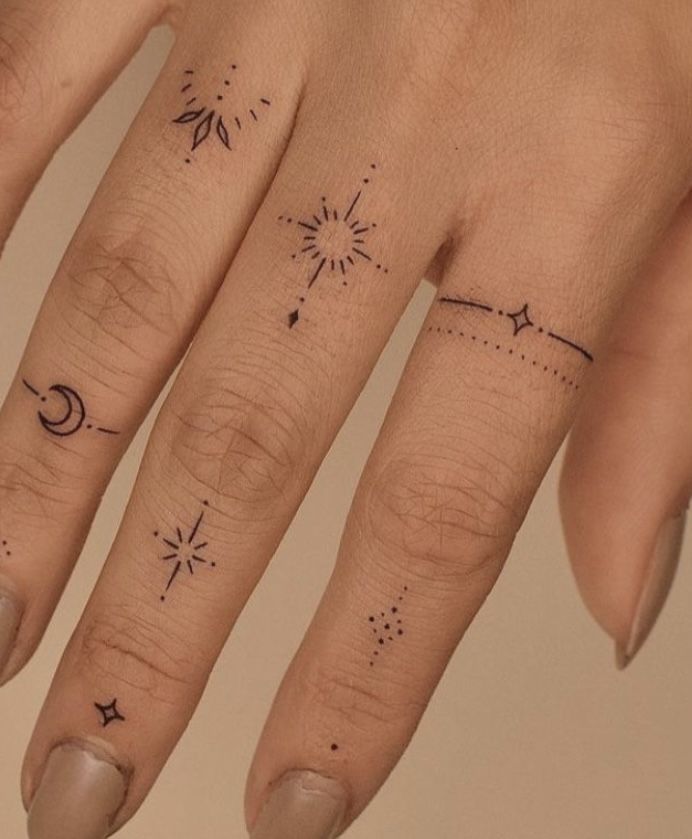
- Minimalist Symbols: Stars, moons, or tiny anchors.
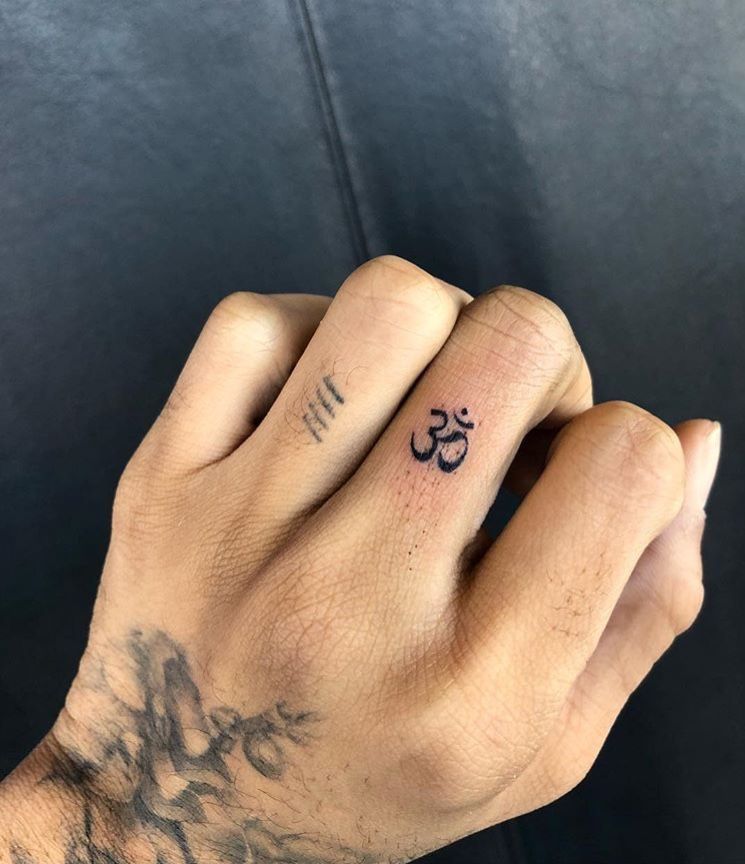
- Meaningful Dates: Roman numerals on the side of the finger.
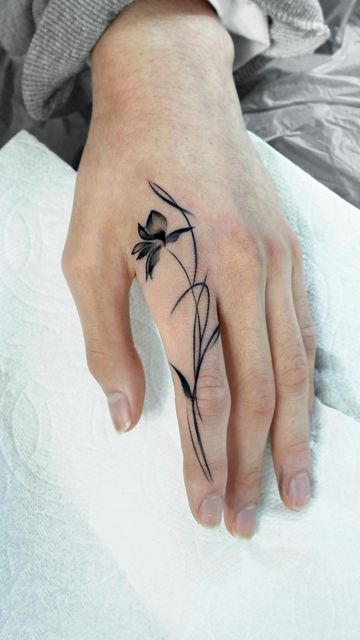
- Floral Wraps: Delicate vines that act like permanent jewelry.

- Initial Tattoos: A single, stylized letter of a loved one.
Why Choose H2M Tattoo Studio for Your Finger Tattoo?
When you’re a traveler in a foreign city like Hanoi, you need a studio you can trust. H2M Tattoo Studio isn't just a place to get "inked" - we are your professional consultants in the world of body art. With 9 years in the industry and four locations across Vietnam and Taiwan, we’ve built a reputation for excellence.
Our team of over 20 professionals speaks fluent English and Chinese, making the consultation process seamless for international tourists. We operate in a spacious 100m2 facility in the heart of the Old Quarter, ensuring that your experience is comfortable, hygienic, and world-class. Whether you want a traditional Vietnamese design or a modern fine-line finger piece, our artists bring a "Pioneer" spirit to every needle stroke.
FAQ
Should I get a finger tattoo for my first tattoo?
We usually suggest starting elsewhere. The pain is high and the aftercare is demanding. It’s better to understand how your body heals with a tattoo in an easier location first.
Is a touch-up usually needed?
Almost always. Don't be discouraged if some ink drops out during the first month; it’s just the nature of hand skin.
How can I reduce the pain?
Come in well-rested and hydrated. Avoid caffeine right before your session as it can make you jittery and increase sensitivity.
Choosing the right location is just as important as the design itself. To make the best decision for your lifestyle, feel free to explore our comprehensive look at different tattoo placements.
A finger tattoo is a stunning way to wear your heart (or your art) on your sleeve - literally. By choosing the right placement and committing to diligent aftercare, you can ensure your mini-masterpiece stands the test of time.
Are you ready to leave your mark in Hanoi? Contact H2M Tattoo Studio today to book a consultation with our expert artists and turn your finger tattoo vision into a reality.