


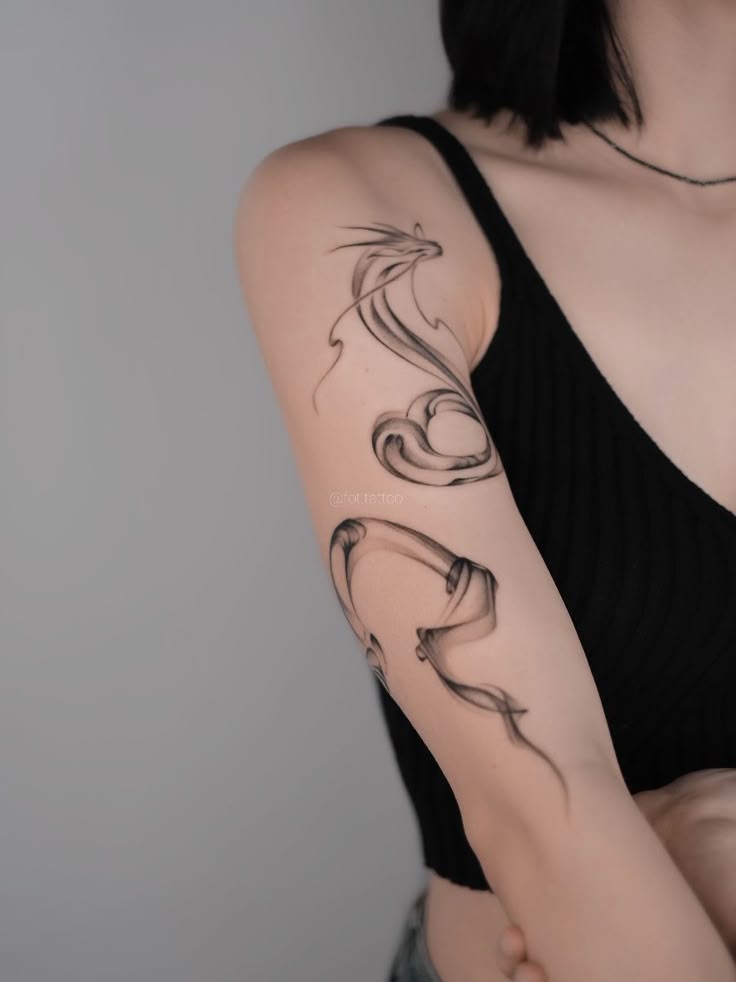
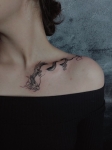
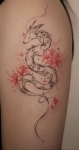
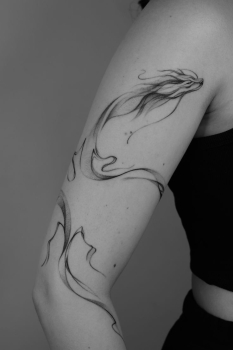
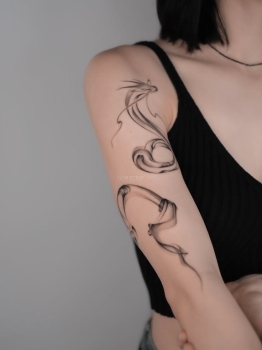
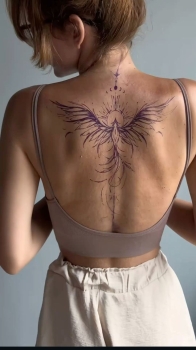
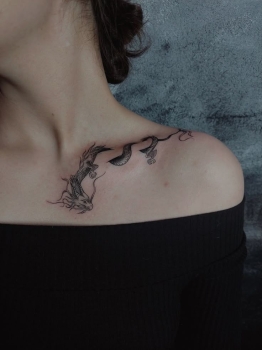
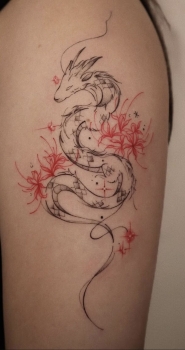
A fine line dragon tattoo is a minimalist tattoo style that renders the dragon motif using ultra-thin, single-needle lines-creating intricate, detailed imagery with a delicate, almost illustrative quality. Dragons are among the most universally requested tattoo subjects worldwide, appearing across Asian, European, and fantasy-inspired traditions.
According to a 2023 global tattoo trend report by Statista, dragon tattoos consistently rank in the top 5 most-searched tattoo motifs globally, with fine line interpretations growing more than 40% in online search volume between 2021 and 2024. H2M Tattoo Studio, a professional tattooing studio located in Hanoi's Old Quarter (17 Luong Ngoc Quyen, Hoan Kiem), has offered fine line tattooing as a signature service since 2020, with a team of artists each carrying over 5 years of hands-on expertise across styles including Realism, Graphic Tattoo, and intricate fine line work.
What Is a Fine Line Dragon Tattoo - and Why Is Everyone Talking About It?
If you've spent any time on tattoo Instagram or Pinterest in the last three years, you've already seen them: dragons rendered in whisper-thin lines, coiling elegantly across wrists, forearms, and ribcages with an almost hand-drawn quality. Fine line dragon tattoos have moved from niche to mainstream - and for good reason.
The fine line technique strips away the heavy shading and bold outlines of traditional tattooing and replaces them with single-needle precision. The result is imagery that feels more like ink-on-paper illustration than conventional body art. Applied to a dragon - one of the most symbolically loaded creatures in global mythology - the contrast is stunning: a subject associated with raw elemental power, rendered with extraordinary restraint and delicacy.
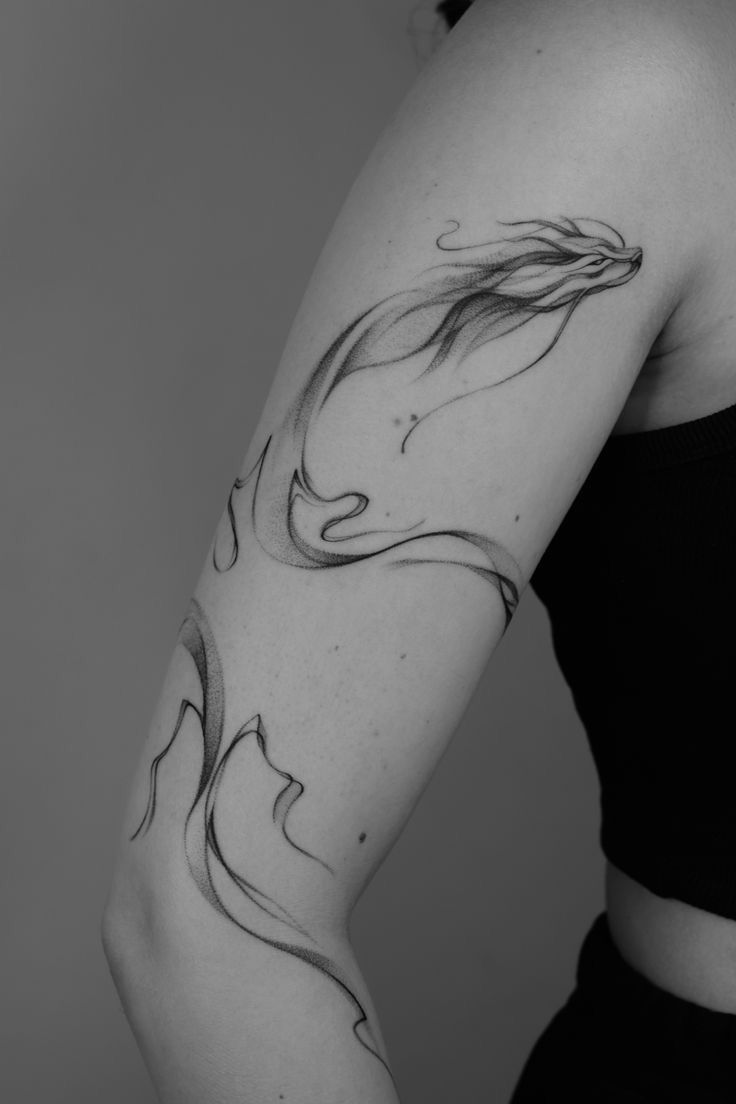
This guide covers everything you need to make an informed decision: the cultural meanings behind dragon tattoos, the best design variations available in 2025, placement and sizing considerations, aftercare specifics for fine line work, and how to find an artist truly qualified to execute this technically demanding style.
Why Do Dragon Tattoos Hold Such Enduring Appeal?
The Dragon as a Universal Symbol
Dragons appear in nearly every major human civilization, making them one of the few cross-cultural symbols in the tattoo world. The creature you're depicting - and the meaning it carries - depends heavily on which tradition you're drawing from.
In East Asian traditions (Chinese, Japanese, Vietnamese, Korean), the dragon is a divine, benevolent being. It commands rain and rivers, governs the sea, and represents imperial authority, wisdom, and extraordinary fortune. A Chinese dragon (lóng, 龙) is sinuous, limbless (or four-legged), and almost serpentine - the archetypal form for most fine line dragon tattoos today.
In European and Western mythology, the dragon is fundamentally different: a creature of fire and danger, hoarding treasure, threatening kingdoms. This version - winged, scaled, fearsome - is more closely associated with raw power, rebellion, and independence.
Japanese Irezumi tradition offers perhaps the most tattooed dragon in history: the ryū, depicted coiling through clouds or water, surrounded by waves or cherry blossoms, and symbolizing strength balanced by wisdom.
Vietnamese culture carries its own dragon lineage. The Rồng - the Vietnamese dragon - is deeply woven into national identity. Vietnamese people traditionally refer to themselves as the "descendants of the Dragon and the Fairy" (Con Rồng Cháu Tiên). The Vietnamese dragon is sinuous, elongated, and often depicted ascending - representing growth, resilience, and celestial ambition.
Fine Line Dragon Tattoos in 2026
The broader shift toward fine line tattooing reflects a generational change in aesthetic preference. A 2022 survey by the Harris Poll found that younger tattoo recipients (ages 18–35) increasingly prefer designs described as "delicate," "minimalist," or "artistic" over heavily shaded, bold traditional work.
Fine line work also photographs exceptionally well - relevant in a social-media-saturated culture where tattoos are shared as personal visual statements. The style translates across skin tones differently from bold black work, creating a tone-on-tone effect on darker complexions that many clients find uniquely beautiful.
Dragon motifs suit fine line tattooing particularly well because the dragon's inherent complexity - scales, claws, flowing mane, serpentine body - gives the artist extraordinary scope to demonstrate technical skill within a restrained visual language.
What Are the Most Popular Fine Line Dragon Tattoo Designs?
Minimalist Dragon Outline
The simplest and most versatile interpretation: a clean contour of the dragon's form with no fill, no shading - just the line itself. This works beautifully small (2–4 inches) and scales well to larger compositions on the forearm or calf. The negative space becomes part of the design.
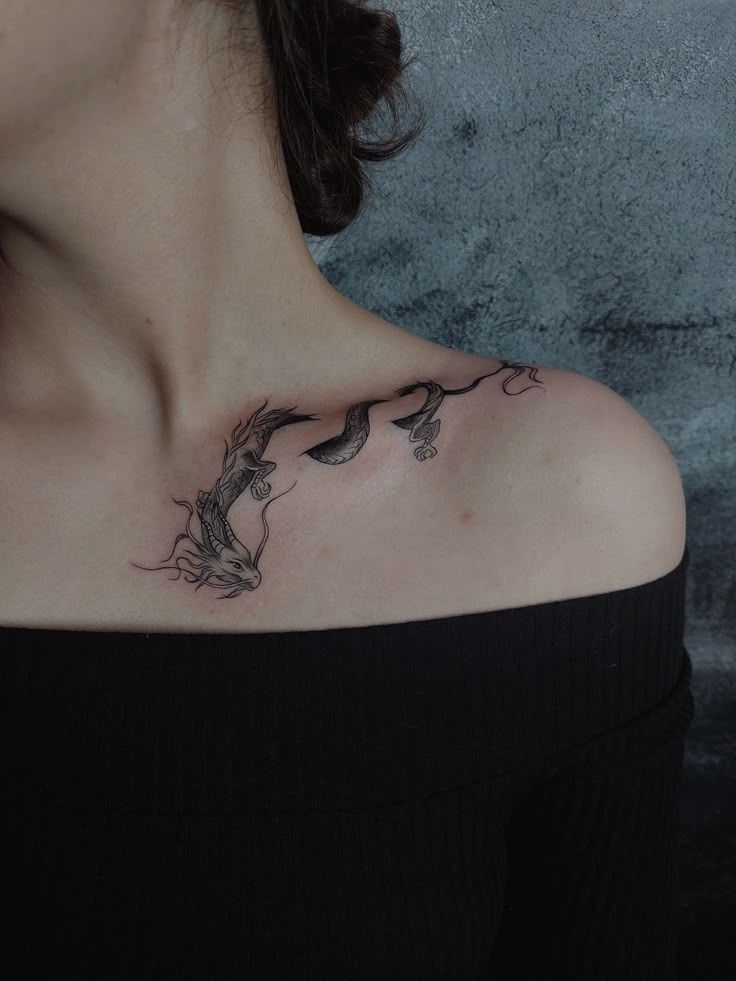
Geometric Fine Line Dragon
Incorporates geometric elements - sacred geometry, mandala patterns, triangles, dotwork grids - into or around the dragon's form. The interplay between organic (the dragon's fluid body) and structured (the geometry) creates visual tension that reads as distinctly contemporary.
Dragon Wrapped Around a Floral Element
One of the most requested combinations in fine line work: a dragon coiling around a peony, lotus, cherry blossom, or rose. The dragon's angular, scaled body against soft floral petals is visually arresting. This composition works especially well on the forearm, shin, or as a shoulder-to-elbow piece.
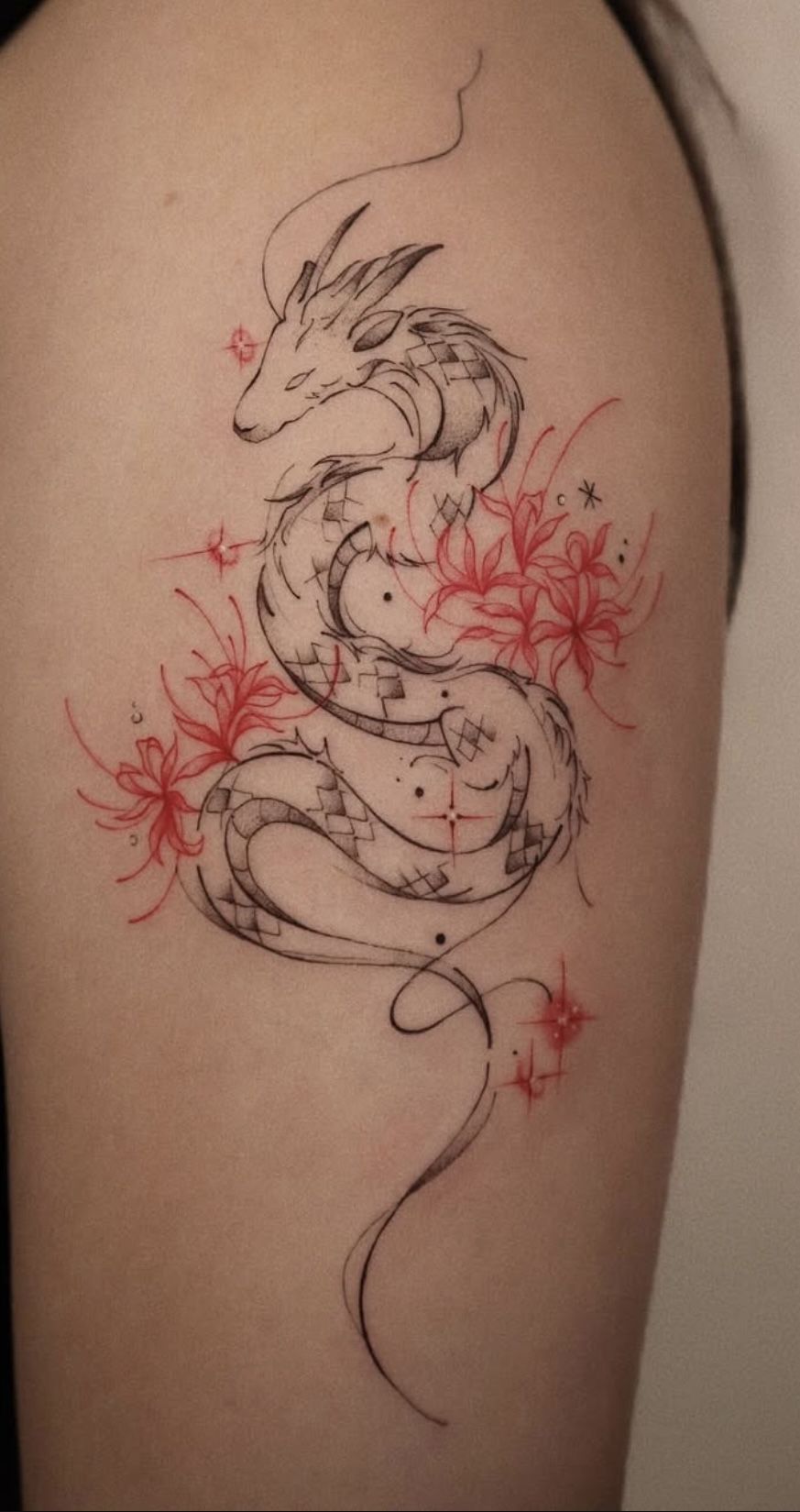
This combination pairs naturally with fine line tattoo aesthetics, where the contrast between organic and architectural line weights creates maximum visual interest.
Dragon and Moon Composition
The moon - especially a crescent or full moon - serves as a dramatic compositional anchor for a coiling dragon. The dragon might circle the moon, emerge from behind it, or mirror its curve. This design carries symbolic weight: the moon in East Asian tradition governs tides, time, and transformation.
Fine Line Dragon as Part of a Sleeve or Story Composition
Increasingly, clients are requesting fine line dragons as the centerpiece of a larger narrative sleeve - incorporating clouds, waves, koi fish, temples, or lanterns into a single cohesive scene. This is the most technically demanding application of the style and requires an artist with demonstrated experience in compositional tattoo design.
For couples, a dragon and phoenix pairing - executed in matching fine line style - has become one of the most requested motifs. The dragon (representing masculine energy, power) paired with the phoenix (feminine energy, rebirth) is a traditional Chinese symbol of perfect balance. See how this concept extends naturally into fine line couple tattoos, where the pairing of complementary motifs tells a shared story across two people.
Single-Needle Dragon in Realism Style
For clients who want maximum detail, a realism-style fine line dragon - rendered with careful value gradation using only thin lines and stippling - produces an almost three-dimensional result. This is the highest-difficulty tier of fine line dragon work and requires an artist with specific realism training.
What Do Different Dragon Tattoo Placements Mean?
Forearm Dragon Tattoo
The forearm is the most popular placement for fine line dragon work - highly visible, relatively flat, and large enough for meaningful detail. An ascending dragon on the inner forearm reads as aspirational; a coiling dragon wrapping around the outer forearm demonstrates the artist's ability to work with dimensional form.
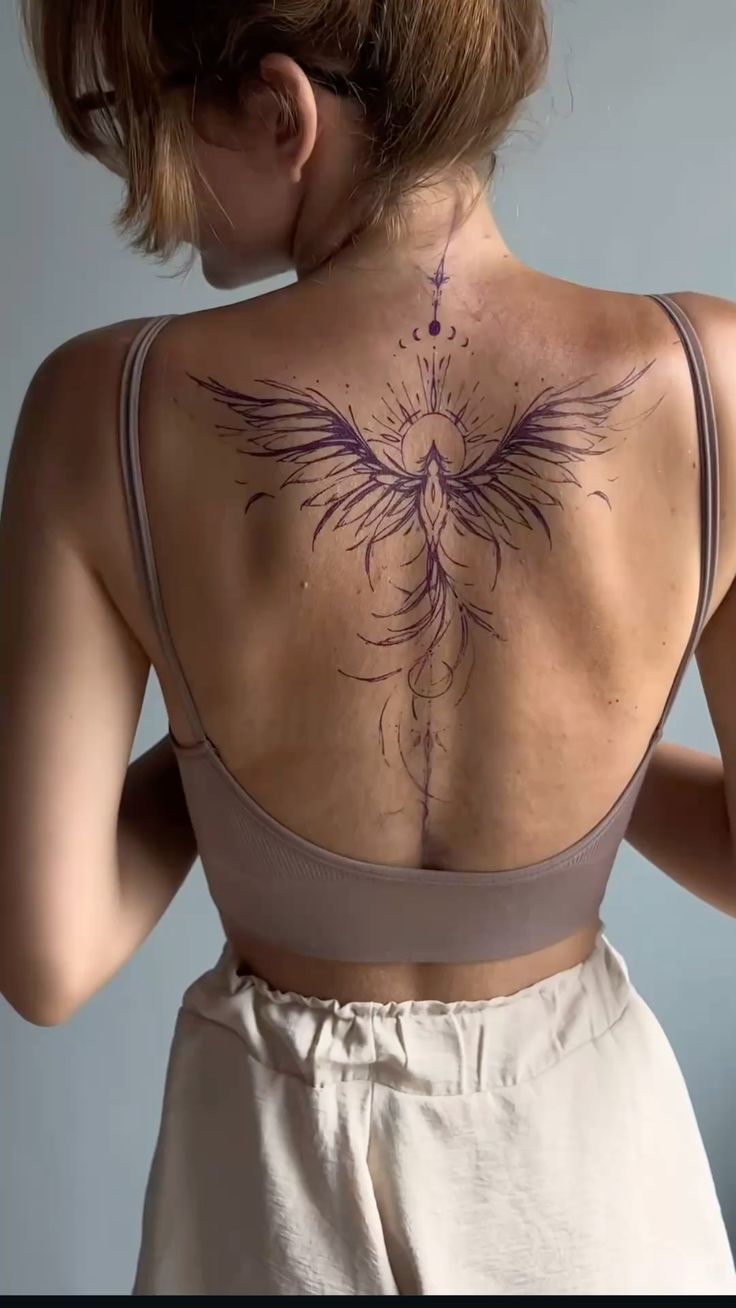
Spine or Sternum Dragon Tattoo
A dragon running vertically along the spine or sternum creates a dramatic, symmetrical composition that's rarely visible to the wearer but unforgettable to anyone who sees it. The elongated vertical format suits the serpentine dragon body naturally.
Ribcage Dragon Tattoo
The ribcage offers a large, relatively private canvas. Fine line work here ages more predictably than on high-movement areas. Pain level is significant, but the visual payoff - a dragon that appears to breathe with you - is difficult to replicate anywhere else.
Wrist and Ankle Dragon Tattoo
Small fine line dragons on the wrist or ankle are the entry point for many first-time clients. They're manageable in size, relatively low-pain, and adaptable to a single clean outline design. Be aware that extremities - hands, wrists, ankles, feet - experience more friction and sun exposure, which accelerates fading in fine line work. Diligent sunscreen use is non-negotiable.
Upper Arm and Shoulder Dragon Tattoo
The upper arm and shoulder offer structural surface area that works well for wrapping compositions. A dragon coiling from shoulder to bicep, with clouds or waves as supporting elements, is among the most requested compositions at H2M Tattoo Studio.
How Does Fine Line Technique Compare to Other Dragon Tattoo Styles?
| Style | Line Weight | Shading | Aging | Best Placement | Complexity Level |
| Fine Line | Ultra-thin, single needle | Minimal or none | Requires touch-up | Flat, stable areas | High |
| Japanese Traditional | Bold, thick outlines | Heavy black shading | Ages very well | Any large area | Medium–High |
| Blackwork | Bold solid fills | Solid black | Extremely durable | Any area | Medium |
| Watercolor | Varied, loose | Color washes | Fades fastest | Large flat areas | Medium |
| Realism | Mixed, thin dominant | Photorealistic | Variable | Flat, stable areas | Very High |
| Geometric | Precise, architectural | Minimal | Good | Any area | Medium–High |
Fine line tattooing produces the most visually refined result but places the highest demands on both artist skill and client aftercare discipline.
What Should You Know About Fine Line Tattoo Aging?
This is the most underexplored - and most important - practical topic for anyone considering a fine line dragon tattoo.
Fine line tattoos age differently from bold-outline work. The thin lines that make fine line work so visually delicate are also the lines most susceptible to spreading and fading over time as the skin changes. Here is what the evidence shows:
- Line migration: Over 5 - 10 years, fine lines can spread slightly (called "blowout" if severe, or natural migration if mild), softening the crispness of the original design. Proper technique - correct needle depth, appropriate needle size, skilled hand pressure - dramatically reduces this risk. This is why artist selection is the single most consequential decision.
- Sun exposure: UV radiation breaks down tattoo ink faster than any other factor. Fine line work on frequently exposed areas (forearm, wrist, ankle) should be protected with SPF 50+ sunscreen daily, especially during the healing phase and indefinitely afterward.
- Touch-ups: Most fine line tattoos benefit from a touch-up session at 6–12 months post-healing to refresh any lines that have softened or faded during the healing process. Factor this into your planning.
- Skin type: Fine line work shows differently on different skin types. On lighter complexions, the contrast between ink and skin is maximal. On medium-to-darker complexions, fine line work creates a beautiful tone-on-tone effect - subtler, but no less striking. Discuss expected results with your artist during consultation.
How Is a Fine Line Dragon Tattoo Related to Other Fine Line Styles?
The fine line approach applied to dragons shares its technical DNA with other popular motifs in this style. Understanding adjacent designs helps you build a coherent tattoo aesthetic if you're planning multiple pieces.
A fine line heart tattoo - one of the most requested fine line motifs - demonstrates the same principle of maximum emotional resonance through minimal line weight. The heart, like the dragon, is a universally recognized symbol rendered transformative by the restraint of single-needle technique.
Similarly, a fine line butterfly tattoo explores the interplay between organic form and delicate linework. Butterflies share with dragons a compositional challenge: complex wing detail that must read clearly at small scale. Artists skilled in butterfly work often excel at fine line dragon work, as both demand exceptional control of line weight variation.
If you're building a collection of fine line pieces, consider how a dragon composition might anchor a larger aesthetic - serving as the bold, complex centerpiece surrounded by smaller, simpler fine line accents.
What Questions Should You Ask a Fine Line Dragon Tattoo Artist?
Not every tattoo artist is qualified to execute fine line dragon work. This style requires specific equipment (single-needle or 3RL configurations), a refined understanding of ink saturation depth, and a portfolio demonstrating proven line consistency. Before booking, ask:
- Can I see your healed fine line portfolio? (Fresh tattoos always look sharp. Healed work reveals true quality.)
- What needle configuration do you use for fine line work?
- How do you approach dragon scale texture in fine line style?
- What is your touch-up policy?
- How do you advise clients on aftercare for fine line work specifically?
An artist who answers these questions with specificity and enthusiasm is an artist who has thought deeply about the craft.
Why Get Your Fine Line Dragon Tattoo in Vietnam?
Vietnam - and Hanoi specifically - has become an increasingly sought-after destination for tattoo tourists. The combination of skilled, internationally trained artists, competitive pricing relative to Western markets, and the cultural resonance of the dragon motif (deeply embedded in Vietnamese national identity) makes Hanoi a compelling choice.
For those exploring fine line tattoo Vietnam options, the Old Quarter district of Hanoi concentrates the highest density of quality studios serving international clients, with artists fluent in English and Chinese. The Vietnamese dragon (Rồng) as source material for fine line interpretation carries particular authenticity when executed by artists who have grown up within that visual tradition.
Why Choose H2M Tattoo Studio for Your Fine Line Dragon Tattoo in Hanoi?
H2M Tattoo Studio - located at 17 Luong Ngoc Quyen, Hang Buom, Hoan Kiem, Hanoi - has operated continuously since 2020 and has been part of Vietnam's tattoo supply and education ecosystem since 2016. With a team of 22 professionals across 5 facilities in Vietnam, Taiwan, and Cambodia, H2M brings a level of operational depth unusual in the regional market.
Every H2M artist carries a minimum of 5 years of tattooing experience. The studio's fine line and graphic tattoo specialists have developed particular expertise in dragon compositions that draw on both East Asian visual traditions and contemporary Western fine line aesthetics - a synthesis that resonates strongly with international clients.
The 100m² Old Quarter studio accommodates groups of 5–10 simultaneously - ideal for travelers who want to get tattooed together as part of their Vietnam experience. Consulting staff are fluent in both English and Chinese, ensuring nothing is lost between concept and execution.
For anyone planning a tattoo experience in Vietnam's capital, H2M Tattoo Studio stands as the most accessible and internationally oriented tattoo parlor Hanoi option - centrally positioned in the Old Quarter, steps from the city's most historic streets.
Conclusion: Is a Fine Line Dragon Tattoo Right for You?
A fine line dragon tattoo is not a compromise - it is a deliberate aesthetic choice. It says: I want the weight of this symbol without the visual weight of its execution. It trusts the viewer to lean in, to notice the detail, to appreciate the restraint.
If you're drawn to this style, invest the time to find an artist with a proven fine line portfolio showing healed work. Commit to the aftercare process with the same seriousness you brought to choosing the design. Protect your investment from the sun. Plan for a touch-up.
And if you're considering a tattoo while traveling through Vietnam - particularly through Hanoi's Old Quarter - take the time to consult with the team at H2M Tattoo Studio. Bring reference images, ask questions, and trust the process. A fine line dragon, executed with precision and care, is the kind of tattoo that improves with every year it lives on your skin.
FAQ: Fine Line Dragon Tattoos
1. How long does a fine line dragon tattoo take to complete?
Size and complexity are the primary variables. A small (2–3 inch) single-outline dragon on the wrist takes approximately 1–2 hours. A detailed forearm composition with scales, clouds, and supporting elements typically requires 3–5 hours. A full sleeve or back piece involving a dragon as centerpiece may require multiple sessions totaling 10–20+ hours.
2. Are fine line dragon tattoos more painful than bold traditional tattoos?
Pain level is determined more by placement than by style. Fine line tattooing typically involves less repeated passes over the same area compared to heavily shaded work, which some clients find less intense. However, placements like the ribcage, spine, or inner arm remain painful regardless of style.
3. How much does a fine line dragon tattoo cost in Hanoi, Vietnam?
Pricing varies by studio, artist experience, and design complexity. In Hanoi's Old Quarter, reputable studios typically charge between $80–$300 USD for small-to-medium fine line dragon pieces, and $300–$800+ for larger, more complex compositions. Always prioritize quality over price when choosing fine line work - poorly executed fine lines are extremely difficult to correct.
4. How do I take care of a fine line tattoo during healing?
Standard tattoo aftercare applies, with heightened attention to moisture and sun protection. Keep the tattoo clean with fragrance-free soap, apply a thin layer of unscented healing ointment (such as Aquaphor or Bepanthen) 2–3 times daily for the first two weeks, avoid direct sun exposure and swimming during healing, and do not pick or scratch any peeling skin. Fine line work is particularly sensitive to aggressive aftercare - less is more.
5. Will a fine line dragon tattoo fade quickly?
Fine line tattoos do fade faster than bold traditional work, but "quickly" is relative. With proper aftercare and sun protection, a well-executed fine line dragon tattoo should remain visually clear for 5–10 years before a touch-up is needed. High-movement areas (fingers, inner wrists, feet) will fade faster than stable areas (forearm, ribcage, shin). Annual SPF protection on tattooed areas extends the life of fine line work significantly.
6. Can fine line dragon tattoos be done in color?
Yes, though it requires considerable artist skill. The most popular color additions to fine line dragon work are subtle - a wash of red or gold on select scale details, blue-green for water elements, or soft gray shading for dimensionality. Full-color fine line dragons are possible but less common, as saturating color in thin lines is technically demanding and ages less predictably than black ink.
7. What is the best dragon style for a first tattoo in fine line?
For first-time clients, a minimalist dragon outline - clean, unshaded, 2–4 inches - on a stable placement like the outer forearm or upper arm is the ideal starting point. It showcases the fine line aesthetic clearly, heals predictably, and gives you a reference point for how your skin takes ink before committing to a larger, more complex composition.