



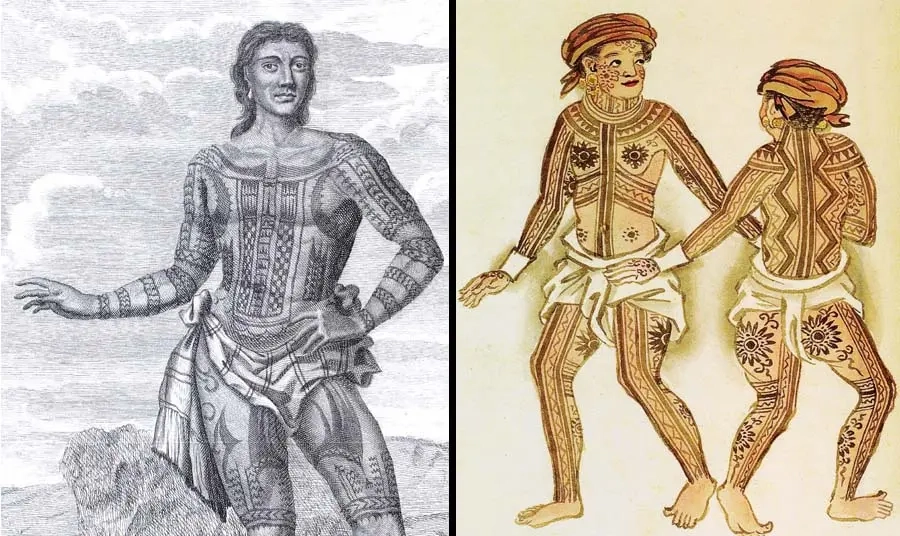
Vietnamese traditional tattoos history stretches back roughly 4,000 years to the era of the Hùng Kings, according to the 15th-century chronicle Đại Việt Sử Ký Toàn Thư, compiled by royal historian Ngô Sĩ Liên and completed in 1479. The custom began as a survival practice — river and sea dwellers tattooed water-monster patterns onto their skin to avoid attacks from aquatic creatures — before evolving into a mark of status, courage, and clan identity. The art form reached its golden age under the Trần dynasty (1225–1400), when kings and elite soldiers wore dragon tattoos as symbols of royal lineage and military loyalty, before Emperor Trần Minh Tông ended the mandatory tattooing of soldiers in 1323. Today, H2M Tattoo Studio in Hanoi's Old Quarter revives this heritage, reinterpreting motifs like the Đông Sơn drum, the lotus, and the dragon into contemporary, wearable art.
Key Takeaways
- Vietnamese tattoo history dates back nearly 4,000 years, first recorded in the Đại Việt Sử Ký Toàn Thư and the Lĩnh Nam Chích Quái, and centers on five recurring motifs: the dragon, the lotus, the crane, the Đông Sơn drum, and traditional calligraphy.
- The Trần dynasty (13th–14th century) marked the peak of tattoo culture, when dragon ink signified royal blood and unbreakable loyalty to the throne.
- Confucian ideals during later dynasties pushed tattooing into decline, associating it with criminality — a stigma that only began reversing in recent decades.
- Modern studios like H2M Tattoo Studio, located in Hanoi's Old Quarter near Hoàn Kiếm Lake, now blend these ancient symbols with contemporary technique for a new generation of wearers.
Why Vietnamese Traditional Tattoos Still Matter Today
Before diving into dates and dynasties, it helps to understand why this history is worth knowing at all. A tattoo is permanent — and for many people choosing traditional vietnamese tattoos, the appeal isn't a random pattern but a connection to something older than themselves. Traditional Vietnamese tattoos were never just decoration. They functioned as spiritual protection, proof of endurance, and a visual language that separated one clan or rank from another. Understanding where a symbol came from — a river legend, a royal army, a bronze drum buried for two thousand years — changes how a person carries that symbol on their own skin. That context is exactly what separates a meaningful custom piece from a generic "tribal" design copied off a wall of flash art.
Where Did Vietnamese Traditional Tattoo History Begin?
The earliest layer of Vietnamese traditional tattoos history is part legend, part written record. The Lĩnh Nam Chích Quái (Marvelous Records of the Lĩnh Nam Region) describes early Lạc Việt people who fished and farmed near rivers being harmed by aquatic "water dragons." According to the tale, their king advised that these creatures only attacked what looked unfamiliar to them, so he ordered his people to tattoo images of water monsters onto their bodies. Once inked, they were left alone by the creatures — and the custom of tattooing among the Bách Việt peoples was said to have started from that moment.
This origin story is echoed in Vietnam's most authoritative historical chronicle, the Đại Việt Sử Ký Toàn Thư, which places the beginnings of tattoo practice around the time of the Hùng Kings, roughly 4,000 years ago. Three meanings grew out of this early custom:
- Protection: tattoos acted as a spiritual shield against wild animals, sea creatures, and misfortune during long journeys through forest or water.
- Proof of courage: enduring the pain of tattooing by hand signaled bravery, discipline, and maturity.
- Status and belonging: patterns distinguished one tribe, rank, or role from another, reinforcing a sense of harmony between people and the natural world around them.
How Did Tattoo Art Flourish Under the Trần Dynasty?
If the Hùng King era planted the roots of Vietnamese tattoo culture, the Trần dynasty (1225–1400) was where it bloomed into a defining feature of national identity. Tattooing during this period was not limited to soldiers or commoners — kings, mandarins, and elite military units all wore ink as a visible marker of rank and loyalty.
The Dragon (Rồng): A Symbol of Nobility and Military Might
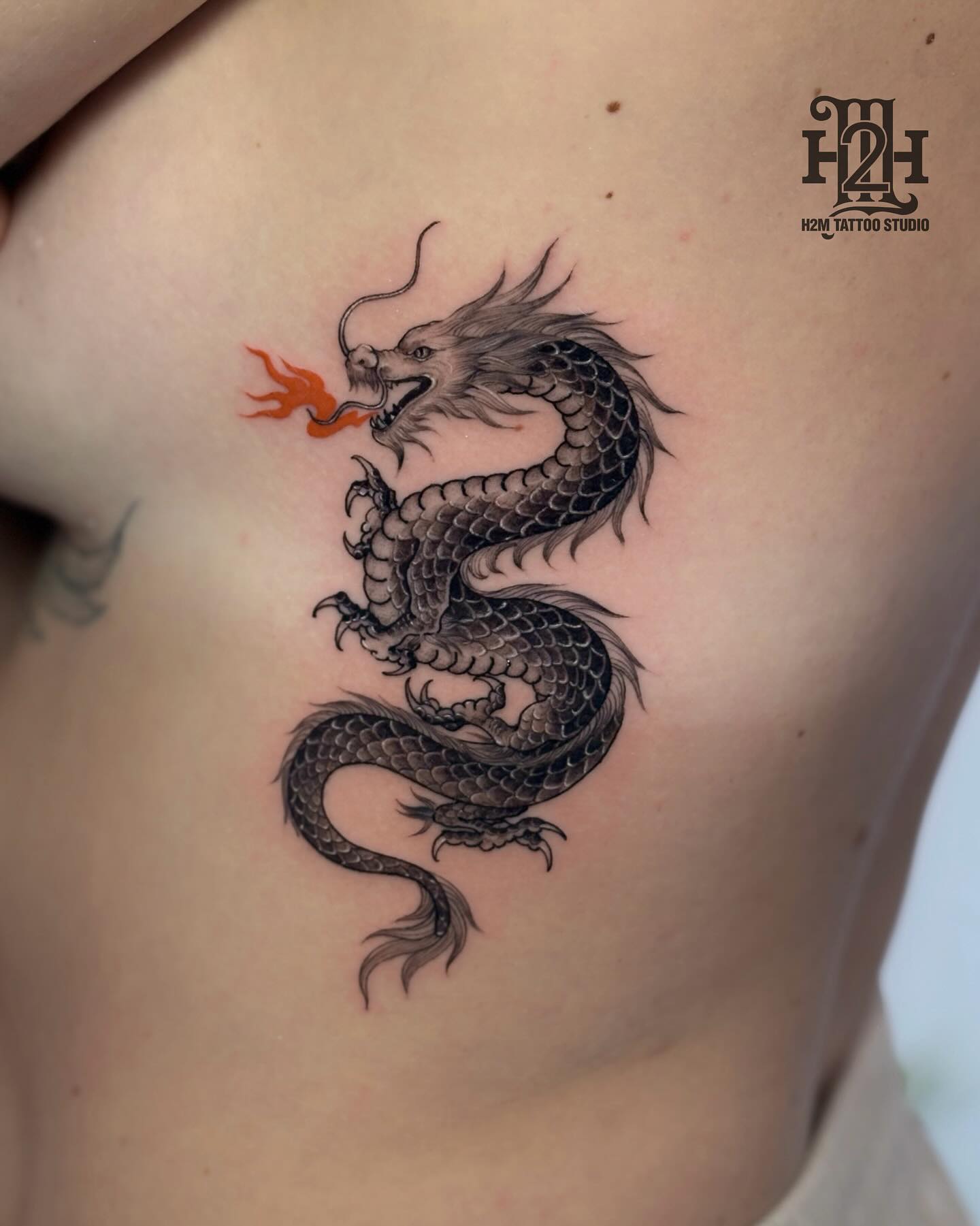
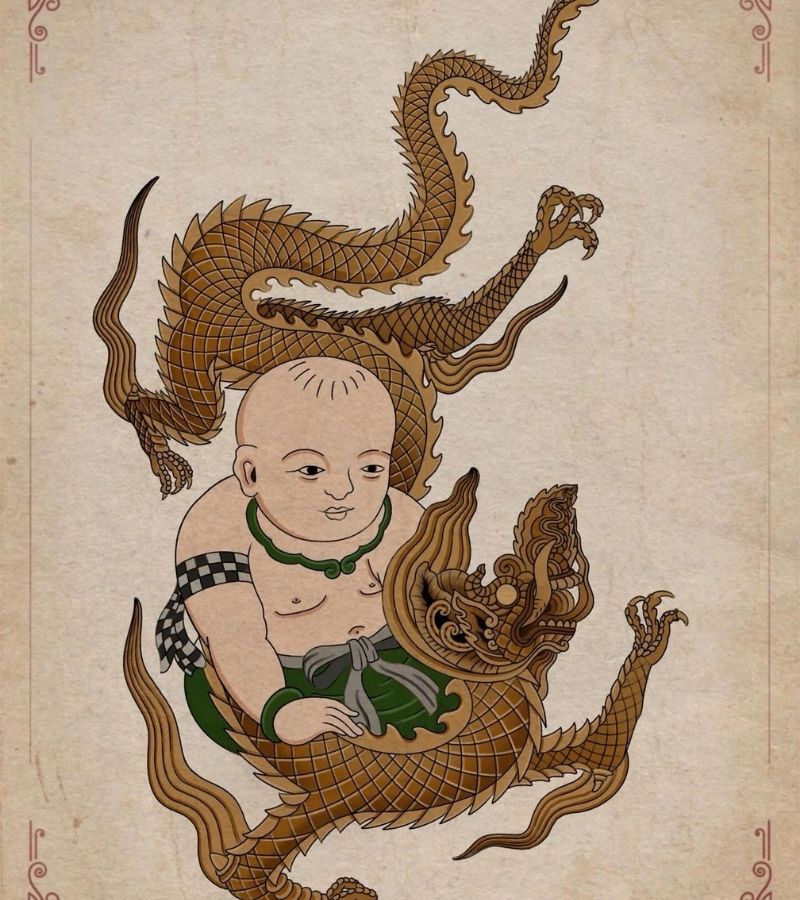
The dragon was, without question, the most prestigious Vietnamese tattoo motif of the era. Trần kings tattooed dragons onto their thighs to affirm their identity as descendants of the mythical Lạc Long Quân, while the elite Thánh Dực ("Divine Wings") army had soldiers tattooed with dragons across their chests, backs, and arms — a design meant to project both intimidation on the battlefield and absolute devotion to the crown. Each dynasty gave the dragon its own visual signature: Lý-era dragons carried a more slender, jewel-holding form influenced by Indian myth, while Trần-era dragons grew more elaborate, with larger heads, sharp claws, and heavily scaled bodies — a style still referenced by tattoo artists working in the traditional Vietnamese style today.
Other fierce animals — tigers, leopards, eagles — were also popular during this period, each believed to lend the wearer that creature's particular strength or agility. This golden age is also where much of the visual language now associated with Vietnam Tattoos first took shape.
What Are the Core Symbols in Vietnamese Traditional Tattoo Art?
Beyond the dragon, a handful of motifs recur across Vietnamese tattoo history precisely because they carry the deepest cultural weight. Each one tells a different part of the national story.
Dong Son Drum Patterns
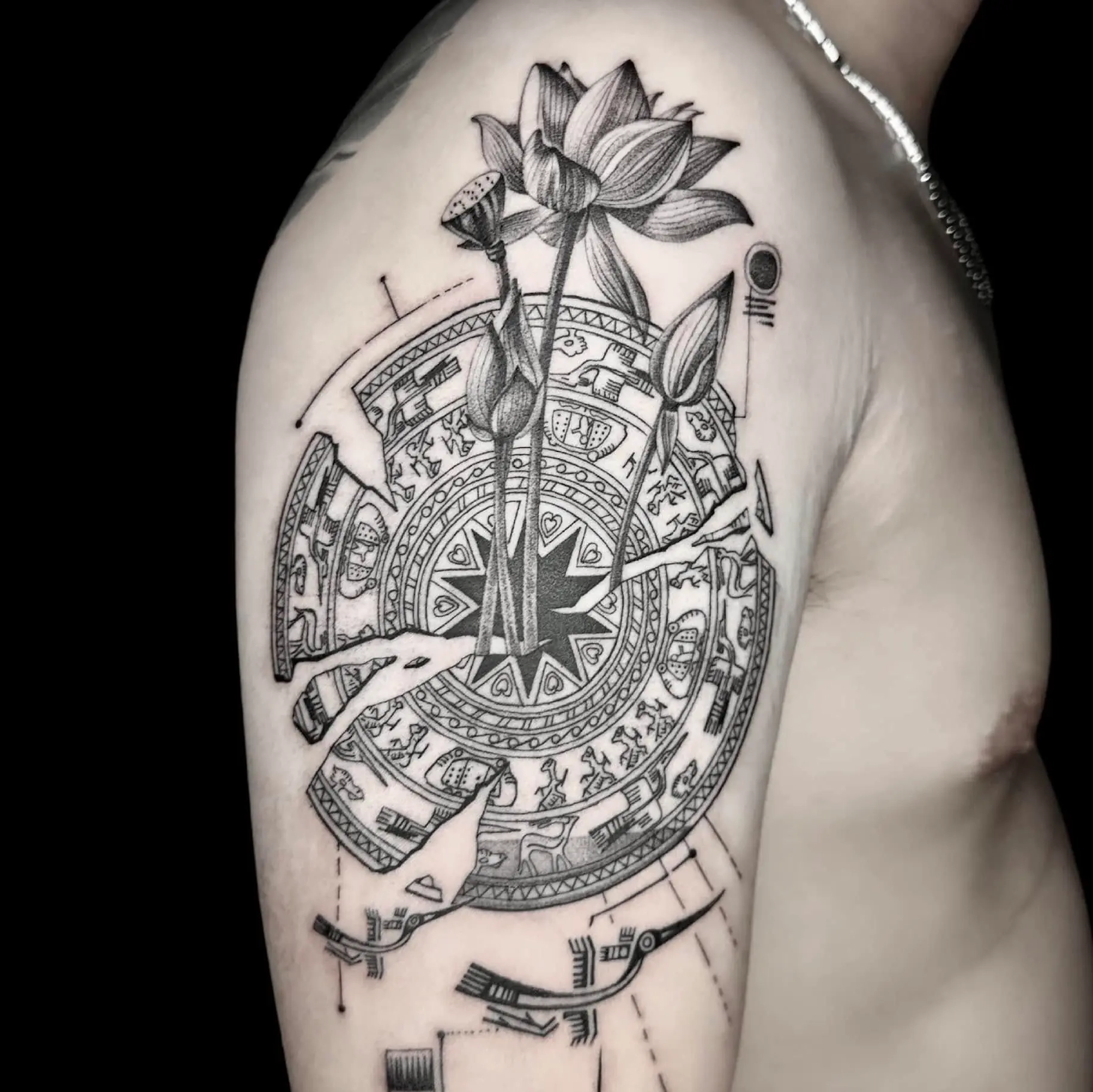
The Đông Sơn bronze drum is one of the oldest and most recognizable symbols of Vietnamese civilization. Archaeologists date these drums to roughly 600 BCE through the third century CE, with the first major find unearthed in 1924 in Đông Sơn village, Thanh Hóa province — a discovery that gave the entire Bronze Age culture its name. The drum's face is organized around a radiating sunburst at its center, representing life and the supreme power of nature, surrounded by circling Lạc birds symbolizing freedom and the connection between heaven and earth, and scenes of boats and people that depict community labor and solidarity. As a tattoo, a Dong son drum tattoo translates into intricate, geometric linework that reads as unmistakably Vietnamese — often chosen by people who want a design rooted in archaeology rather than legend alone.
The Lotus (Hoa Sen)
The lotus holds a different kind of symbolism — one tied to resilience and inner clarity rather than martial strength. Rising clean and unstained from muddy water, the lotus has long represented purity, spiritual growth, and the ability to remain grounded through difficulty. Because its meaning is gentler and more personal than the dragon's, the lotus is one of the most popular Vietnamese traditional tattoo choices for wearers — men and women alike — who want linework that feels reflective rather than aggressive. Artists frequently soften its lines or pair it with water and geometric border work reminiscent of Đông Sơn patterns to keep the design rooted in a traditional visual language.
The Crane (Chim Hạc)
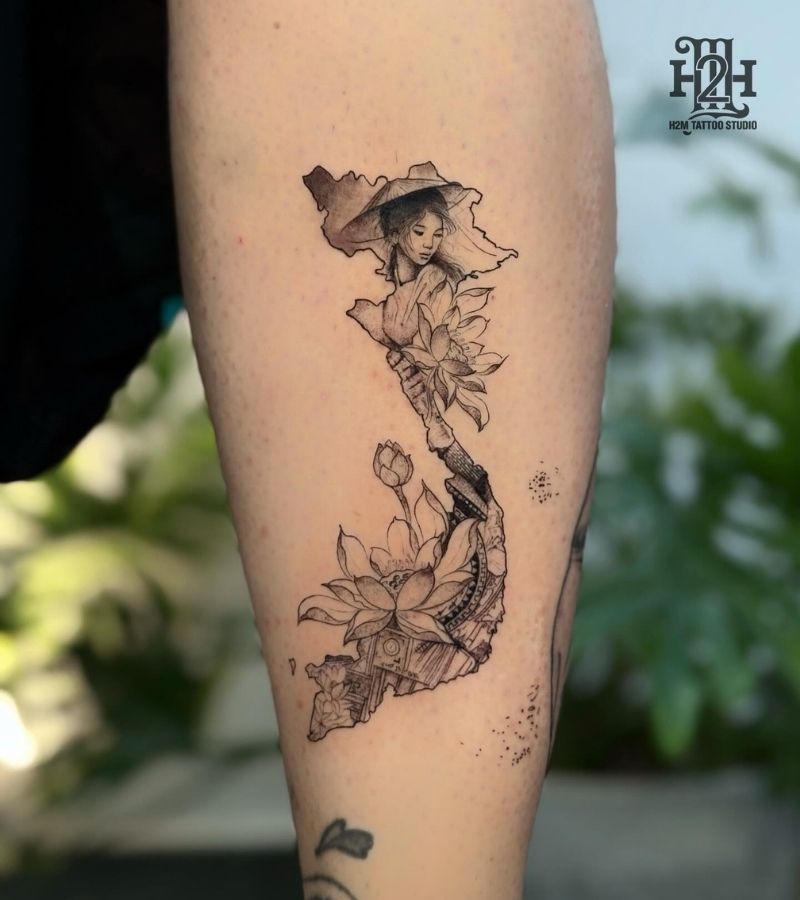
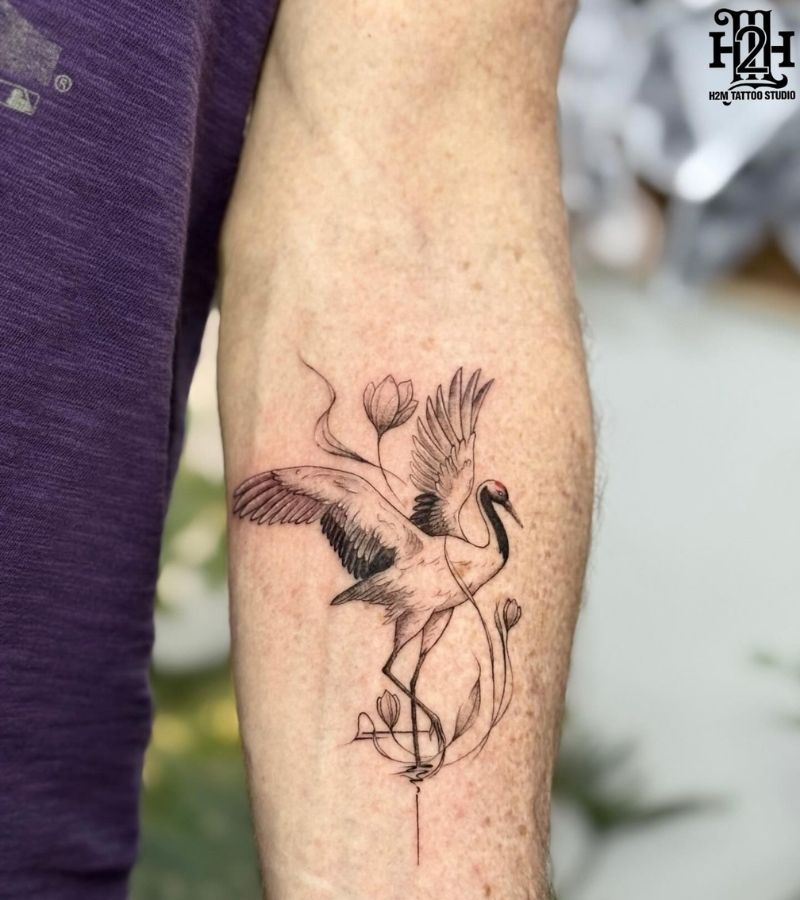
The crane appears throughout Vietnamese folklore, temple carvings, and Đông Sơn artifacts as a bridge between the earthly and the sacred. Long associated with longevity, wisdom, and grace, the crane is often depicted mid-flight or standing beside water and lotus flowers, reinforcing its role as a messenger between worlds. In tattoo form, the crane tends to favor elegant, elongated linework, making it a favored motif for pieces along the spine, ribs, or forearm where a sense of movement matters as much as the symbol itself. Some wearers pair the crane with figures in áo dài or other period clothing, echoing the imagery seen in a vietnam traditional dress tattoo.
Calligraphy (Chữ Nôm & Quốc Ngữ)
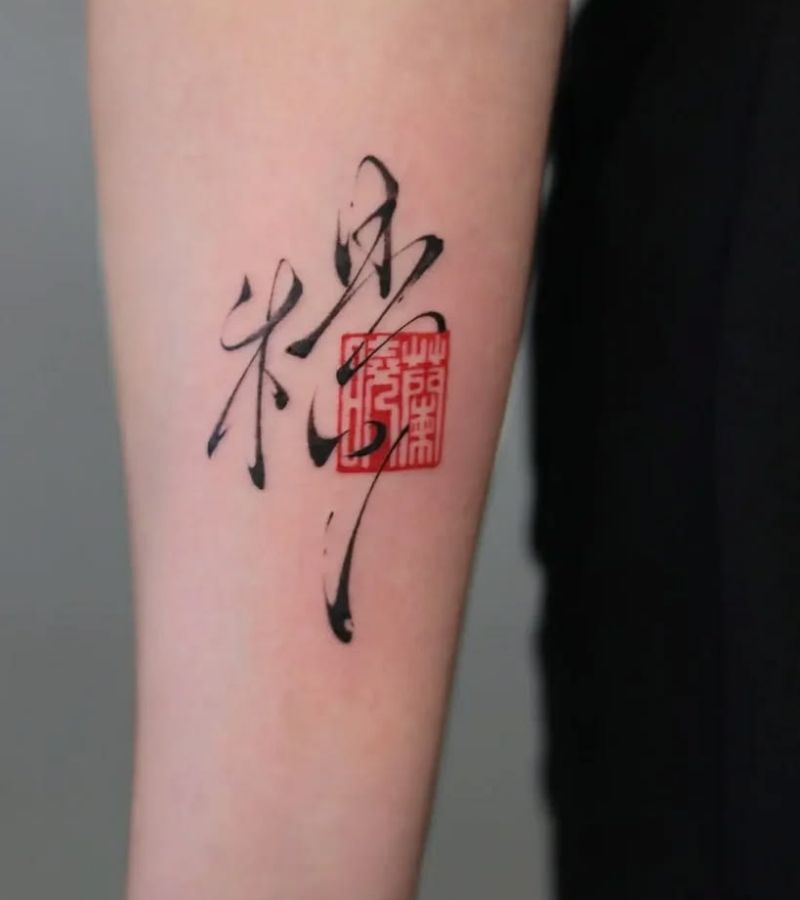
Where the dragon, lotus, and crane speak through imagery, calligraphy speaks directly through language. Chữ Nôm — the historic script adapted from Chinese characters to write the Vietnamese language — carries centuries of literary and philosophical weight, appearing in everything from royal edicts to Trần-era poetry. Modern Quốc Ngữ, the Latin-based script used in Vietnam today, offers a more legible alternative for wearers who want a specific word, name, or proverb rendered in ink rather than symbol. Both approaches let a tattoo carry a precise, personal message alongside the cultural weight of the script itself — something a purely visual motif cannot always do on its own.
Why Did Vietnamese Tattoo Traditions Decline — and How Did They Return?
Tattoo culture in Vietnam did not fade by accident. As Confucian ideology took deeper root in the royal court, its teaching that the body — a gift from one's parents — should remain unmarked began to clash directly with the tattooing custom. Emperor Trần Anh Tông himself broke from his ancestors' tradition of dragon tattoos, and by 1323, under Trần Minh Tông, soldiers were no longer required to be tattooed at all. Over the following centuries, tattooing slipped further out of favor and, in later dynasties, was even associated with criminality or servitude rather than nobility.
That stigma held for generations — until a modern resurgence of national pride brought ancient motifs back into circulation. Today, a growing number of Vietnamese tattoo artists and clients are deliberately returning to Đông Sơn patterns, dragon iconography, and traditional calligraphy, not as a passing style but as a way of carrying inherited identity forward. What was once feared or stigmatized is now treated as heritage worth wearing.
Where Can You Experience Authentic Vietnamese Traditional Tattoos Today?
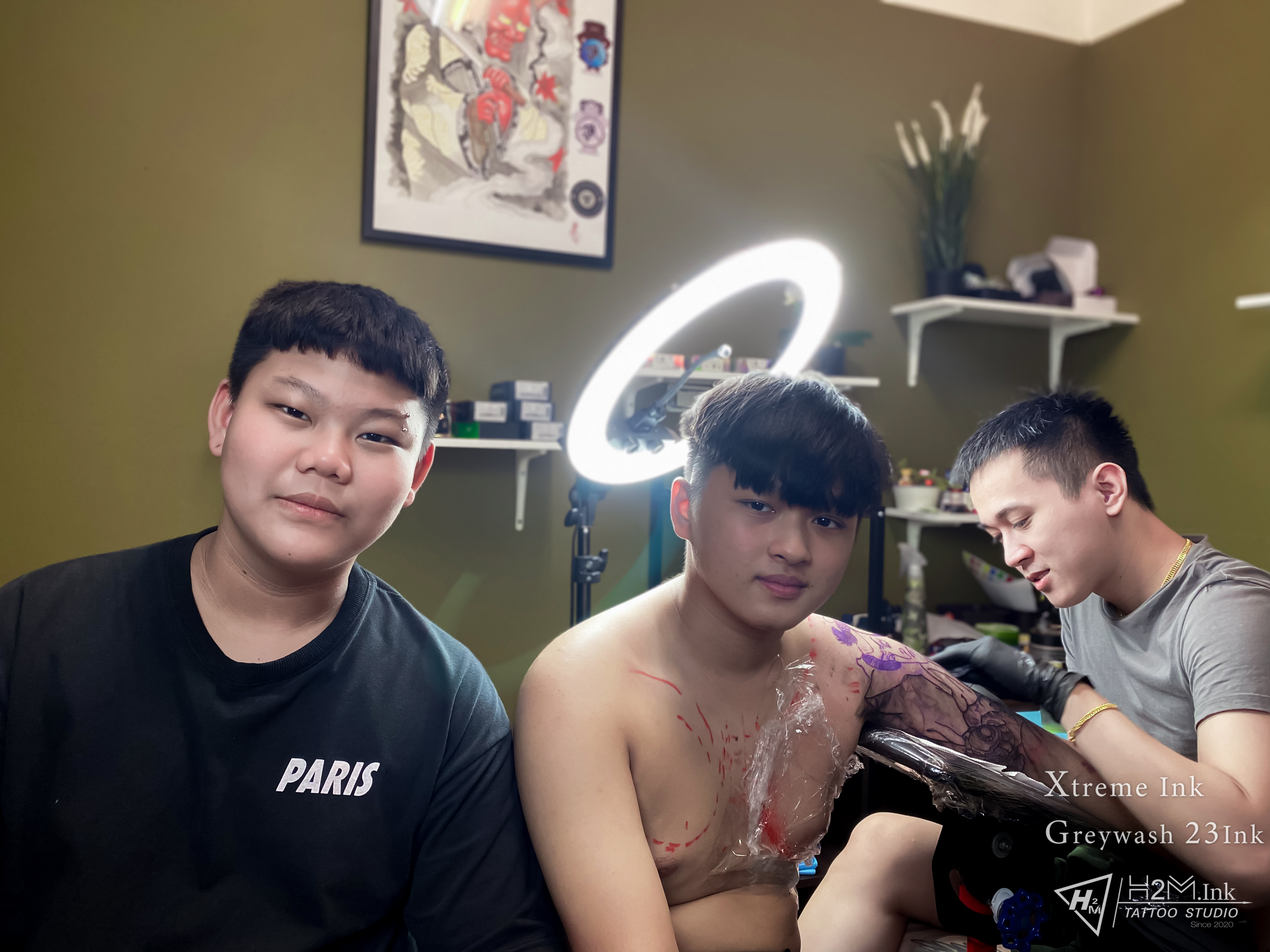
If you're looking to turn this history into a real piece of ink rather than just a story you read about, the studio matters as much as the design. At H2M Tattoo Studio, based in the heart of Hanoi's Old Quarter just a short walk from Hoàn Kiếm Lake, we specialize in translating Vietnamese traditional tattoos history — dragons, Đông Sơn drum linework, lotus, crane, and calligraphy — into pieces that respect where each symbol came from while fitting the body and story of the person wearing it.
What working with H2M looks like in practice:
- Location that matters: studio based in Hanoi's Old Quarter, near Hoàn Kiếm Lake, in the same historic district where much of this tattoo history unfolded.
- Symbol-first consultation: every project starts with understanding the meaning behind the motif you're drawn to, not just its visual shape.
- Dynasty-accurate reference work: designs draw on documented sources — Trần-era dragon forms, Đông Sơn drum patterns, Chữ Nôm and Quốc Ngữ calligraphy — rather than a generic vietnamese tribal tattoo copied off a wall of flash art.
- Collaborative custom design: sketching, revisions, and open conversation continue until the piece is genuinely yours, not a copy-paste template.
- Techniques built for longevity: modern equipment and safety standards applied to traditional motifs, so the artwork holds its detail for years.
Conclusion: A Living Story, Not Just a Design
From a river legend about water monsters to a golden age of royal dragon tattoos, through a long stretch of stigma, and now into a confident modern revival — Vietnamese traditional tattoos history is a genuinely unbroken thread connecting today's wearers to their ancestors. Choosing a lotus, a Đông Sơn drum pattern, a dragon, a crane, or a line of Chữ Nôm calligraphy isn't just picking a design; it's choosing which part of that four-thousand-year story you want to carry forward. If that's the kind of tattoo you're after, H2M Tattoo Studio in Hanoi's Old Quarter is ready to research, sketch, and ink that story with you — reach out to book a consultation and start the conversation about your piece.
Frequently Asked Questions (FAQ)
How old is Vietnamese traditional tattoo history? Vietnamese tattoo history is traced back roughly 4,000 years to the Hùng King era, based on records in the Đại Việt Sử Ký Toàn Thư and the earlier legend collection Lĩnh Nam Chích Quái.
Why did ancient Vietnamese people get tattoos in the first place? The earliest tattoos were protective — worn by people living and fishing near rivers to avoid being harmed by aquatic creatures. Over time, the meaning expanded to signify courage, maturity, and tribal or social status.
Why was the dragon such an important tattoo symbol in Vietnamese history? Under the Trần dynasty, the dragon represented royal lineage and absolute loyalty to the throne. Trần kings tattooed dragons on their thighs, and elite soldiers of the Thánh Dực army wore dragon tattoos across their chest, back, and arms.
Are traditional Vietnamese tattoos suitable for women? Yes. Motifs like the lotus, crane, and calligraphy are frequently adapted with softer, more delicate linework, making them well suited to feminine placements without losing their cultural meaning.
Can I combine multiple traditional motifs, like a lotus and a crane, in one design? Yes — pairing motifs is common, since many symbols already appear together in Đông Sơn drum art and Vietnamese folklore. A skilled artist can layer meaning without overcrowding the composition.
What should I know before getting a Vietnamese traditional tattoo? The most important thing is respect: choose a symbol you genuinely understand and connect with, rather than picking a design purely for its look. A good studio, like H2M Tattoo Studio, will walk you through the history and meaning of each motif before any ink touches skin.
Where is H2M Tattoo Studio located? H2M Tattoo Studio is located in Hanoi's Old Quarter, a short walk from Hoàn Kiếm Lake — the historic district closely tied to much of the Vietnamese traditional tattoo history described above.