

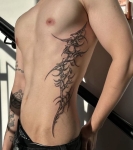
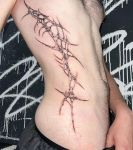
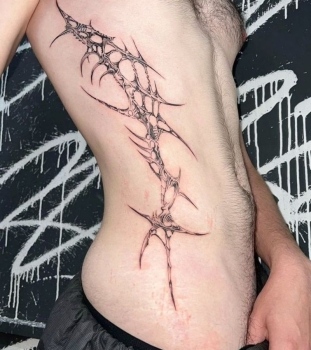
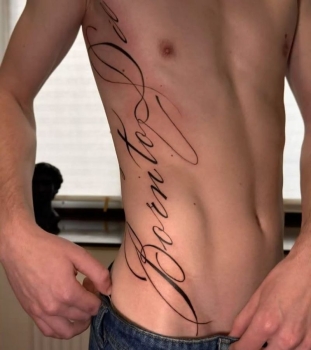
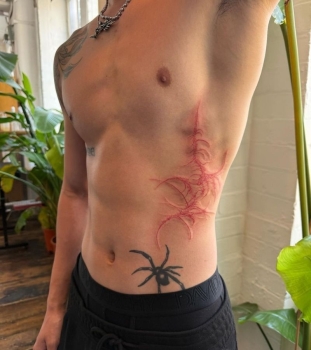
Rib tattoos for men rank among the most requested placements in professional tattoo studios globally, valued for their long canvas, natural body flow, and the ability to integrate with hip, stomach, and chest work. H2M Tattoo Studio in Hanoi specializes in large-format rib pieces across Japanese traditional, blackwork, fine line, and realism styles. Artists recommend a full consultation before beginning any rib piece that connects to adjacent placements. Pain is real but manageable with proper preparation - most men rate the experience as intense rather than unbearable. Healing takes 3–4 weeks of surface recovery and up to 3 months for full skin settlement.
Key Takeaways
- The rib cage offers one of the longest continuous canvases on the male body, ideal for narrative or large-format artwork
- Rib pieces connect naturally to hip, stomach, and sternum placements - plan the full composition before your first session
- Pain intensity is high but predictable; meal timing, hydration, and breathing technique significantly reduce discomfort
- Choosing an artist with documented rib experience matters more here than on most other placements
Why Men Choose the Ribs: The Case for This Placement
The rib cage has held a distinct place in tattoo culture for decades, and demand has only grown as men invest in larger, more intentional body art. The reasons are straightforward: the ribs offer a canvas that is simultaneously expansive and personal. Long enough to accommodate an entire scene or narrative, but positioned where only the wearer - and those they choose - will see it regularly.
From a design standpoint, the ribs reward ambition. The natural curve of the torso gives flowing artwork - wave sequences, dragon bodies, botanical vines - an organic movement that flat surfaces like the forearm simply cannot replicate. A well-placed rib piece looks like it belongs to the body, not just on it.
The placement also carries a psychological dimension that many men find compelling. The ribs sit close to the chest - a location that, across many cultures, carries associations with strength, vulnerability, and personal conviction. Men frequently choose this placement for their most meaningful pieces: memorial work, philosophical quotes, imagery tied to formative experiences.
What Styles Work Best for Rib Tattoos for Men?
Not every tattoo style performs equally on the rib cage. The skin here sits closer to the bone than on the upper arm or thigh, the surface curves significantly, and the canvas is long on the vertical but can be narrow at specific sections. These five styles consistently deliver the strongest results:
Japanese Traditional (Irezumi)
Japanese tattooing was practically designed for the rib cage. Koi fish, rising phoenixes, samurai figures, and writhing dragons all benefit from the elongated canvas and natural curve. The bold outlines and layered shading of traditional irezumi age exceptionally well on the ribs, and the style integrates seamlessly when the piece extends toward the back, chest, or hip. This remains the most popular style for large-scale rib work globally.
Blackwork and Geometric
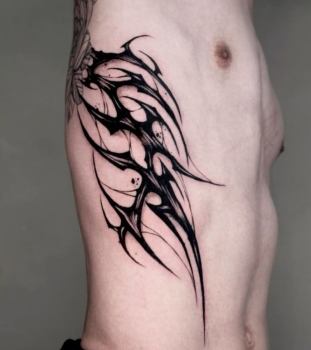
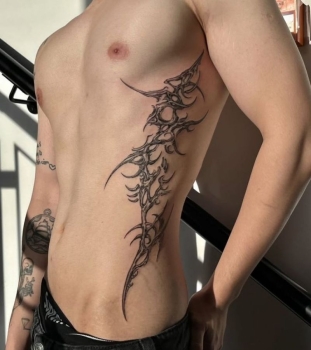
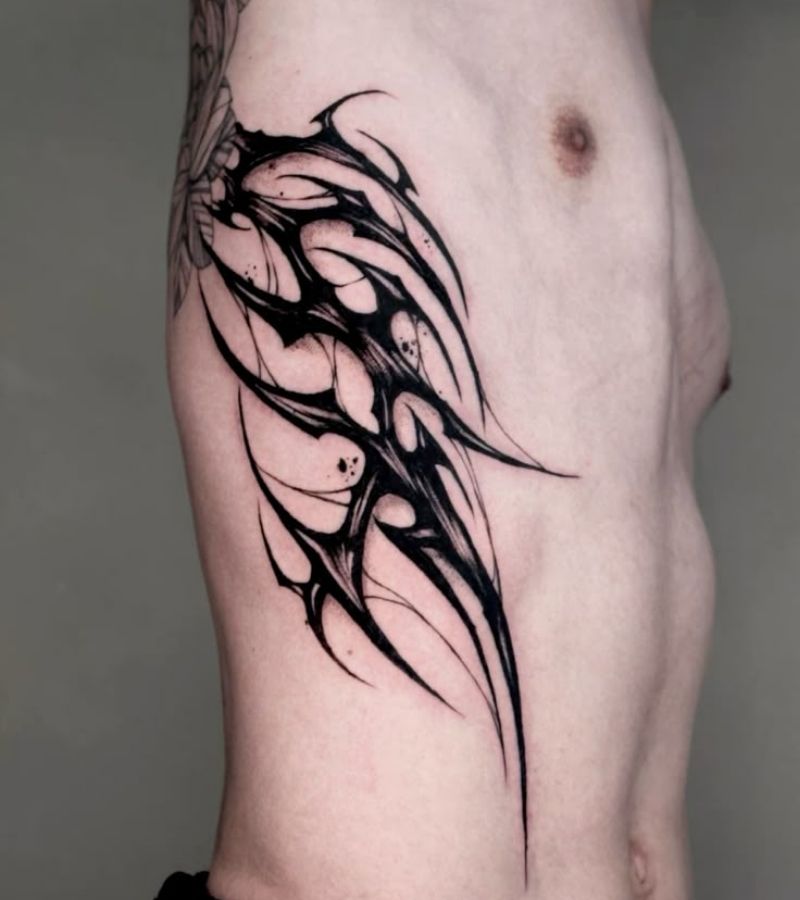
High-contrast blackwork - whether tribal-inspired patterns, sacred geometry, or abstract graphic compositions - is an excellent choice for the ribs. The absence of color removes concerns about pigment migration and long-term fading, and geometric precision looks striking against the body's natural lines. This style rewards artists and clients who value longevity over trend.
Fine Line and Illustrative
For men who prefer something quieter in scale but no less sophisticated, fine-line illustrative work - botanical sketches, architectural drawings, constellation maps - translates beautifully onto the ribs. Precision is everything here. Fine-line work on a moving, curved surface requires an artist with exceptional technical control. Portfolio review is non-negotiable before committing to this style.
Script and Typography
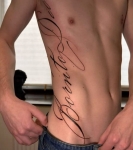
A single line of text following the natural arc of the rib cage remains one of the most enduring tattoo choices a man can make. Quotes, names, coordinates, and lyrics have all found their permanent home here. Font selection matters significantly: overly decorative scripts can blur and merge within five to ten years, while clean serif or sans-serif lettering maintains legibility for decades.
Realism and Portraiture
Photorealistic work - faces, animals, landscapes - makes a powerful statement on the ribs. The surface area accommodates substantial detail, and the slight curve of the torso gives large portrait pieces a sense of dimension. This style demands more from the artist than perhaps any other, however. Verify realism experience specifically; technical skill in one style does not automatically transfer.
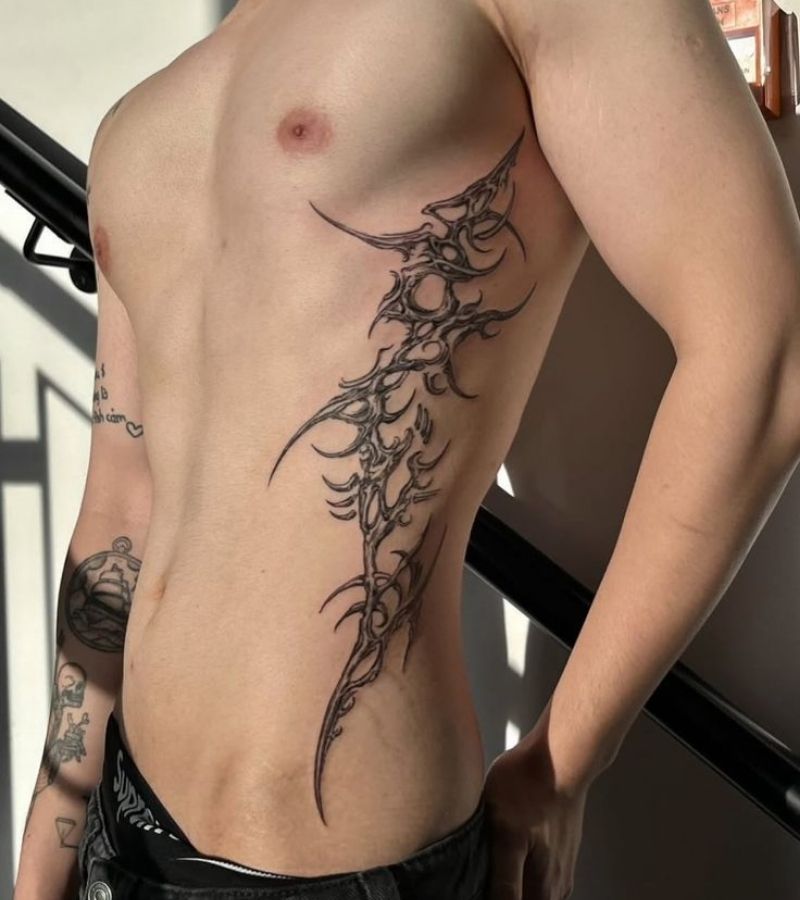
Combining Rib Tattoos with Full-Torso Compositions
The rib cage rarely exists in isolation for men who think seriously about body art. It is, more often than not, the cornerstone of a larger torso composition - the anchor from which adjacent placements extend.
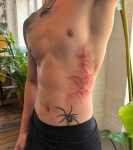
Ribs to hip: A piece that originates at the lower rib line and flows downward into a men hip tattoo creates a unified side-body composition. Dragon wraps, botanical trees with root systems, and wave progressions all transition naturally across this section of the torso. This combination works best when both placements are planned together before either session begins.
Ribs to stomach: Extending rib work across the lower torso to connect with stomach tattoos men is increasingly common in large-scale Japanese and neo-traditional compositions. The lower ribs blend into the stomach section without a natural visual break, making this one of the more seamless multi-placement transitions available on the male torso.
Ribs to sternum: Symmetrical pieces that meet at the center of the chest and expand outward across the ribs are among the most visually dramatic options in torso tattooing. A sternum tattoo men can serve as the centerpiece of a composition that fans outward across both rib sections, creating a unified chest-and-rib statement. Moths, mandalas, and mirrored geometric forms appear most frequently in this configuration.
Planning principle: If you intend to connect two or more placements, schedule a single consultation for the entire composition - not just the first session. Artists who see the full picture from the start will make choices on spacing, scale, and directional flow that make the final composition look cohesive rather than assembled over time.
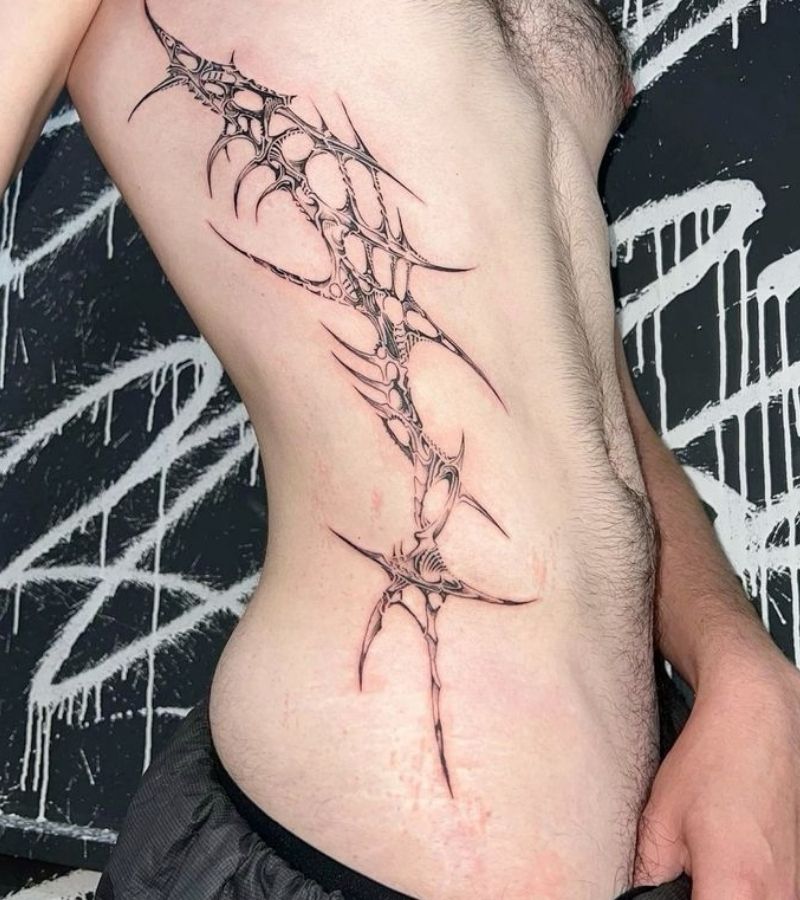
Pain: What to Realistically Expect
There is no honest way to describe rib tattoo pain as mild. The rib area ranks consistently among the more intense placement options for men, and the reasons are well understood: less cushioning between skin and bone, and the constant respiratory movement means the canvas is never fully still during a session.
That said, intensity is not the same as unmanageable. Men who have sat through rib sessions consistently report that the experience was more bearable than they anticipated - provided they prepared properly.
Before your session:
- Eat a complete, balanced meal within two hours of your appointment. Low blood sugar dramatically amplifies pain perception and increases the risk of lightheadedness.
- Maintain consistent hydration for the two to three days leading up to your session - not only the morning of. Well-hydrated skin takes ink more evenly and responds better during long sessions.
- Sleep well the night before. Fatigue lowers pain tolerance significantly, and rib sessions are rarely short.
- Schedule morning appointments when possible. Pain tolerance follows a natural daily rhythm, and most people handle discomfort better earlier in the day.
During your session:
- Practice long, controlled exhales during the most intense linework passes. Deep, slow breathing engages the body's natural pain-management response and keeps the torso more stable for the artist.
- Communicate openly. Every professional studio expects clients to ask for short breaks. Requesting a pause is not a sign of weakness - it is practical management of a long process.
- Avoid caffeine on the day of your session. Stimulants increase heart rate and skin sensitivity without providing any benefit.
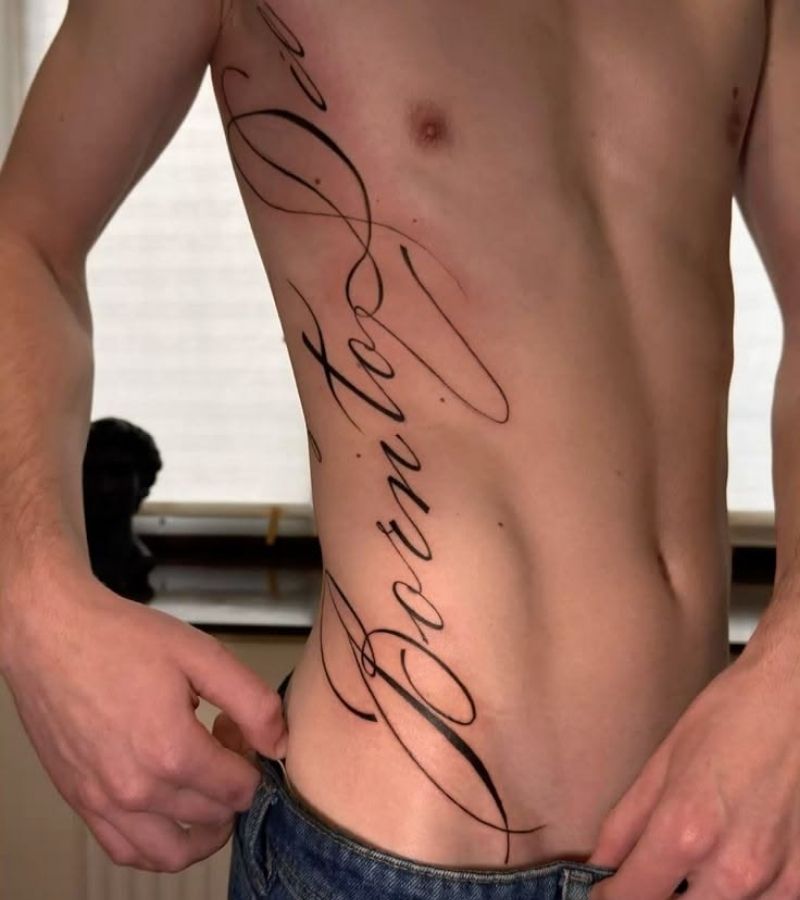
Aftercare for Rib Tattoos
The rib cage presents specific aftercare challenges that do not apply to most other placements. Breathing is continuous, clothing covers the area, and men often discover that ordinary daily movement - bending, stretching, twisting - creates friction and disruption they didn't anticipate.
The first two weeks:
Wear loose-fitting, natural-fiber clothing over the tattooed area. Fitted athletic shirts, waistbands, and compression garments placed directly on a fresh rib tattoo will cause mechanical irritation and negatively affect healing outcomes. If your occupation requires physical activity or fitted clothing, discuss timing with your artist before booking.
Side sleepers will need to temporarily adjust their position. Sleeping on a fresh rib tattoo for extended periods creates consistent pressure that can disrupt the healing surface. A temporary positional change is far preferable to a compromised tattoo.
Moisturize with an unscented, tattoo-specific lotion two to three times daily once the initial healing phase begins (typically after the first 24–48 hours of wrap or film coverage). The skin on the ribs can dry out quickly, particularly in air-conditioned environments.
Ongoing care:
Avoid submerging the tattoo in water - pools, ocean, baths - until the surface is fully healed, typically three to four weeks. Showering is acceptable; prolonged soaking is not.
Apply SPF 50+ sunscreen to healed rib tattoos before sun exposure for the life of the tattoo. Ultraviolet exposure is the primary cause of tattoo color degradation and line softening over time. This applies to beach days, athletic outdoor activity, and any situation where the tattooed area is exposed to direct sunlight.
H2M Tattoo Studio - Hanoi's Address for Rib Tattoos for Men
If you are looking for rib tattoos for men executed at a professional level in Hanoi, H2M Tattoo Studio has built a well-earned reputation as the studio serious collectors return to.
H2M brings together a team of artists with deep, documented specializations across the styles that define high-quality rib work - Japanese traditional, blackwork, fine line, and realism. Every rib piece begins with a thorough placement consultation, where the artist reviews not just the requested design, but how it will interact with the body's natural contours and any existing or planned adjacent work.
Why clients consistently choose H2M for rib work:
- Placement-first approach - Artists assess the full torso composition before a single line is drawn, ensuring the rib piece looks intentional within the broader body context
- Multi-session planning - For complex rib work extending to hip, stomach, or chest placements, H2M plans across sessions from the first consultation, not retrospectively
- Hygiene and safety as standard - Single-use needles, autoclave-sterilized equipment, and strict studio sanitation protocols on every appointment
- Style depth across the board - Whether the vision is a full irezumi sleeve-integration, a standalone blackwork statement, or a fine-line illustrative piece, H2M maintains artist specialists for each
- Aftercare that follows you home - Every client receives clear, written aftercare guidance specific to their placement, not generic printed sheets
- No walk-in pressure - Design development happens through genuine dialogue, not rushed consultations designed to get you in the chair quickly
Recognized by clients and the local tattoo community as a Best tattoo studio HaNoi, H2M has built its standing through consistent execution across thousands of pieces - not marketing claims. The portfolio is public, the work speaks for itself.
📍 H2M Tattoo Studio - Hanoi, Vietnam Book a consultation to start planning your rib piece with artists who approach every placement as a long-term investment in your personal art.
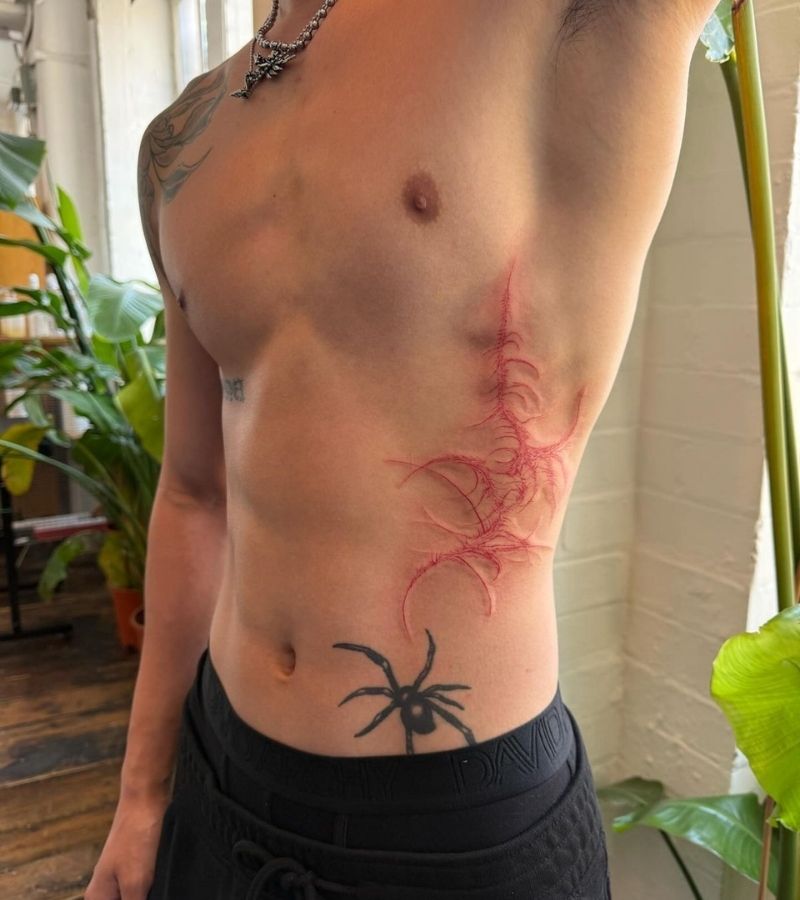
Conclusion
Rib tattoos for men occupy a unique position in the body art landscape - demanding enough in both execution and endurance to reward serious planning, yet personal enough in placement to carry real meaning for the men who choose them. The combination of a generous canvas, natural body curvature, and seamless integration with adjacent torso placements makes the ribs one of the most powerful locations available for large-format, high-intention work.
Recommendation: Begin with a full-composition consultation before booking your first session. Share the complete vision - including any adjacent placements you plan to connect - so the artist can design with the finished picture in mind. Choose an artist with a documented portfolio specifically in the style you want on the ribs, not just their strongest style overall.
CTA: Ready to start? Visit H2M Tattoo Studio in Hanoi to schedule a rib tattoo consultation with artists who specialize in placement-conscious design and large-format torso compositions.
FAQ: Rib Tattoos for Men
Q: How long does a rib tattoo take to heal completely?
Surface healing for rib tattoos typically completes within three to four weeks, during which the skin may appear dull, slightly faded, or flaky - all normal parts of the healing process. Full deep-skin healing takes closer to two to three months. The final appearance of the tattoo becomes fully visible only after this longer healing period concludes.
Q: How many sessions does a large rib piece require?
Session count depends on the size, style, and complexity of shading involved. A large-scale Japanese or realism rib piece typically requires three to five sessions of three to four hours each, spaced four to six weeks apart to allow healing between passes. Fine-line or simpler blackwork pieces may be completable in one or two sessions. Your artist will provide an estimate after reviewing the design in detail.
Q: Do rib tattoos distort with weight changes?
Moderate weight fluctuations have minimal visible impact on rib tattoos. Significant or rapid changes can affect the proportions of any tattoo. Organic, flowing compositions - which are common in rib work - tend to be more forgiving than rigid geometric grids if body composition changes over time.
Q: Can I work out after getting a rib tattoo?
Light activity such as walking is acceptable. Heavy training involving the core, significant sweating, twisting movements, or tight sportswear pressing against the healing tattoo should be avoided for a minimum of two weeks. Activities that repeatedly flex the tattooed area - such as sit-ups, weighted side bends, or contact sports - should wait until healing is confirmed complete.
Q: Is the rib cage a good first tattoo placement?
The ribs are not the most beginner-friendly placement due to the sustained discomfort involved. However, first-time clients with a clear design vision and high motivation for this specific placement complete rib sessions successfully every day at professional studios. Adequate preparation - full meal, hydration, rest, morning appointment - makes the experience significantly more manageable. An experienced artist will also pace the session to your comfort level.
Q: How do I choose between a horizontal and vertical rib design?
Horizontal designs follow the natural directional lines of the rib cage and tend to feel compositionally balanced and easy to read. Vertical designs run perpendicular to these lines and create a more dramatic visual impact but require careful scale planning to avoid a piece that looks cramped between ribs. Discuss both orientations with your artist during the consultation - a stencil mock-up directly on the body before committing is standard practice at reputable studios.