

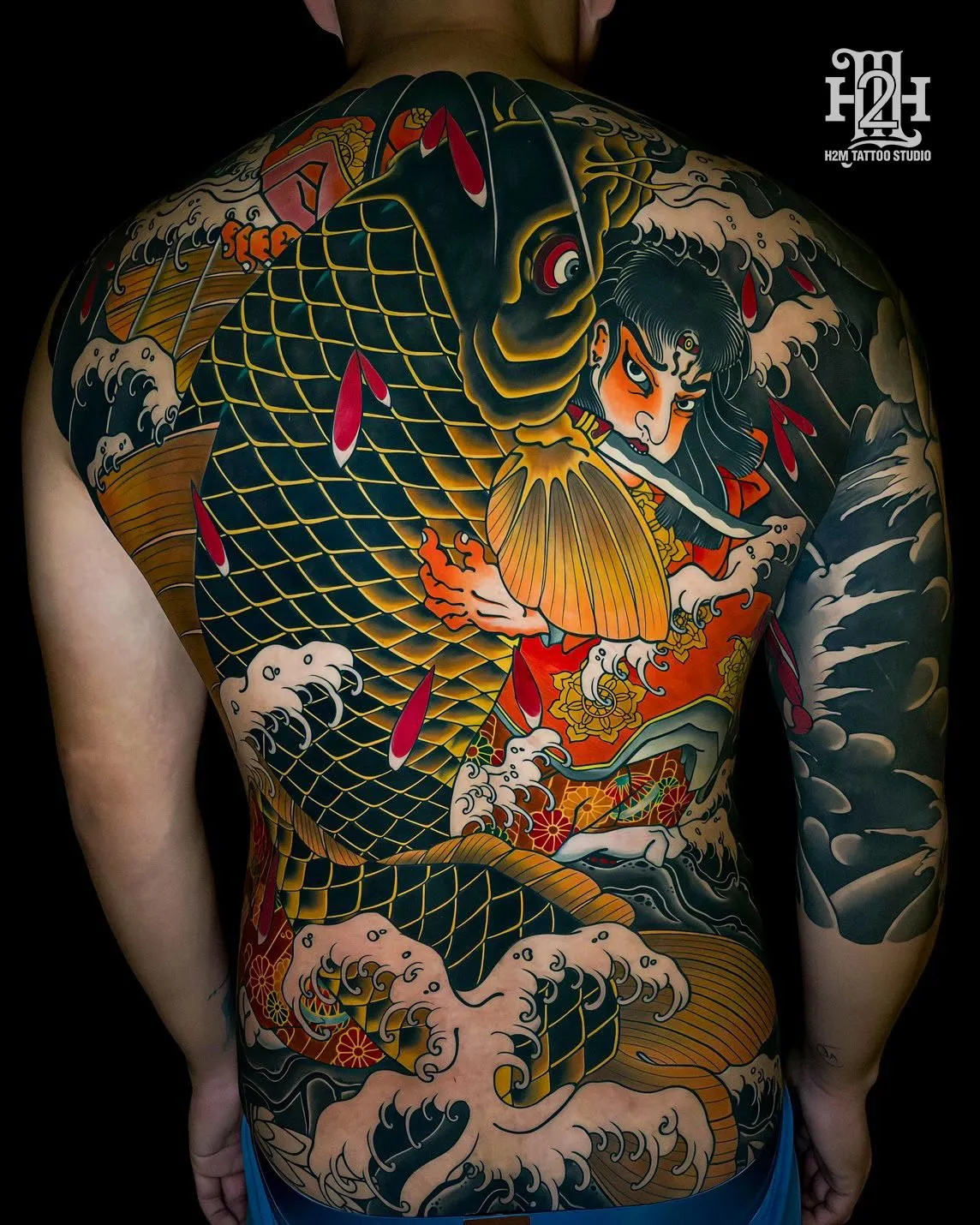
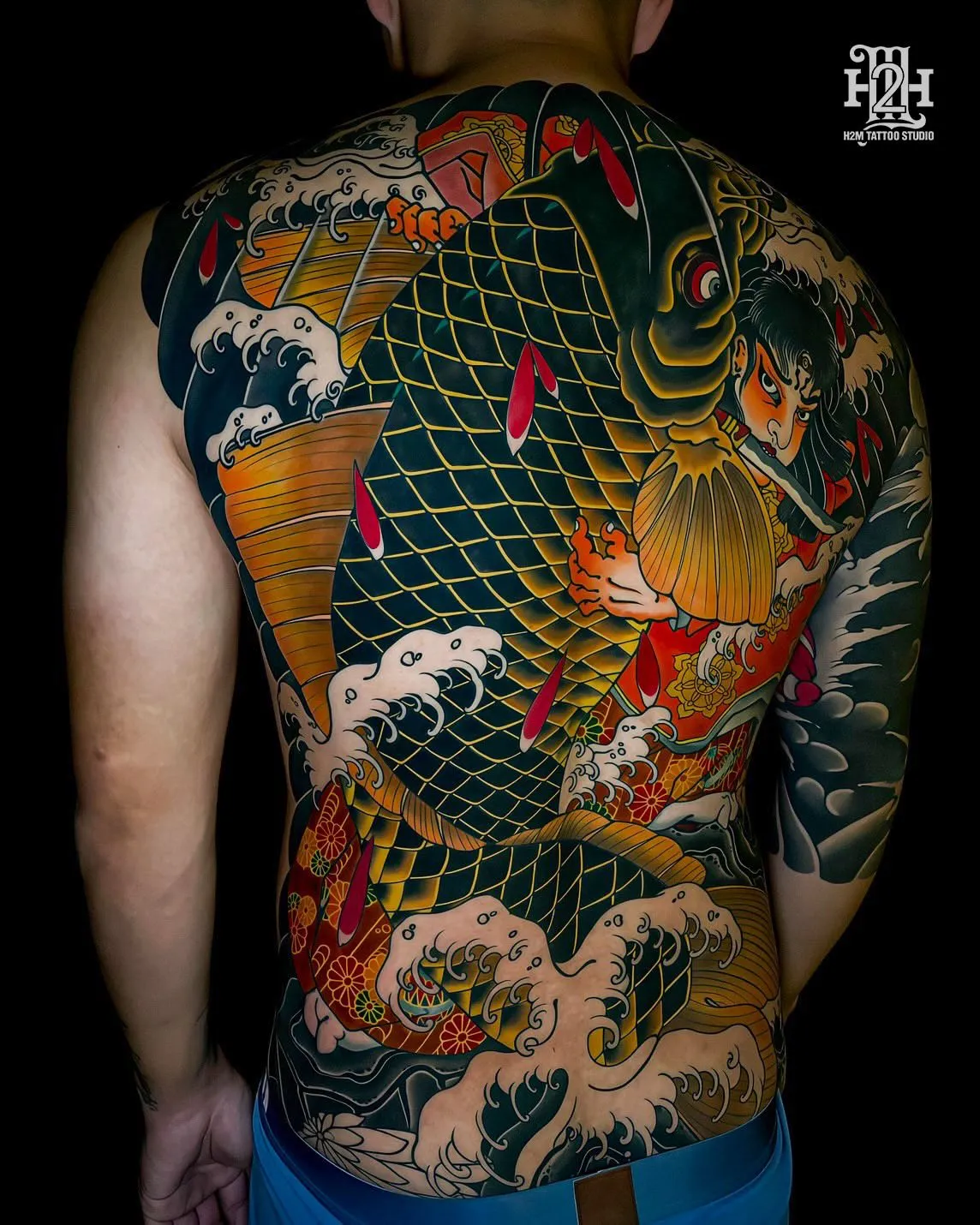
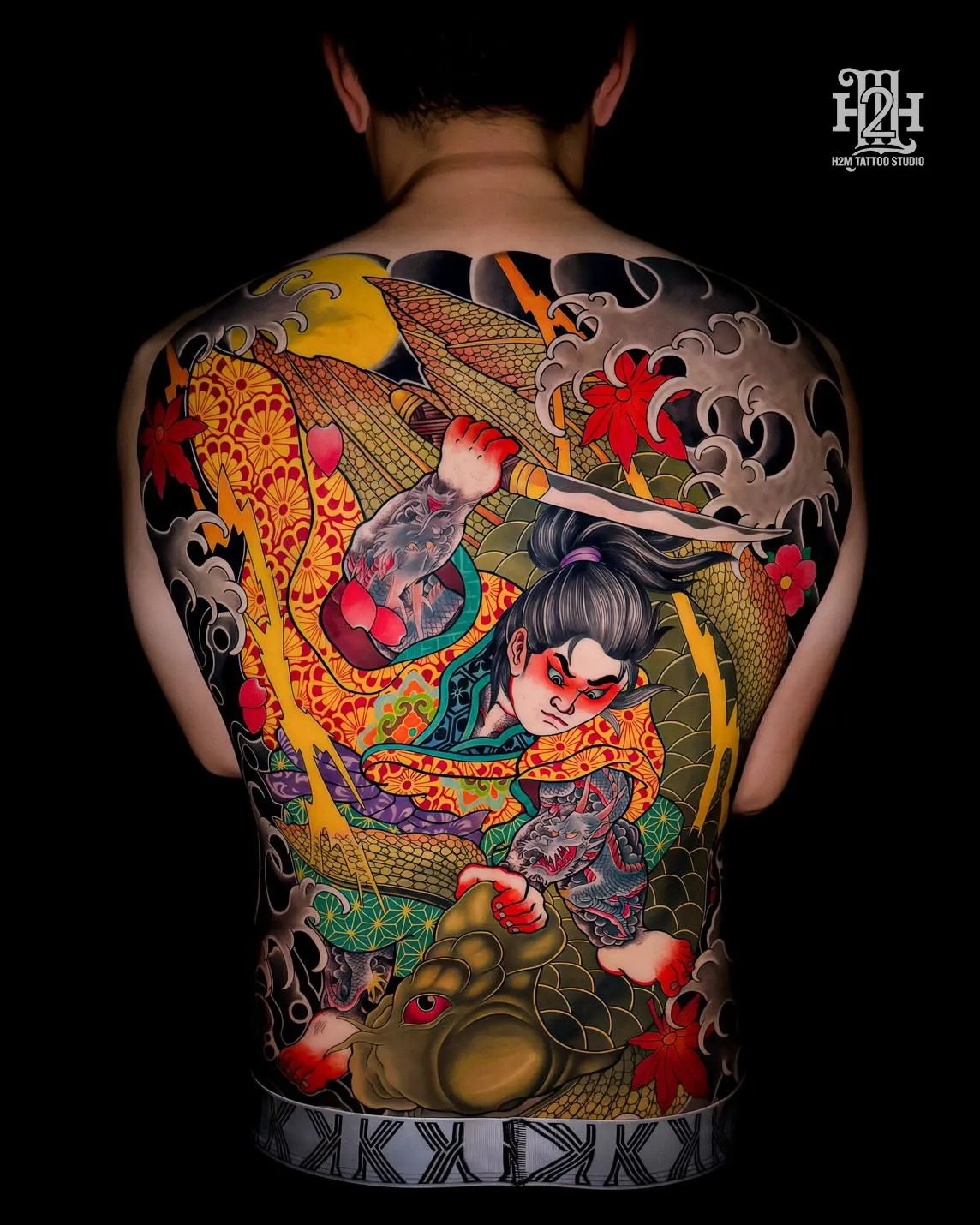
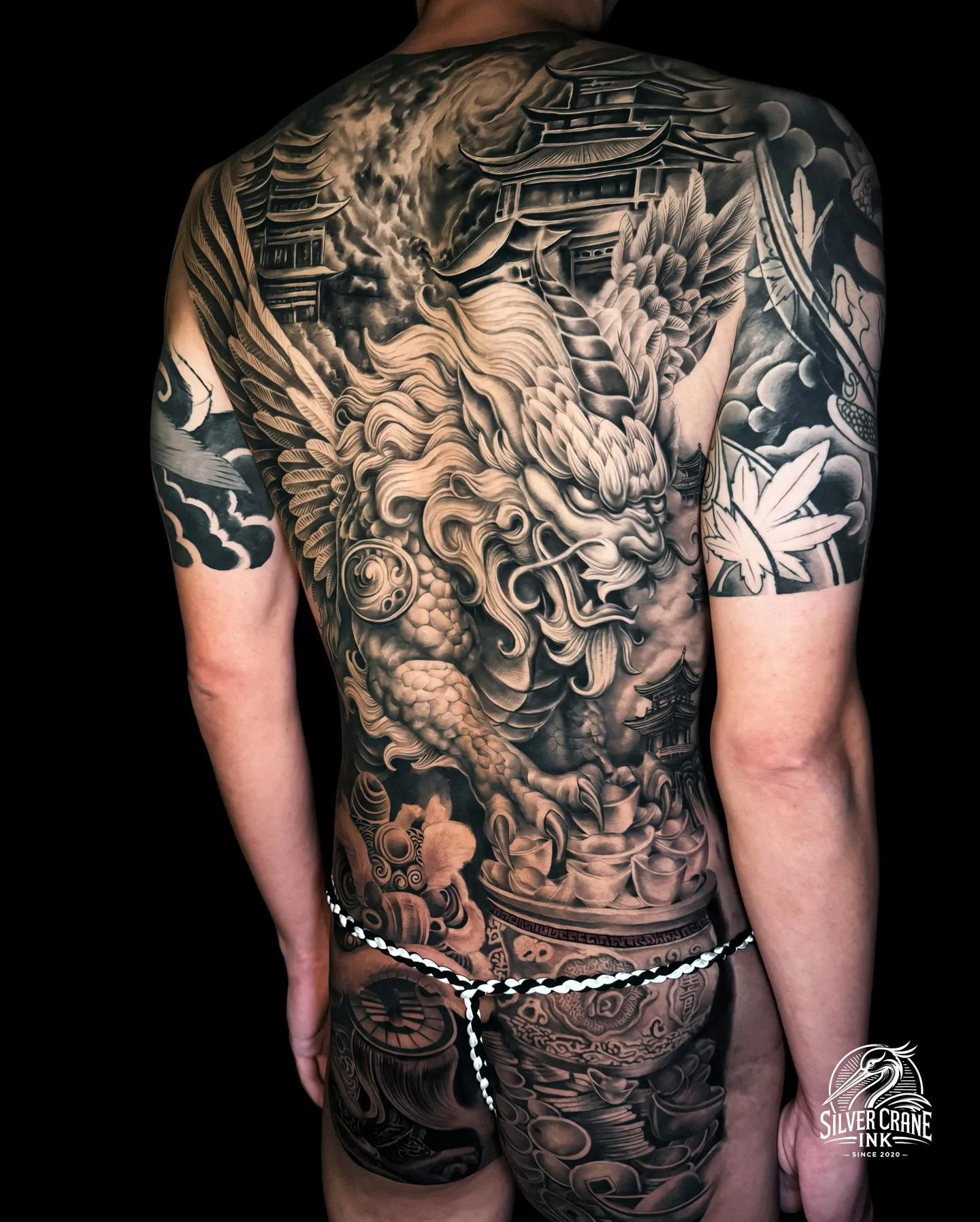
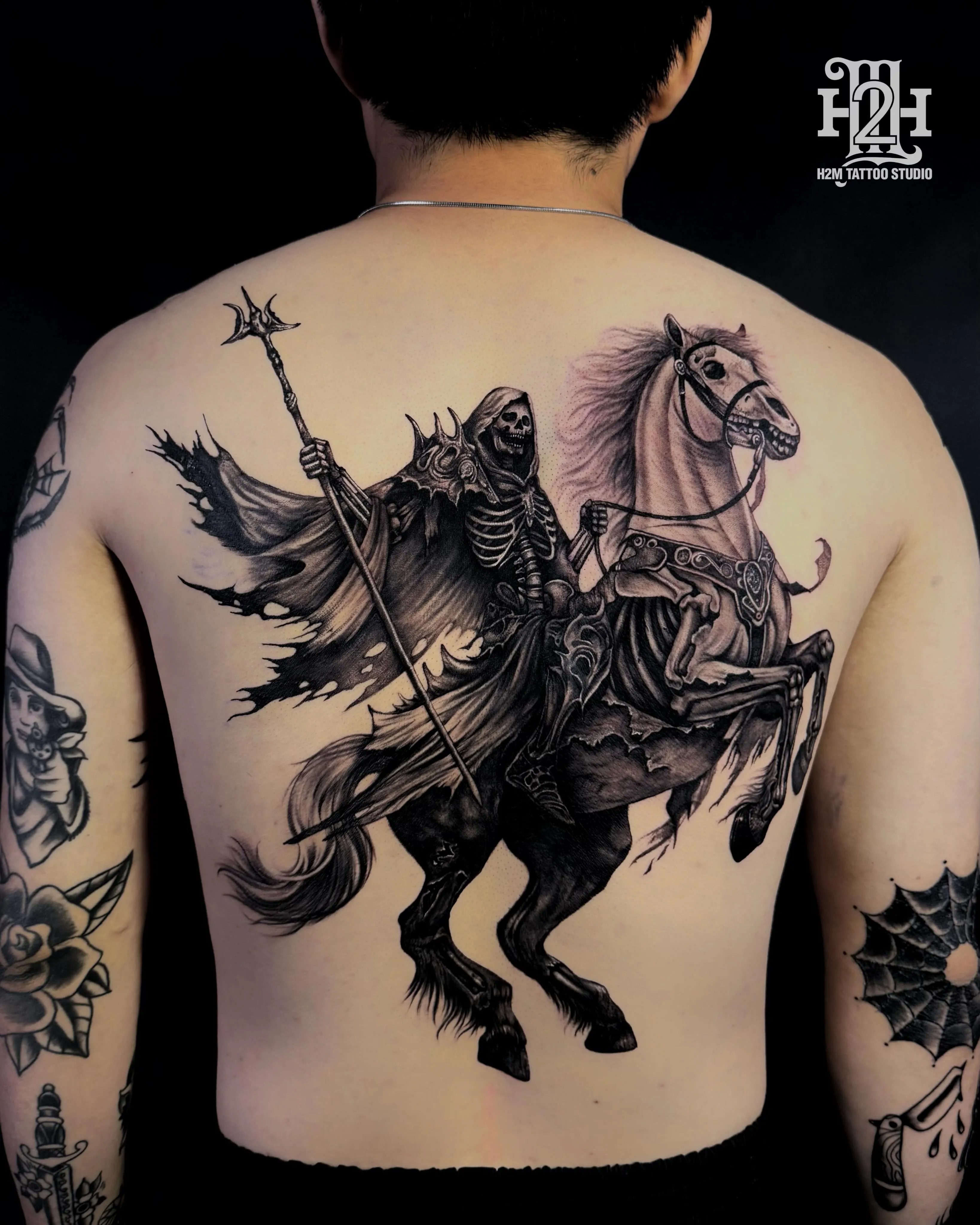
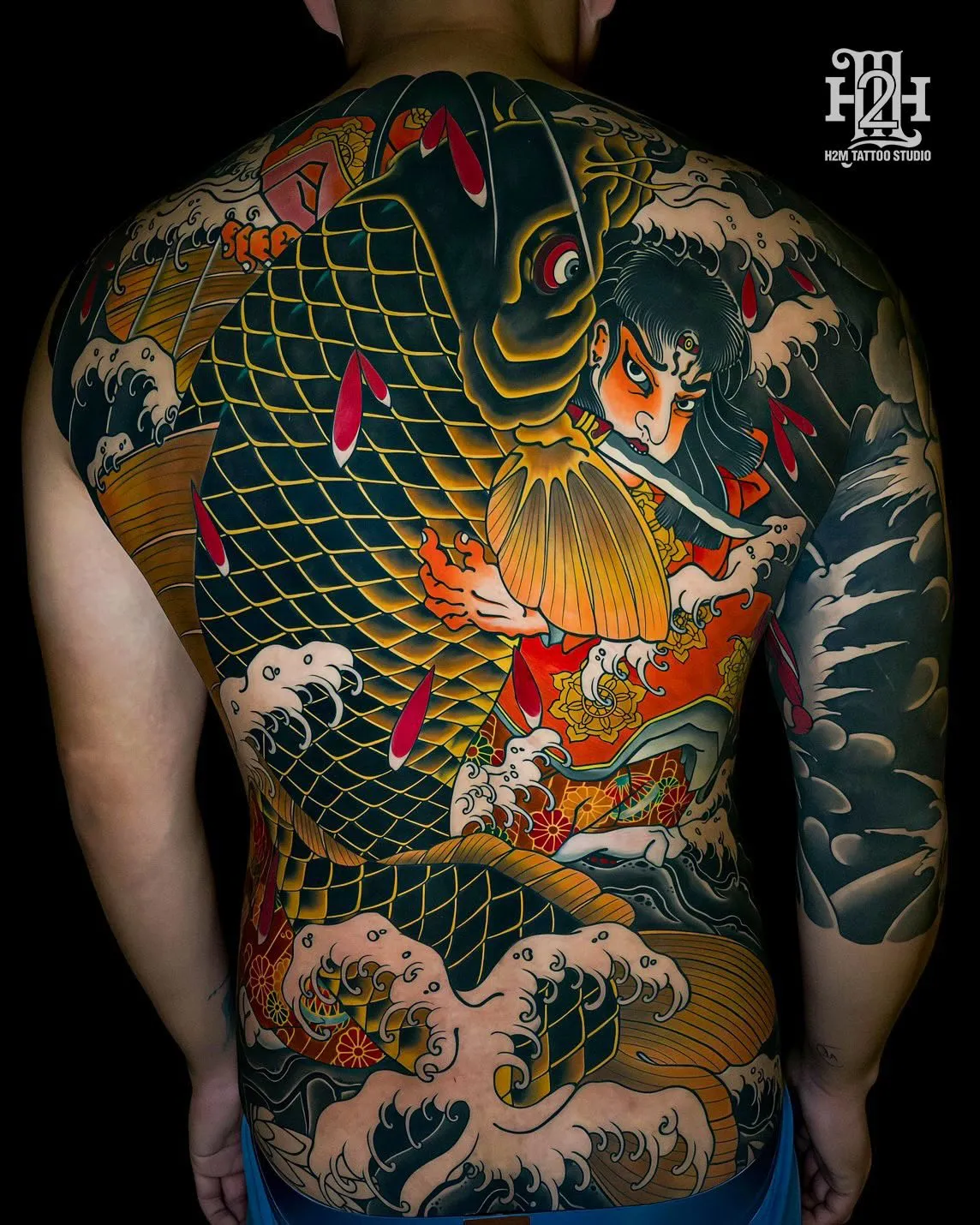
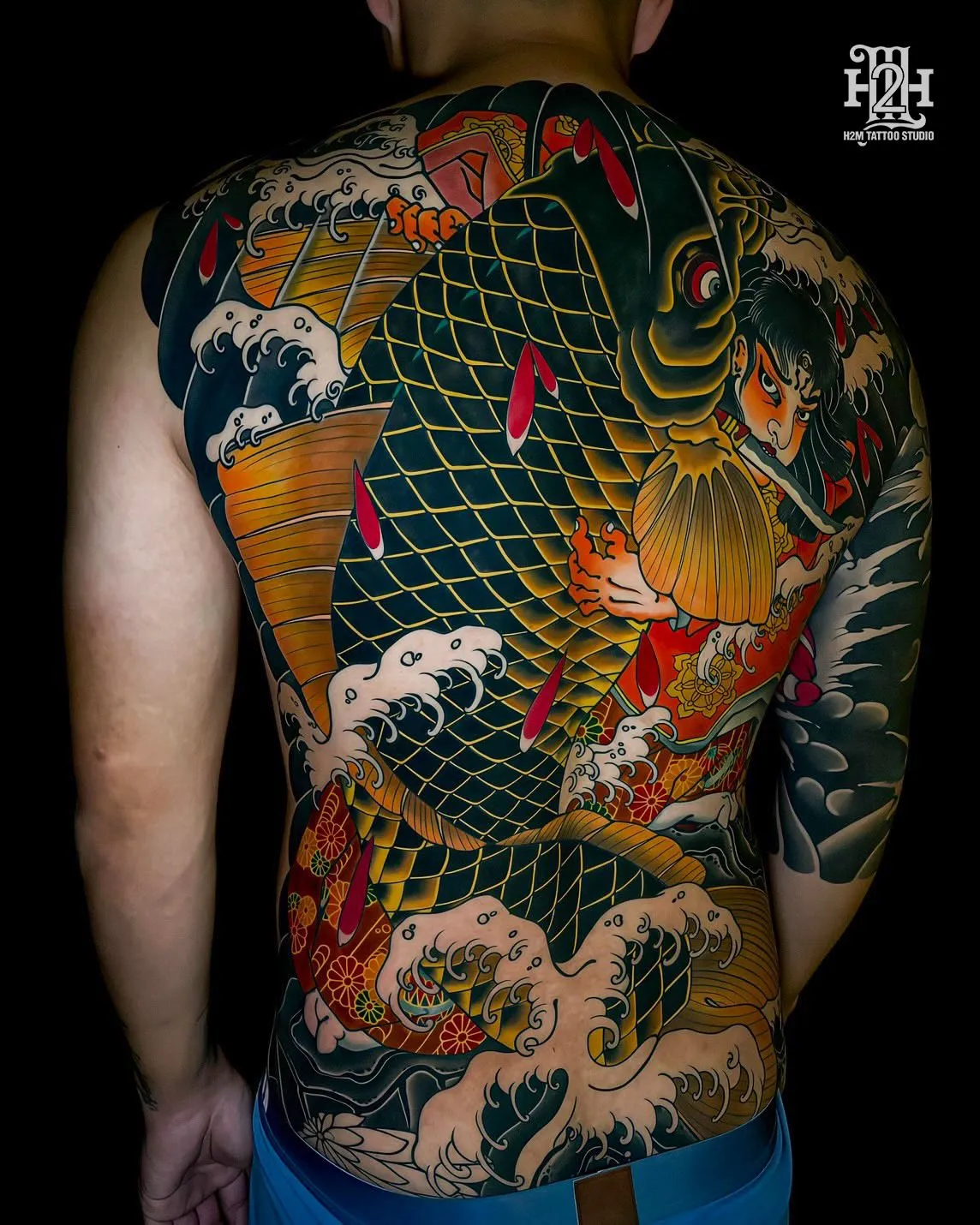
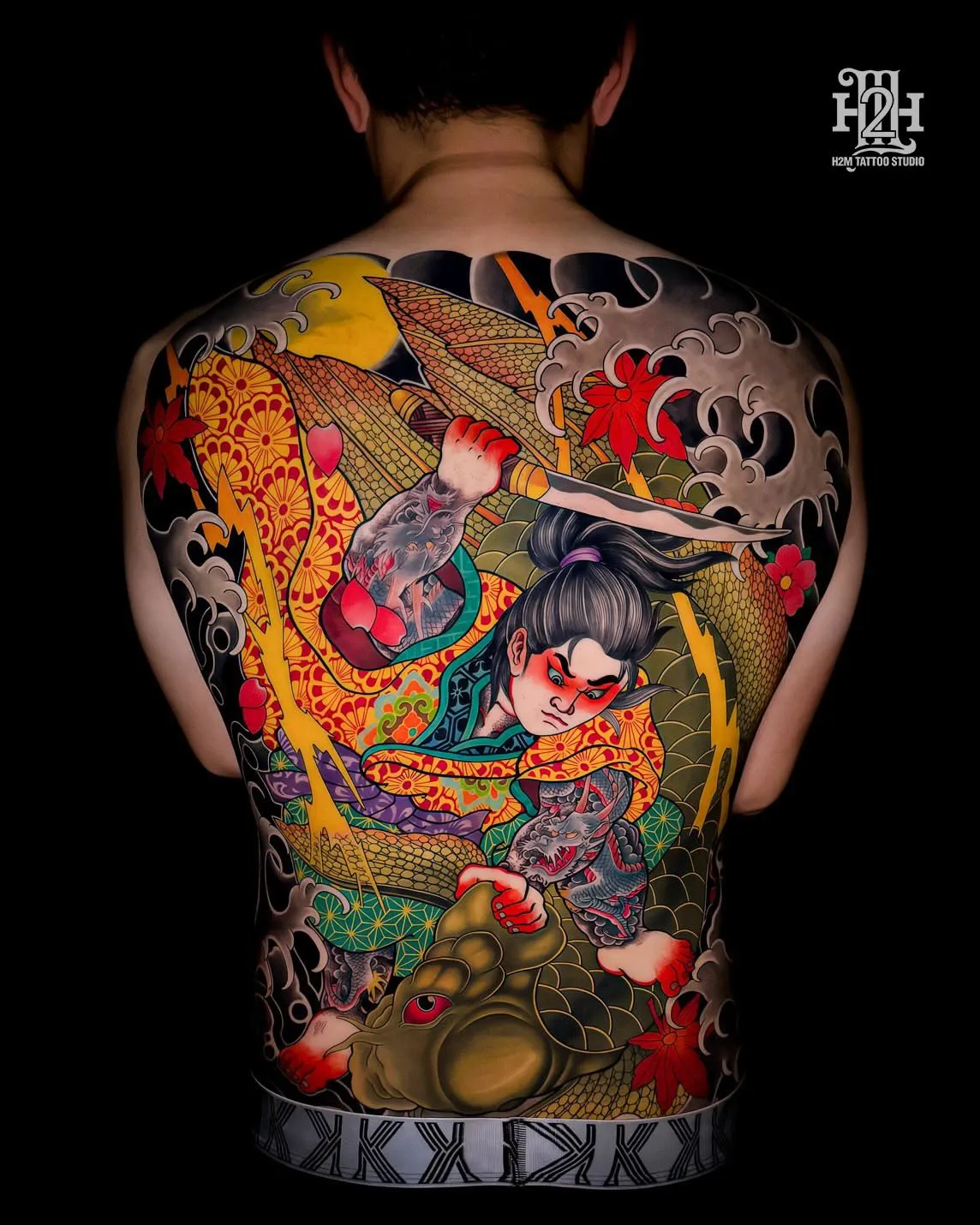
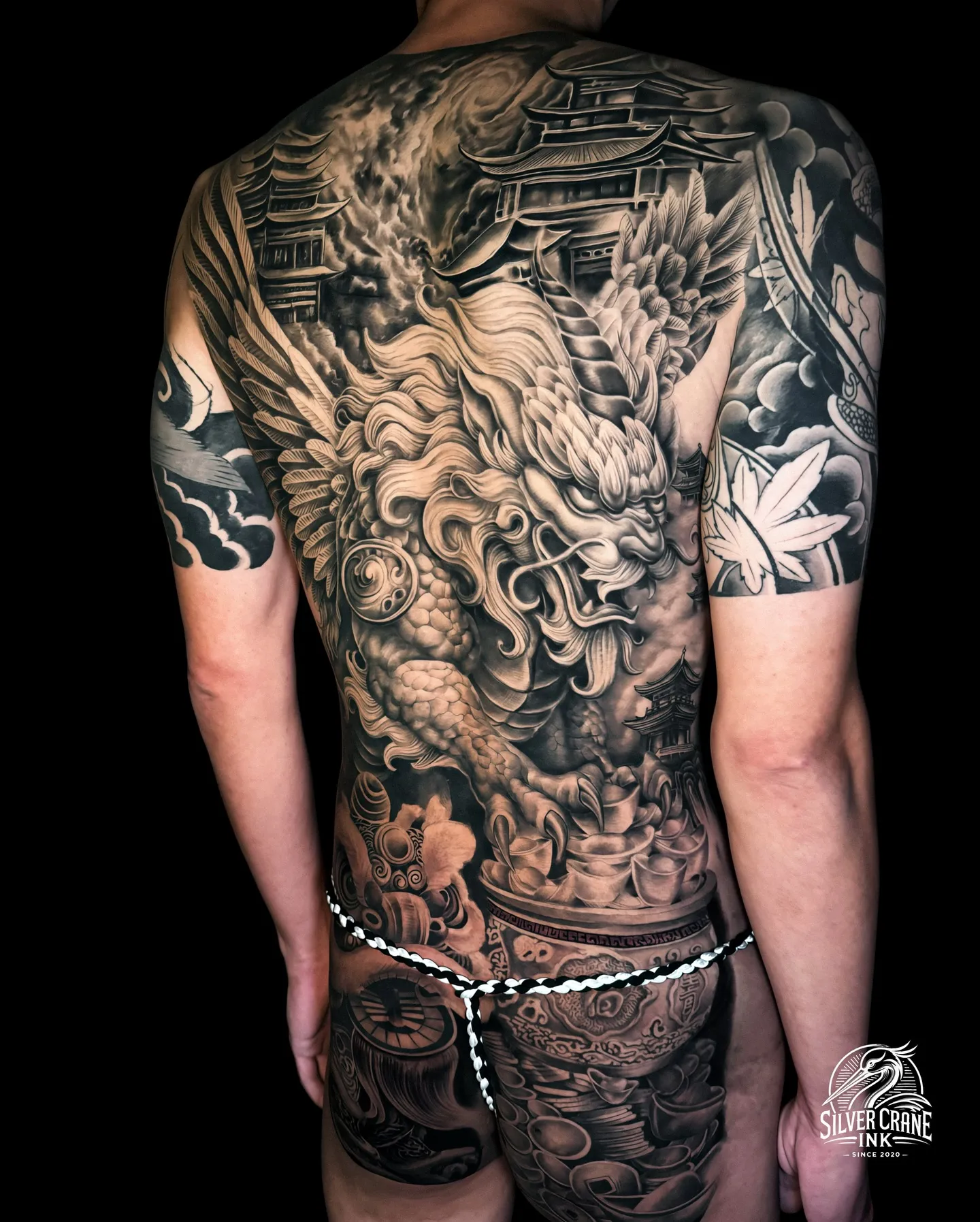
A full back tattoos for men is one of the most ambitious and visually powerful commitments a man can make in tattoo art. The full back canvas spans from the shoulders to the lower back, offering space for large-scale storytelling through imagery, symbolism, and intricate detail. H2M Tattoo Studio - a professional studio with 9 years of industry experience and 22 staff across 5 locations in Vietnam, Taiwan, and Cambodia - specializes in Oriental and Vietnamese Traditional styles that are particularly well-suited to full back compositions.
According to Statista (2023), approximately 32% of tattooed adults in the United States have tattoos larger than a hand, reflecting the growing demand for large-format tattoo art globally.
Key Takeaways
- A full back tattoo covers the entire dorsal canvas - from the shoulder blades to the top of the lower back - and typically requires multiple sessions to complete.
- Oriental, Japanese, Realism, and Graphic styles are the most sought-after options for men choosing a full back piece.
- Proper placement planning - including focal point, symmetry, and negative space - determines whether a full back tattoo reads as a cohesive artwork or a scattered collection.
- Choosing an experienced studio with artists who have at least 5 years of professional practice is essential for a full back piece of this scale.
Why a Full Back Tattoo Is a Statement, Not Just a Design
A full back tattoo carries a different weight than most other tattoo placements. The back is the largest flat surface on the human body, and committing that entire canvas to a single cohesive artwork signals intention, patience, and a genuine relationship with tattoo culture.
Men who choose full back tattoos are rarely making a spontaneous decision. The planning process - choosing a style, selecting motifs, finding the right artist, and preparing for multiple sessions - often takes months. The result is a permanent artwork that few people see in everyday life, which makes the tattoo deeply personal rather than performative.
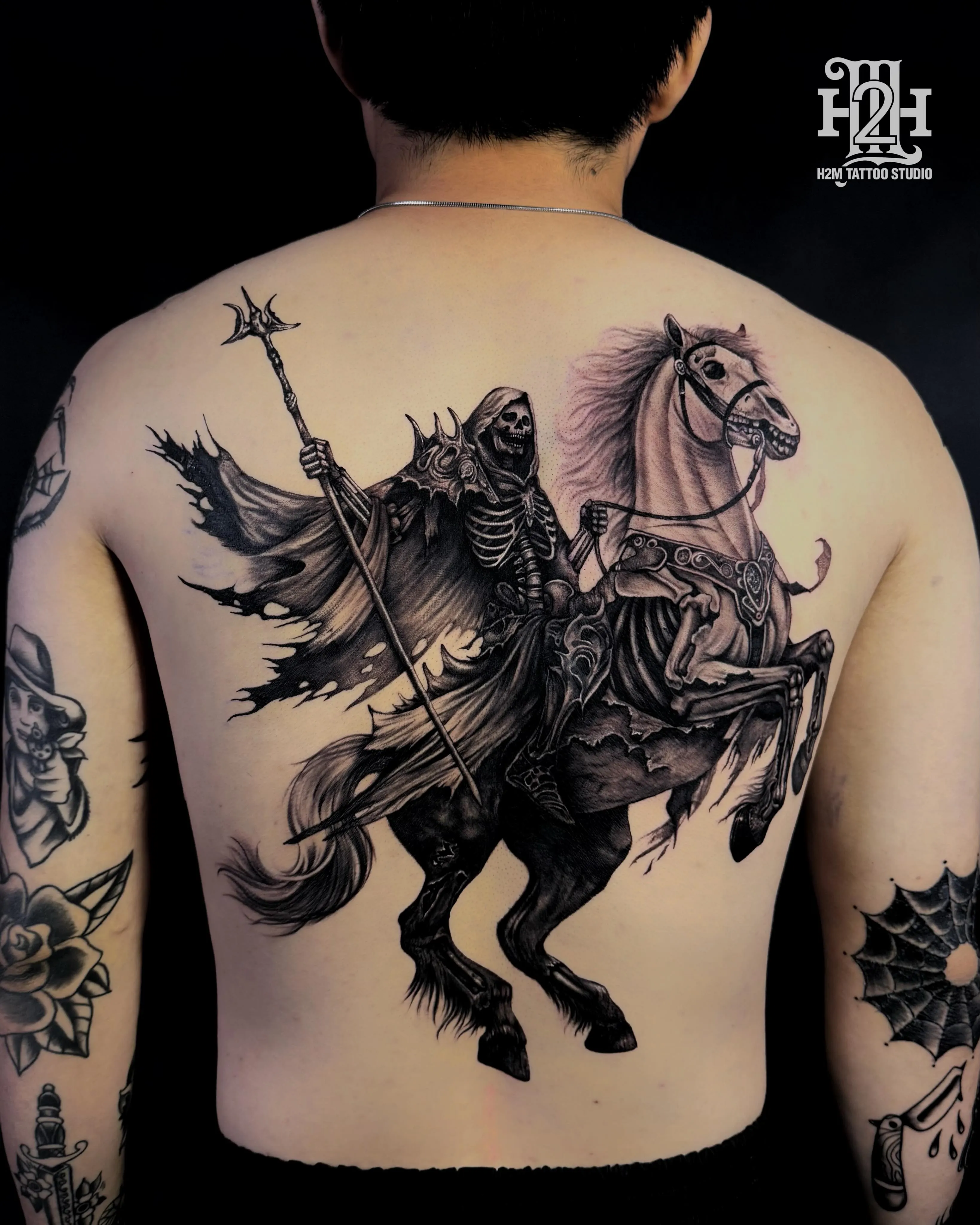
This intimacy is part of the appeal. A full back piece exists primarily for the wearer and for the select moments when it is revealed - at the beach, in the locker room, or during tattooing itself. That sense of private significance makes full back tattoos one of the most meaningful placements in contemporary tattoo culture.
What Makes Full Back Tattoos Different from Other Back Tattoo Sizes
Understanding how a full back tattoo compares to smaller back placements helps men make a more informed decision before committing to a design.
For men exploring the broader spectrum of back tattoo options, the category of back tattoos for men covers all coverage sizes with detailed style and placement guidance.
| Coverage Type | Area Covered | Typical Session Count | Best For |
|---|---|---|---|
| Full back | Shoulders to lower back, edge to edge | 6–15+ sessions | Large-scale narrative artwork, sleeves continuation |
| Half back | Upper or lower half only | 3–7 sessions | Single focal motif, budget-conscious planning |
| Lower back | Waistline area | 1–3 sessions | Accent pieces, existing design extension |
| Spine | Central vertical column | 2–4 sessions | Lettering, geometric, minimal styles |
| Small back | Shoulder blade or single spot | 1–2 sessions | Symbolic single motifs |
The full back format demands the most from both the artist and the client. Artists must plan the entire composition before the first needle touches skin, and clients must commit to a multi-year process in many cases.
Most Popular Styles for Full Back Tattoos on Men
Style selection is the most consequential creative decision for a full back tattoo. The style determines how the design ages, how much detail is achievable, and how cohesive the final piece will read at scale.
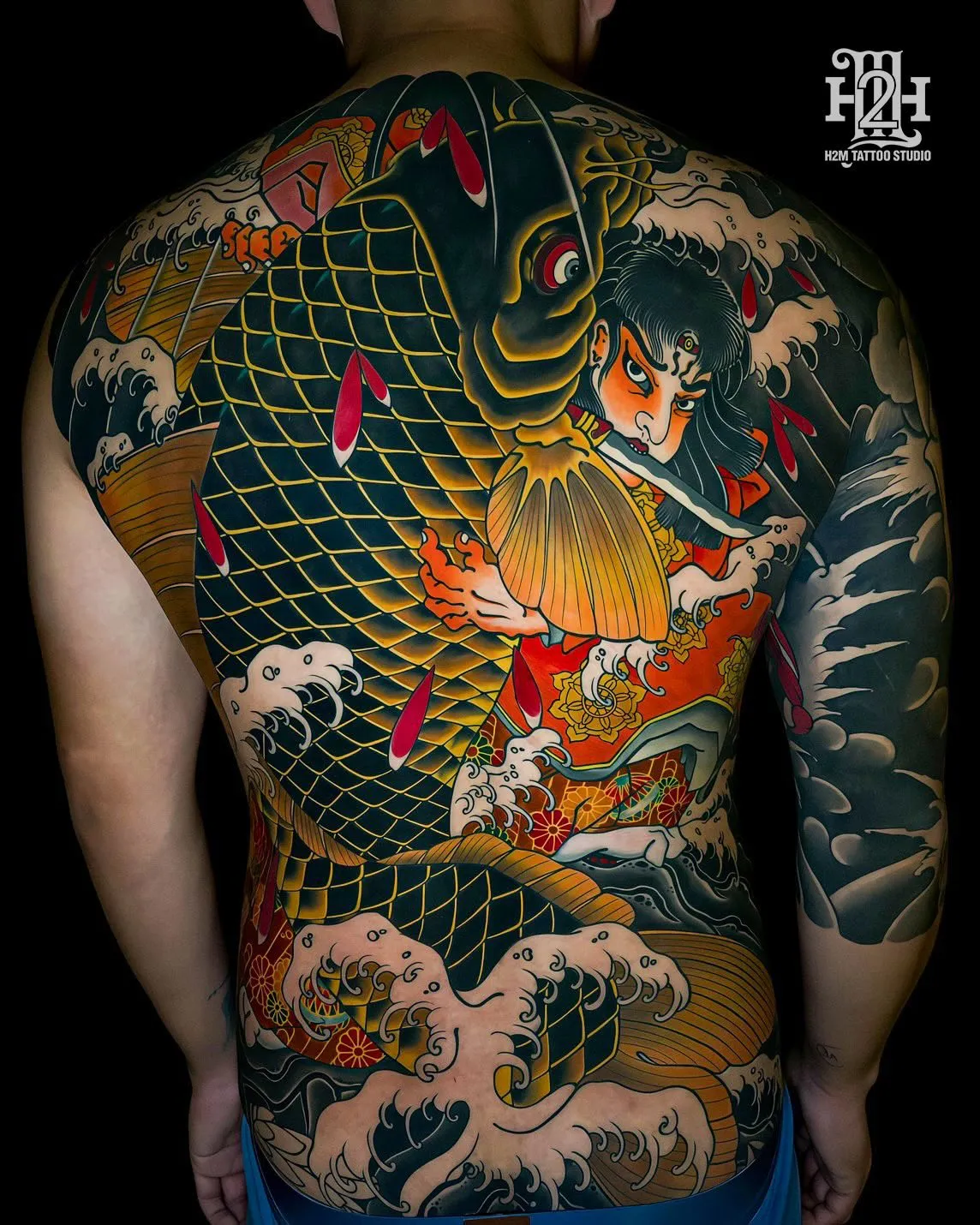
Oriental and Japanese Style
Oriental and Japanese tattoos are the dominant choice for full back pieces globally. These styles use bold outlines, dynamic negative space, and mythological subjects - dragons, koi, tigers, phoenixes, peonies - to create compositions that fill large canvases with purpose and visual hierarchy. The flowing, directional energy of Oriental imagery mirrors the natural contours of the back, making it one of the most technically compatible styles for full back coverage.
Vietnamese Traditional
Vietnamese Traditional tattooing draws from centuries of symbolic imagery rooted in Vietnamese folklore, nature, and spiritual belief. Lotus flowers, dragons, the Four Sacred Beasts (Long, Ly, Quy, Phung), and Buddhist iconography appear frequently. For international travelers visiting Hanoi, a Vietnamese Traditional full back tattoo offers a permanent cultural souvenir with deep local meaning.
Realism
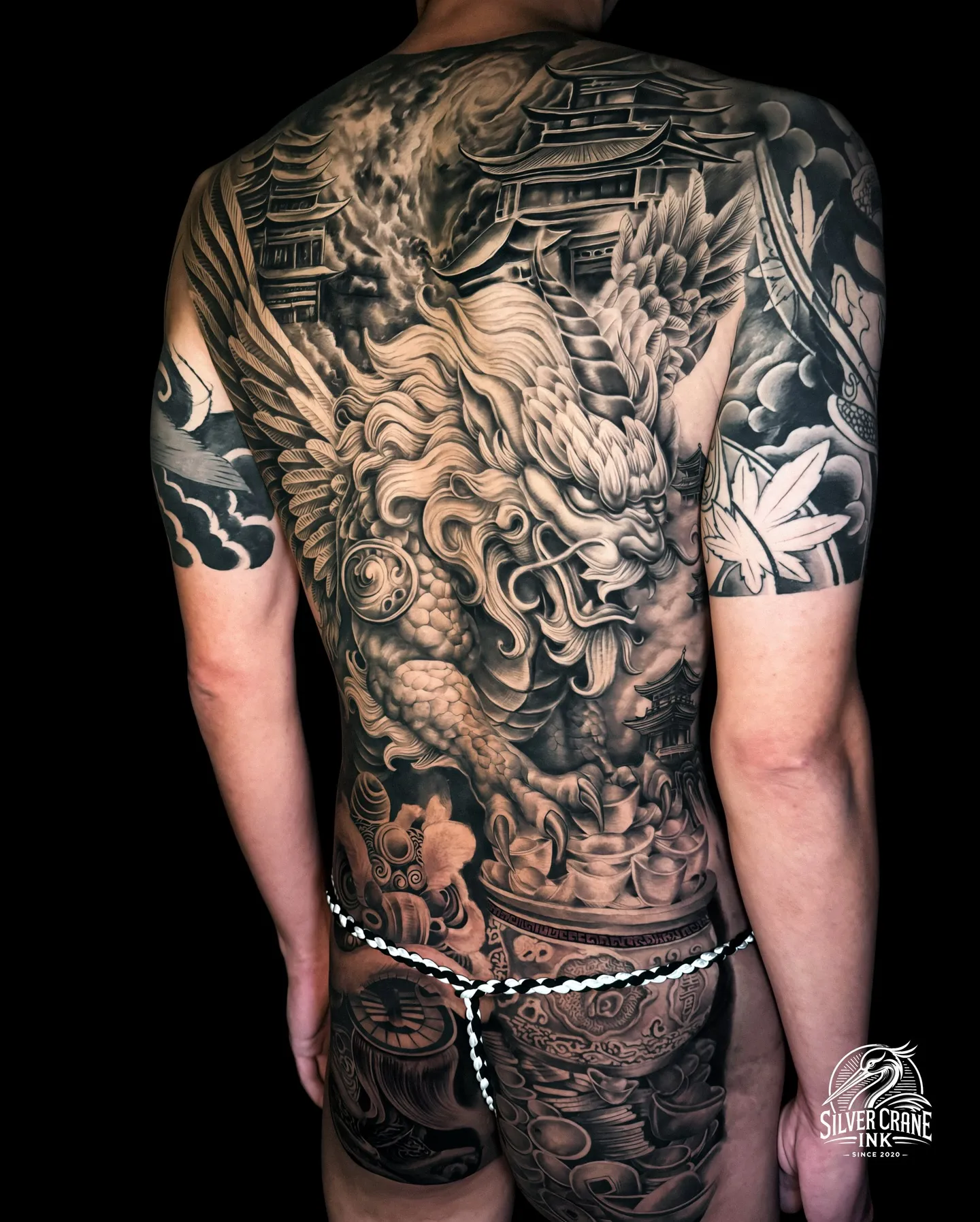
Realism full back tattoos are among the most technically demanding in the industry. Portraits, wildlife, and natural scenes rendered in photographic detail require artists with advanced shading skills and significant experience with large-format work. According to Tattoodo (2024), realism remains one of the fastest-growing tattoo styles globally, with portrait and wildlife subjects leading demand.
Graphic and Geometric
Graphic tattoos use bold lines, flat shapes, and intentional abstraction to create designs that feel modern and architectural. Geometric full back pieces - including mandala-based compositions and sacred geometry - offer a distinctly contemporary aesthetic that differs from traditional figurative styles.
Old School
Old School (American Traditional) full back tattoos use thick outlines, limited color palettes, and iconic Americana imagery. Eagles, anchors, roses, and nautical motifs scaled to full back coverage create a bold, high-contrast result that ages reliably over decades.
Design Ideas and Themes That Work Best on a Full Back Canvas
Certain themes translate exceptionally well to the scale and shape of a full back tattoo. The most effective designs use the vertical orientation of the back to create a natural visual flow from top to bottom.
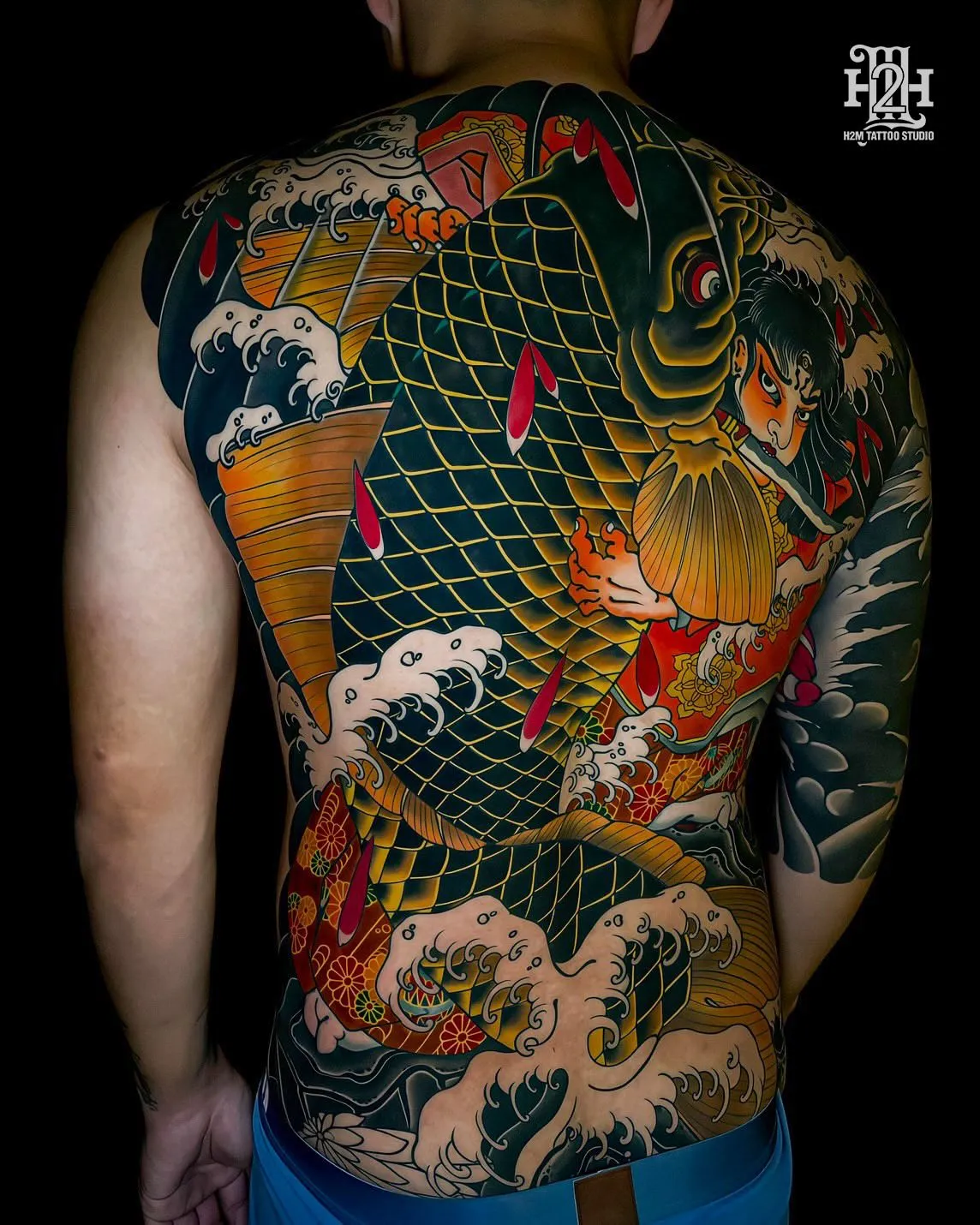
Mythological and spiritual narratives - such as a dragon ascending from waves, a phoenix rising from flames, or a battle scene from Asian mythology - work well because they contain inherent movement and direction that the artist can choreograph across the canvas.
Large-scale wildlife - tigers, wolves, eagles, koi fish - provide a single dominant subject that anchors the composition, with supporting elements (clouds, waves, floral backgrounds, geometric frameworks) filling the surrounding space.
Geometric and mandala compositions centered on the spine create strong bilateral symmetry. When executed precisely, these designs appear almost architectural and remain visually legible even at a distance.
Portrait and figurative realism - including warrior figures, samurai, mythological beings, or ancestral faces - can occupy the full vertical back when composed with the head near the shoulder blades and the body extending downward.
For men considering smaller or partial coverage before committing to a full piece, small back tattoos for men offers curated ideas for shoulder blade, spot, and accent placements.
Back Tattoo Placement: How to Use the Full Canvas Effectively
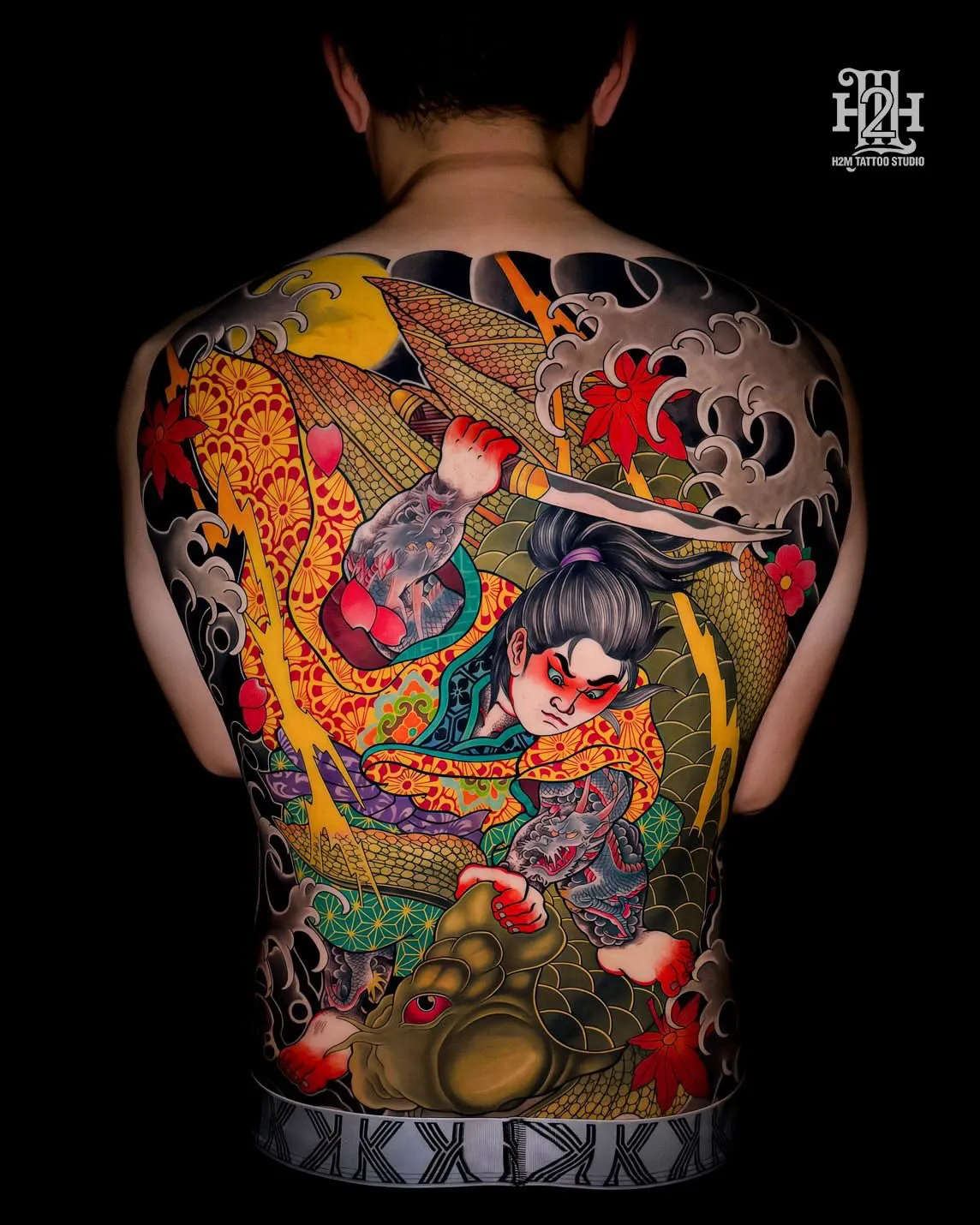
Placement strategy determines whether a full back tattoo functions as a unified artwork or a collection of disconnected elements. A skilled artist plans back tattoo placement before any work begins, treating the back the way a painter treats a canvas.
Establishing a focal point is the first step. Most successful full back pieces have a single dominant element - a face, a creature, a central symbol - positioned between the shoulder blades, where the eye naturally travels first. Supporting elements radiate outward and downward from this anchor.
Flow and directional movement are critical in Oriental and figurative styles. A dragon should appear to move - ascending, coiling, or descending - rather than sitting statically on the skin. This movement guides the viewer's eye across the entire composition.
Negative space is an advanced technique that separates competent full back work from exceptional full back work. Leaving deliberate areas of untattooed skin creates contrast, prevents visual saturation, and gives the design room to breathe. Overcrowding a full back piece is one of the most common mistakes in large-format tattooing.
How Long Does a Full Back Tattoo Take to Complete?
A full back tattoo is not completed in a single visit. Understanding the realistic timeline helps clients plan financially, physically, and logistically.
Session count varies significantly based on style, complexity, and individual healing speed. A full back Oriental piece with heavy background fill may require 8 to 15 sessions. A simpler large-scale linework composition might be completed in 4 to 6 sessions.
Session duration typically runs between 4 and 6 hours per visit, with breaks. Most experienced tattoo artists recommend sessions no longer than 5 hours to maintain line quality and protect skin integrity.
Healing intervals between sessions should be a minimum of 4 to 6 weeks, allowing the skin to fully heal before the next layer of work is applied. Rushing the timeline risks blowouts, color loss, and poor ink retention.
Pain levels on the back vary by zone. The upper back, across the shoulder blades, is generally considered moderate in terms of pain. The spine - particularly the lower spine - is more sensitive. The sides and the area near the hip bone are the most painful zones. For men considering the pain profile of spine-focused designs, spine tattoos men covers sensation, healing, and style compatibility in detail.
Total timeline from first session to completion for a complex full back piece commonly ranges from 18 months to 3 years.
Planning a Full Back Tattoo: What to Do Before the First Session
Preparation before a full back tattoo session significantly affects the outcome and the experience.
Consultation before design finalization. A reputable studio will require at least one in-person or video consultation to discuss concept, style, placement strategy, and artist fit before any deposit is taken or design work begins. Bringing reference images - of both the style and specific motifs - helps the artist understand the client's vision.
Budget planning. Full back tattoos represent a significant financial investment. Pricing is based on hourly rates, session count, and artist experience level. Requesting a detailed cost estimate per session, rather than a total project quote, helps with financial planning.
Artist portfolio review. For large-scale back work, reviewing an artist's specific portfolio of completed full back or large-format pieces is non-negotiable. Technical ability at small scales does not automatically transfer to large compositions.
For men considering designs that cover only the lower half of the back before expanding further, half back tattoos for men and lower back tattoos for men provide placement-specific guidance and design ideas.
Getting a Full Back Tattoo in Hanoi: What International Travelers Should Know
Hanoi is an increasingly popular destination for tattoo tourism, particularly for travelers seeking Oriental, Vietnamese Traditional, and Asian-influenced styles in their geographic and cultural context.
H2M Tattoo Studio, located at 17 Luong Ngoc Quyen in Hanoi's Old Quarter, offers professional full back tattooing within a 100m² studio equipped to accommodate groups of 5 to 10 people. The studio's consultation team provides multilingual support in English, Mandarin, and Japanese - removing the communication barriers that frequently complicate tattooing in a foreign country.
For international visitors planning a full back piece during a trip to Vietnam, H2M recommends initiating the consultation process before arrival, providing reference images and style preferences in advance, and scheduling sessions across multiple visits if the timeline allows.
Travelers searching for the best tattoo studio Hanoi for large-format work should prioritize studios with documented experience in Oriental and Vietnamese Traditional styles, verifiable artist portfolios in large-scale formats, and clear multilingual communication capabilities.
Conclusion
A full back tattoos for men is one of the most significant artistic commitments available to men in the world of body art. The scale demands patience, the process demands trust, and the result - when executed by a skilled artist with a clear compositional vision - produces a permanent artwork that carries personal, cultural, and aesthetic meaning for a lifetime.
The most important decisions are style, artist selection, and placement strategy. These three variables, when aligned correctly, determine whether a full back tattoo becomes a cohesive masterpiece or a collection of disconnected elements that no longer communicate clearly at scale.
If a full back tattoo is the goal, begin with a consultation, review portfolios specifically for large-format work, and allow the artist adequate time to design a composition that respects the full potential of the canvas.
H2M Tattoo Studio is available for consultations in English, Mandarin, and Japanese. Visit the studio at 17 Luong Ngoc Quyen, Hoan Kiem District, Hanoi, or contact the team online to begin planning a full back tattoo before arriving in Vietnam.
Frequently Asked Questions
Q: How much does a full back tattoo cost for men?
A: The cost of a full back tattoo varies widely based on the artist's hourly rate, the complexity of the design, and the total number of sessions required. A detailed Oriental or Realism full back piece by an experienced artist typically involves 8 to 15 sessions at rates ranging from $150 to $500 per hour depending on location and artist reputation. Full project costs commonly range from $3,000 to $15,000 or more.
Q: How painful is a full back tattoo?
A: Pain levels across the back vary by zone. The upper back and shoulder blades are generally moderate in pain intensity. The spine, particularly the lower spine area, is significantly more sensitive. The sides of the torso near the ribs are among the most painful areas. Most clients report that the pain is manageable across the shoulder blades but intensifies near the spine and lower back.
Q: Can a full back tattoo be done in one session?
A: A complete full back tattoo cannot realistically be done in a single session. A single extended session of 5 to 6 hours covers only a portion of the total canvas. Attempting to complete a full back piece in one sitting would compromise line quality, risk infection, and exceed safe tattooing limits. Most full back pieces require between 6 and 15 sessions spread across 1 to 3 years.
Q: What tattoo style works best for a full back piece on men?
A: Oriental, Japanese, and Vietnamese Traditional styles are widely regarded as the most compatible with full back compositions. These styles use directional movement, bold contrast, and mythological symbolism in ways that leverage the scale of the back canvas. Realism and Graphic styles also translate well when the artist has demonstrated large-format experience in their portfolio.
Q: How do I choose the right design for my full back tattoo?
A: Choosing the right design involves three steps: defining the primary subject or focal point, selecting a style that suits the subject and the artist's expertise, and reviewing the artist's existing portfolio of large-format work. Bringing 10 to 20 reference images to the consultation - covering both style examples and specific motifs - gives the artist the context needed to propose a composition that fits the full back canvas.
Q: Is Hanoi a good place to get a full back tattoo?
A: Hanoi has a strong reputation within Asian tattoo culture, particularly for Oriental and Vietnamese Traditional styles. Studios in Hanoi's Old Quarter - including H2M Tattoo Studio at 17 Luong Ngoc Quyen - serve international clients regularly and offer multilingual consultations. For travelers seeking culturally authentic designs with professional execution, Hanoi is a compelling destination for large-format tattoo work.
Q: How should I prepare for a full back tattoo session?
A: Preparation for a full back tattoo session includes staying well-hydrated in the days before the appointment, eating a substantial meal within two hours of the session, wearing or bringing loose clothing that does not press on the back, and avoiding alcohol for at least 24 hours before tattooing. Arranging for rest the day after each session helps the body begin the healing process without additional physical stress.