

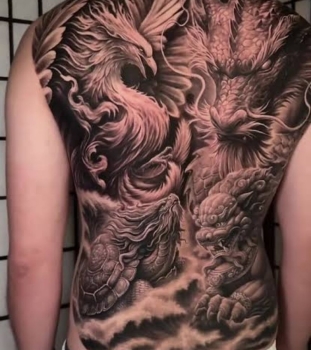
Traditional Vietnamese tattoos are ink designs rooted in Vietnamese mythology, Buddhism, and rural heritage, including symbols such as the dragon (rồng), lotus (hoa sen), phoenix (phượng hoàng), and Đông Sơn drum patterns. The Đông Sơn bronze drum motif traces back roughly 2,600 years to the Đông Sơn Bronze Age culture in Vietnam's Red River Delta. This guide covers 16 traditional Vietnamese tattoo designs, their cultural meanings, and how to choose one. H2M Tattoo Studio, located in Hanoi's Old Quarter, specializes in culturally accurate traditional Vietnamese tattoos done by licensed, English-speaking artists.
Traditional Vietnamese tattoos are symbolic designs drawn from Vietnam's mythology, Buddhist beliefs, and rural traditions - used historically to signal protection, identity, and social status, and worn today as a permanent link to Vietnamese heritage. The most common examples are the dragon, lotus, phoenix, sacred turtle, and geometric patterns copied from ancient Đông Sơn bronze drums. Each design carries a distinct meaning: the dragon represents power and national origin, the lotus represents purity and resilience, and the Đông Sơn patterns represent ancestral pride. For travelers, these tattoos work as a lasting souvenir that a t-shirt or keychain can't replicate - a piece of Vietnam's history carried on the skin rather than in a suitcase.
Key Takeaways
- Traditional Vietnamese tattoos are built on 16+ recognized symbols, each tied to a specific myth, belief, or cultural value - not decorative patterns chosen at random.
- The dragon (rồng) and lotus (hoa sen) are the two most requested designs because their symbolism - power/origin and purity/resilience - is easy to explain and resonates broadly.
- Đông Sơn drum motifs are the oldest documented Vietnamese tattoo-style imagery, tracing back to a Bronze Age culture roughly 2,600 years old.
- Choosing the right design depends on matching the symbol's meaning to your personal reason for getting inked, then working with an artist who understands its cultural and historical context - not copying a random reference photo.
What Are the Most Meaningful Traditional Vietnamese Tattoo Symbols?
Every traditional Vietnamese tattoo draws from one of three main sources: national mythology (the dragon, phoenix, sacred turtle), Buddhist belief (the lotus), and rural or ancestral heritage (the conical hat, water buffalo, Đông Sơn patterns). Below are the 16 most recognized designs, each explained on its own so it can stand alone as a reference; for a broader overview of styles beyond this list, browse this guide to Vietnam Tattoos.
Dragon Tattoo (Rồng)
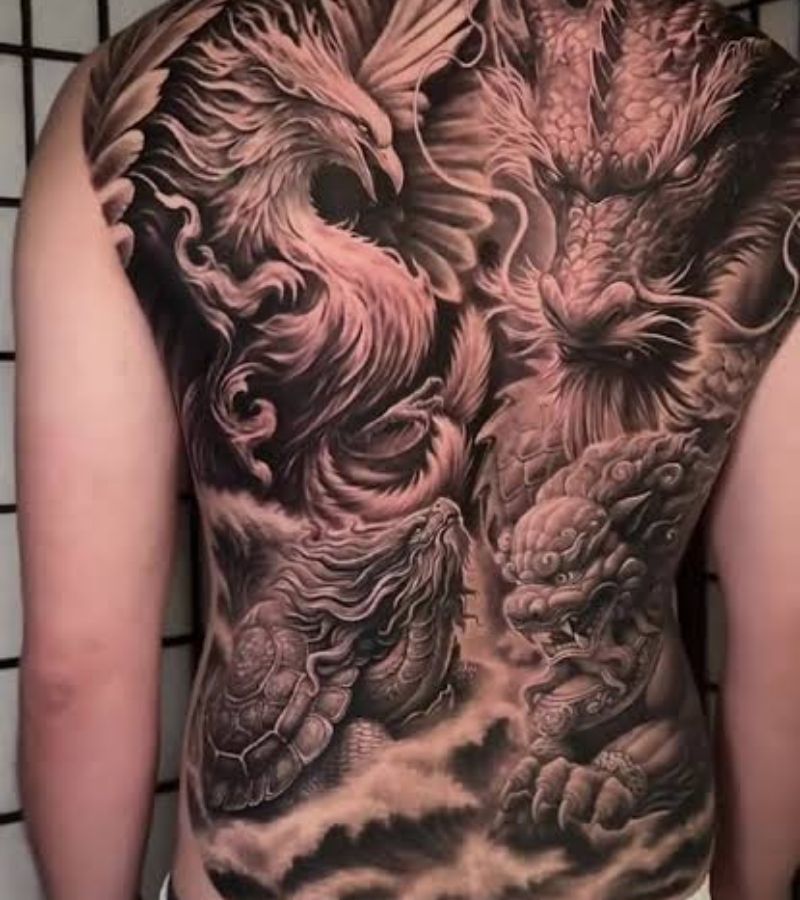
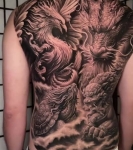
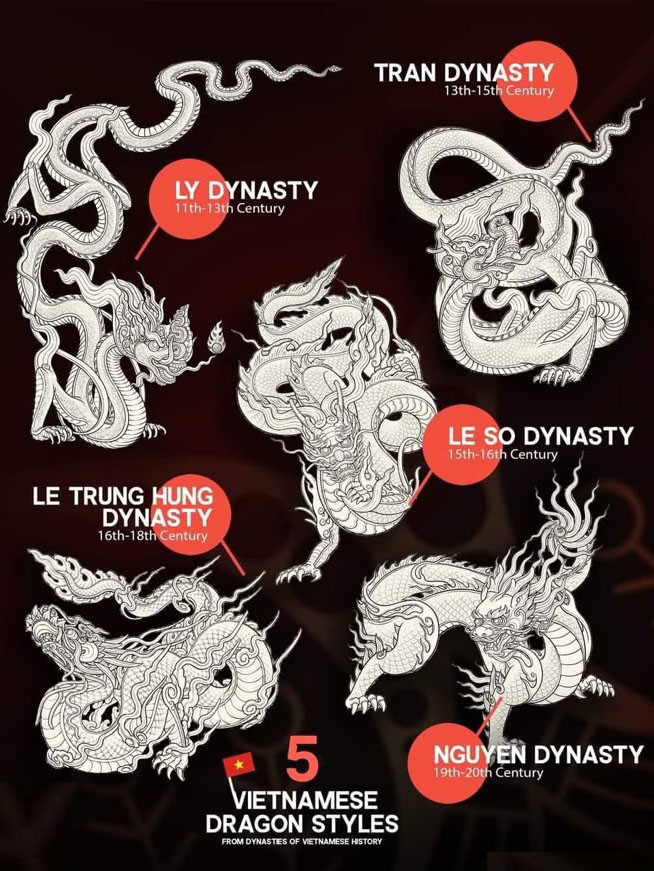
The dragon represents power, protection, and prosperity. Vietnamese legend holds that the Vietnamese people descended from Lạc Long Quân, the Dragon Lord, making the dragon a symbol of national origin rather than a monster to be feared. Unlike the Western dragon, the Vietnamese rồng is long and serpentine, tied to water and rain rather than fire. It is typically inked as a large piece - sleeve, back, or ribcage - because its flowing body suits bigger canvases.
Phoenix Tattoo (Phượng Hoàng)
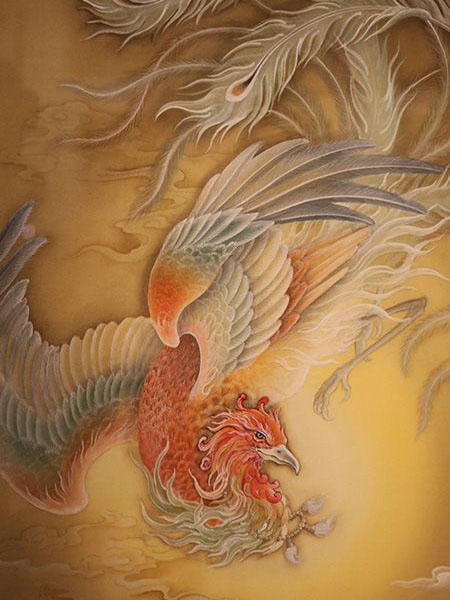
The phoenix represents grace, rebirth, and feminine energy. It is traditionally paired with the dragon to form "Long Phụng," a symbol of balance between masculine and feminine forces. On its own, the phoenix marks personal transformation, which makes it a common choice after a major life change.
Lotus Tattoo (Hoa Sen)
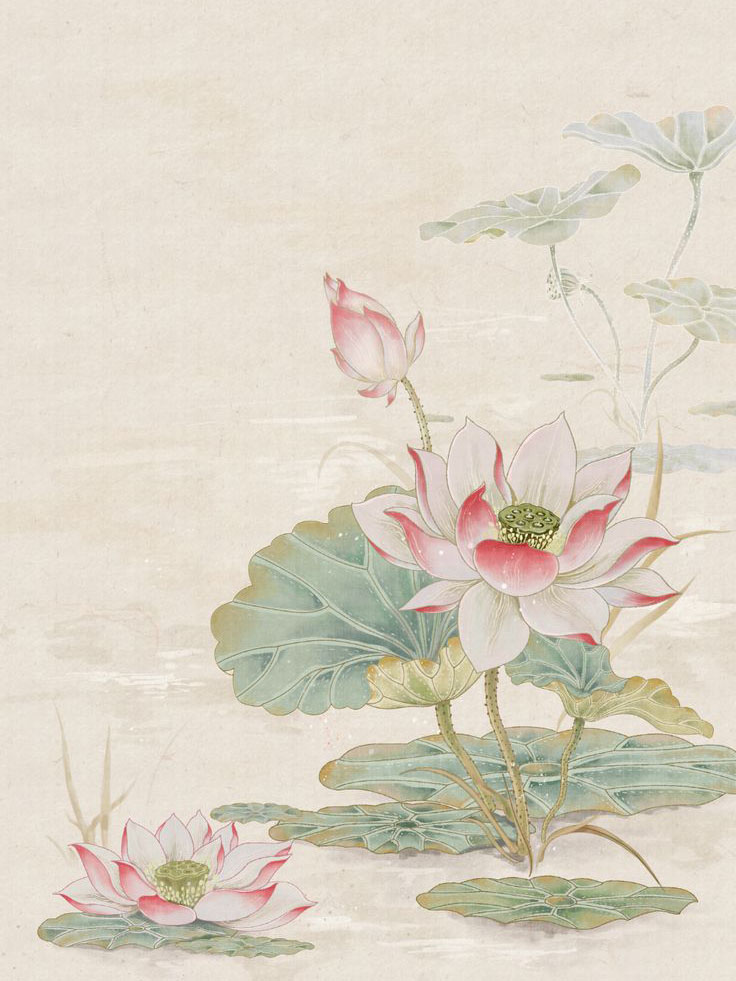
The lotus represents purity, enlightenment, and resilience. As Vietnam's national flower and a central image in Vietnamese Buddhism, the lotus rises from muddy water and blooms untouched above the surface - a metaphor for overcoming hardship without being defined by it. It suits both small minimalist pieces and larger lotus-pond scenes; several lotus tattoo studios in Hanoi specialize in this fine-line style if you want to see examples before booking.
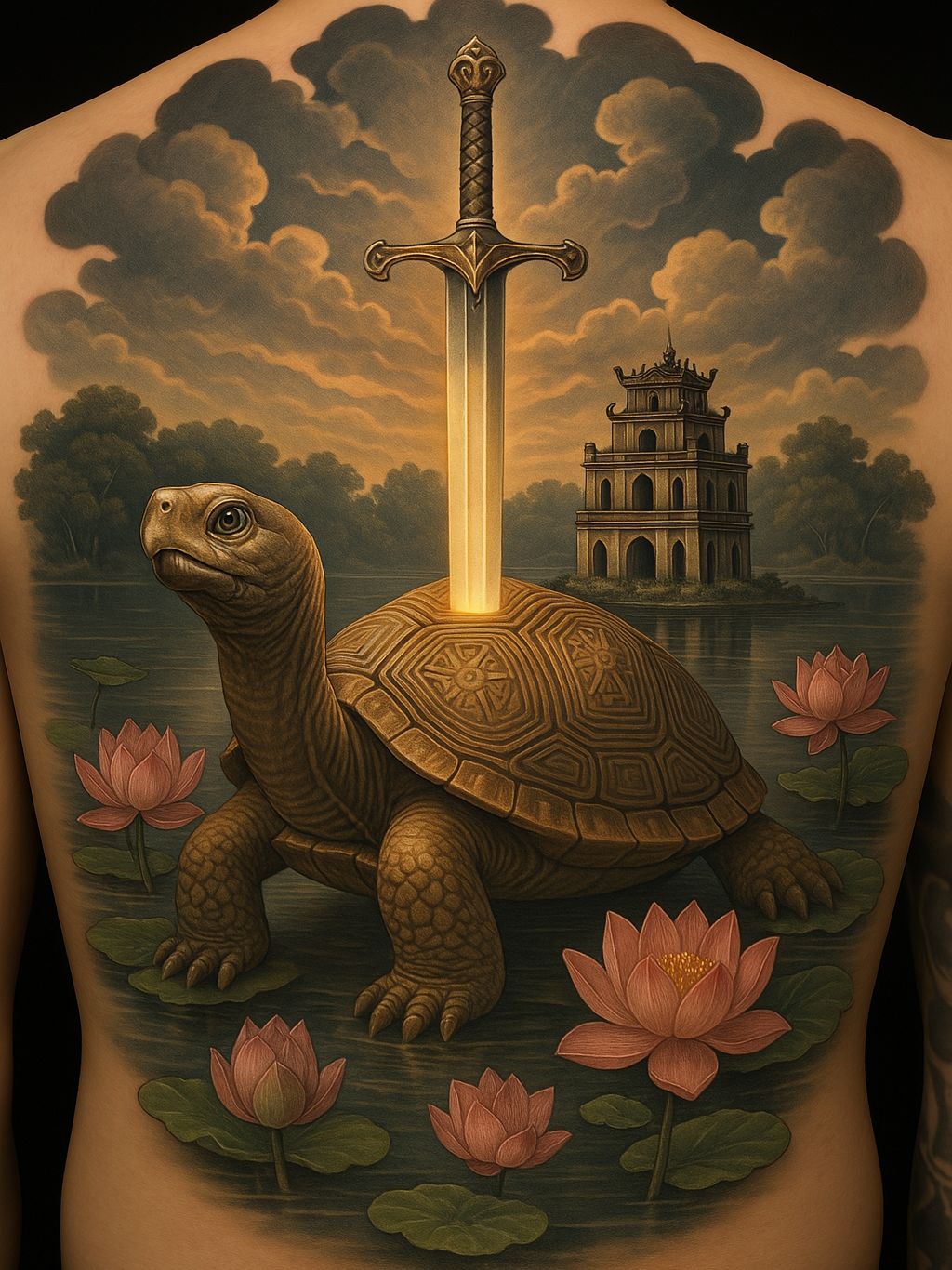
Sacred Turtle Tattoo (Rùa Thần)
The sacred turtle represents longevity, wisdom, and protection. It is tied to the legend of Hoàn Kiếm Lake in Hanoi, where a golden turtle god is said to have reclaimed a magic sword from Emperor Lê Lợi after a military victory. The turtle is one of Vietnam's Four Sacred Creatures (Tứ Linh), alongside the dragon, phoenix, and unicorn (kỳ lân). For more turtle-specific design variations, see this collection of Vietnamese turtle tattoo designs.
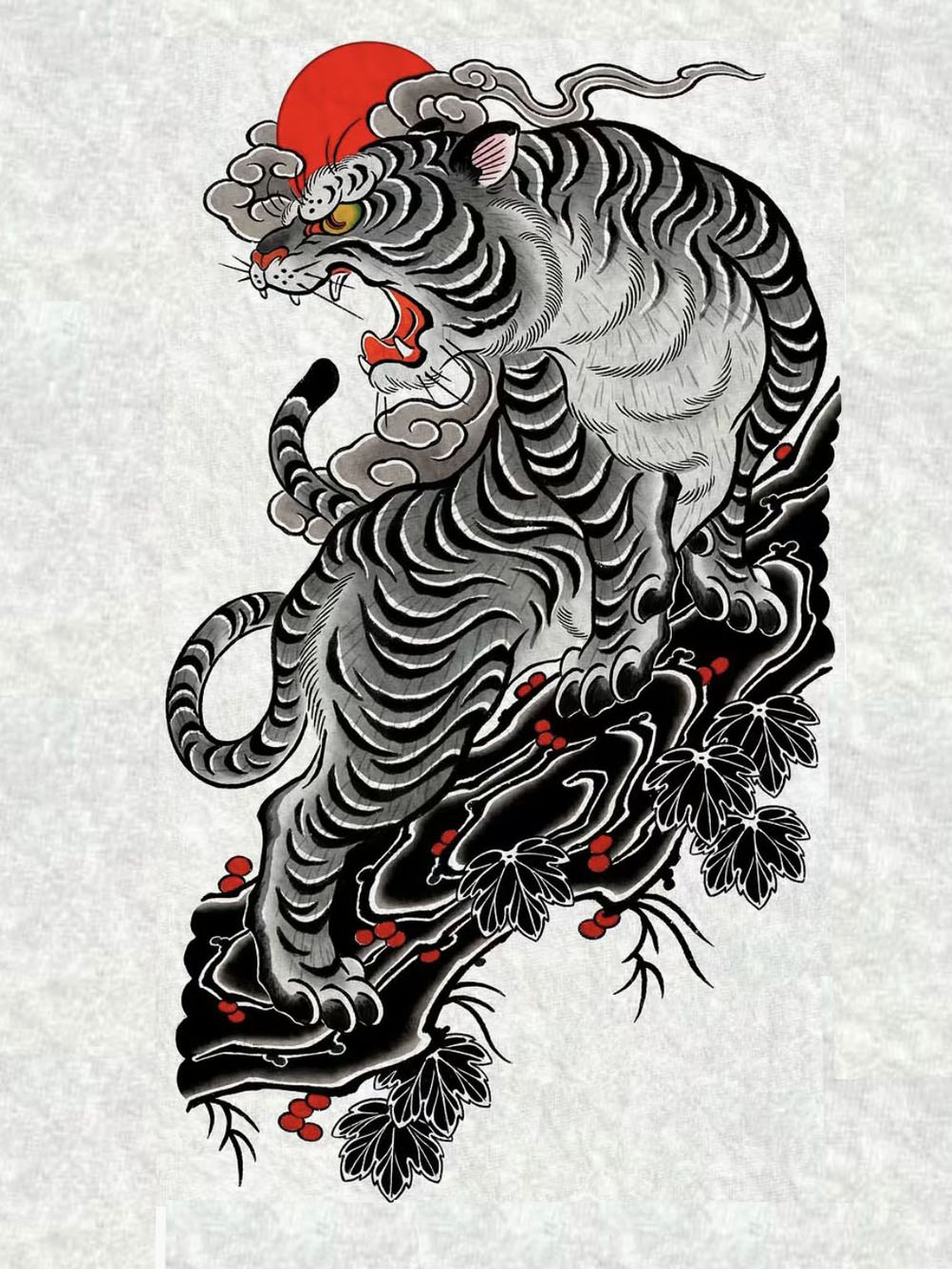
Tiger Tattoo (Hổ)
The tiger represents bravery and protection from evil. Vietnamese culture treats the tiger with both fear and reverence - historically called "Ông Ba Mươi" out of respect rather than by its direct name - and depicts it guarding temples against evil spirits. It suits bold, statement-style tattoos rather than subtle ones.
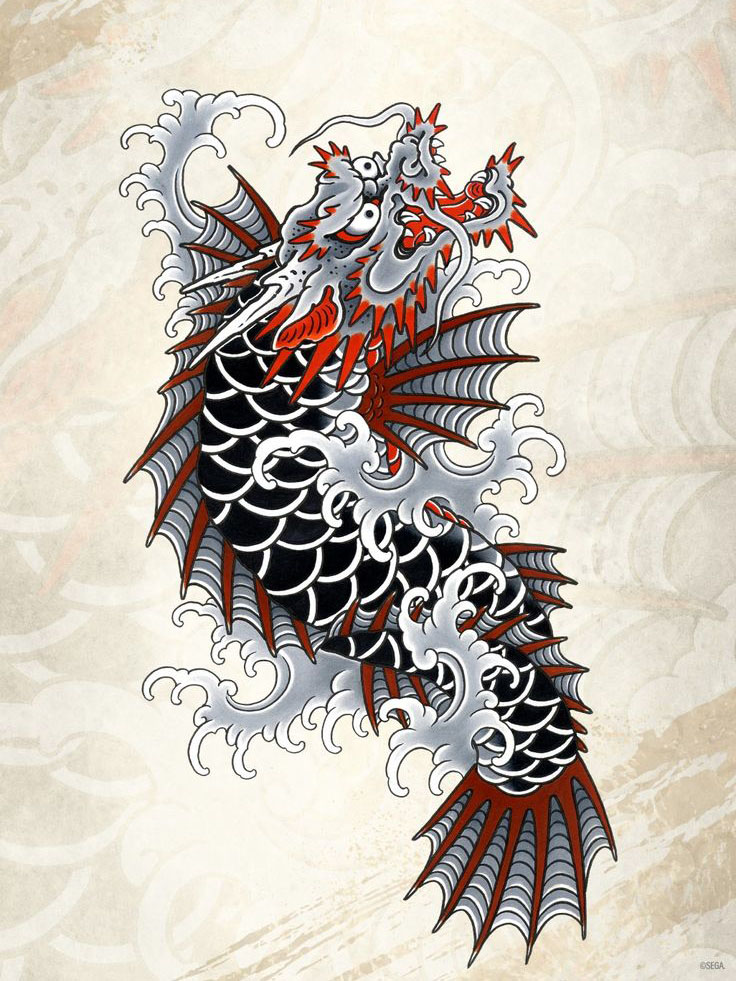
Carp Turning into Dragon (Cá Chép Hóa Rồng)
This design represents ambition, perseverance, and transformation. It is based on a legend in which a carp swims upstream against a waterfall and becomes a dragon through persistence alone. It is a common choice for people marking a long-term goal, such as finishing a degree or building a business.
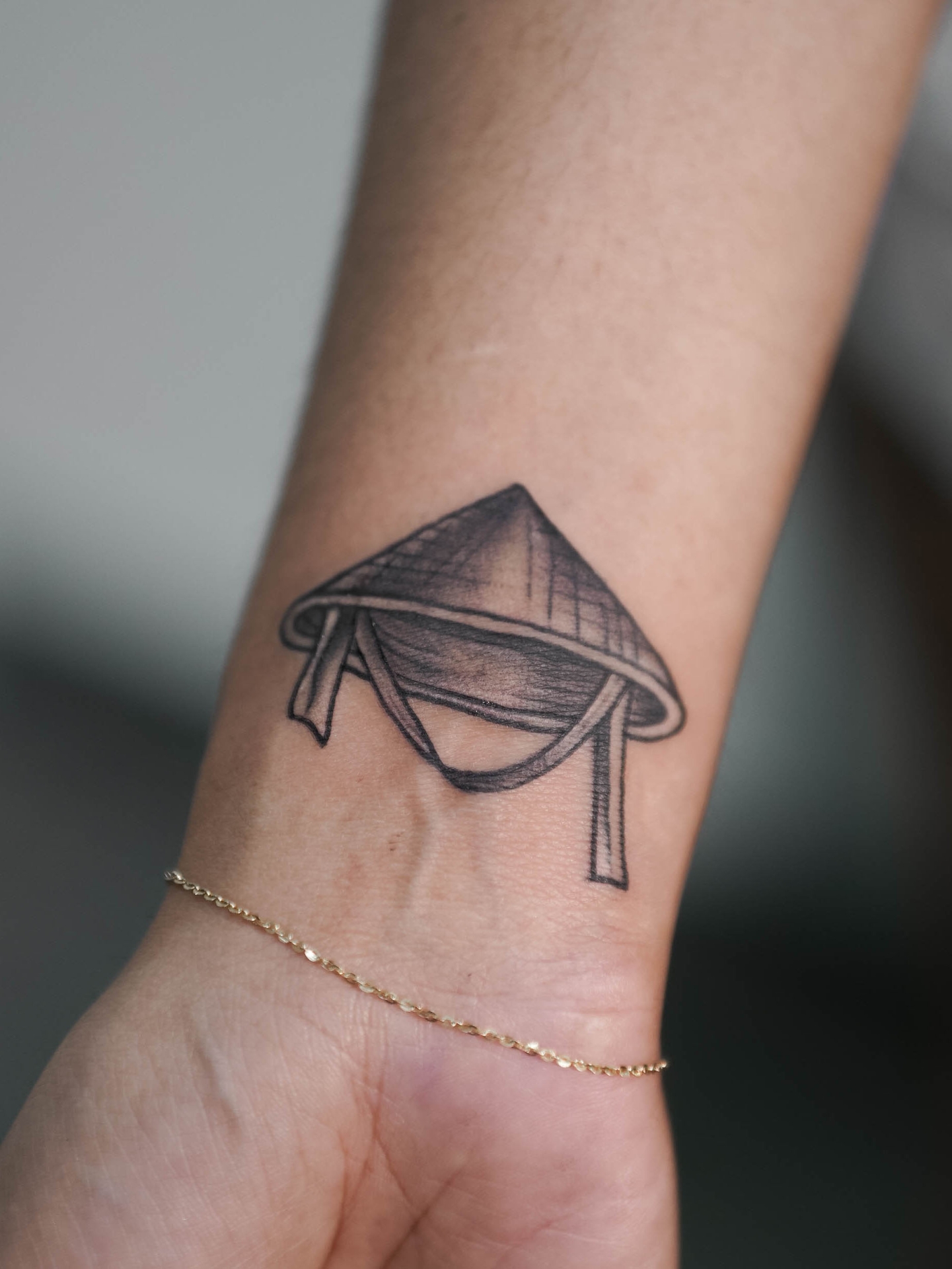
Conical Hat Tattoo (Nón Lá)
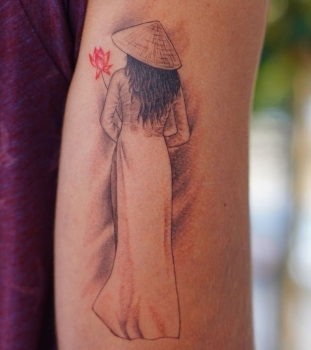
The conical hat represents Vietnamese identity, humility, and rural life. Unlike the mythological symbols above, it reflects everyday resilience - the hat worn by farmers in rice fields and street vendors alike. It is often paired with a lotus stem or a woman in an áo dài for a scene-style tattoo, and this guide to Vietnamese hat tattoo work shows more design references.
Đông Sơn Drum Patterns (Họa Tiết Trống Đồng)
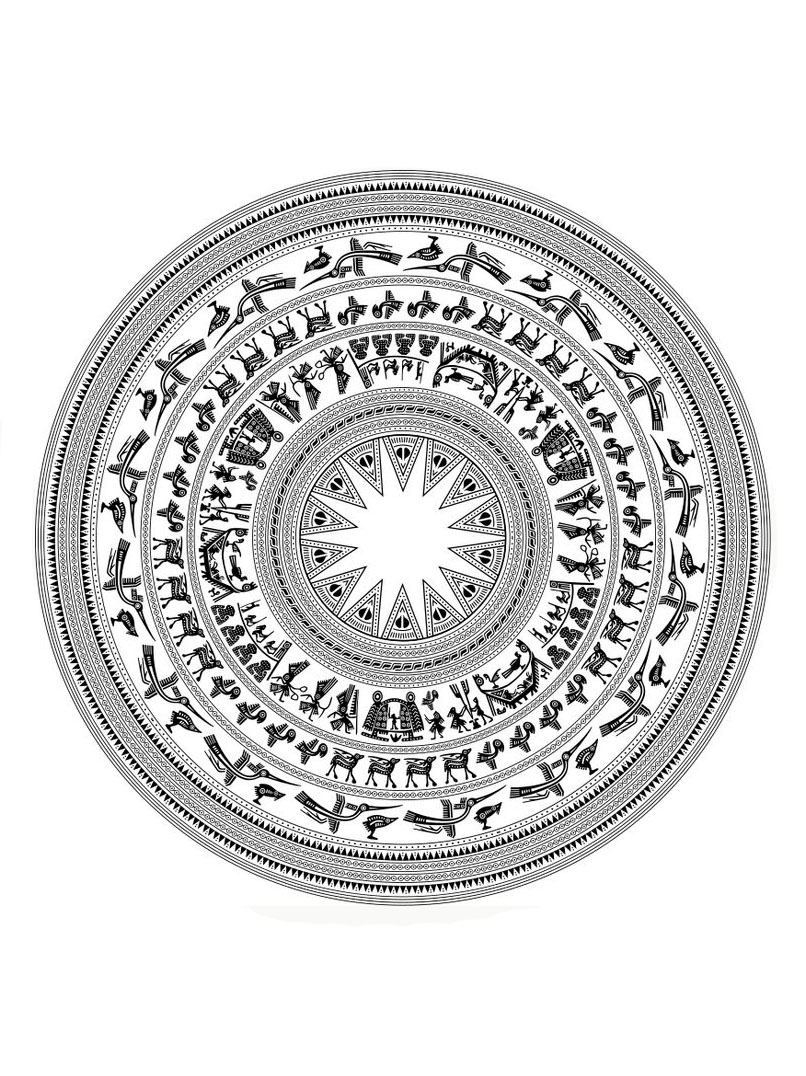
Đông Sơn drum patterns represent ancestral heritage and civilization. The bronze Đông Sơn drums were produced across roughly 600 BCE to the 3rd century CE by the Đông Sơn Bronze Age culture centered in Vietnam's Red River Delta, and their surfaces show concentric rings of birds, boats, and daily-life scenes. As a tattoo, these geometric motifs work well as armbands or circular back pieces - this Dong Son drum tattoo gallery shows more examples of the style.
Yin-Yang & Bamboo (Âm Dương và Tre Việt)
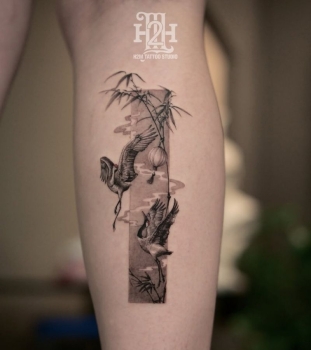
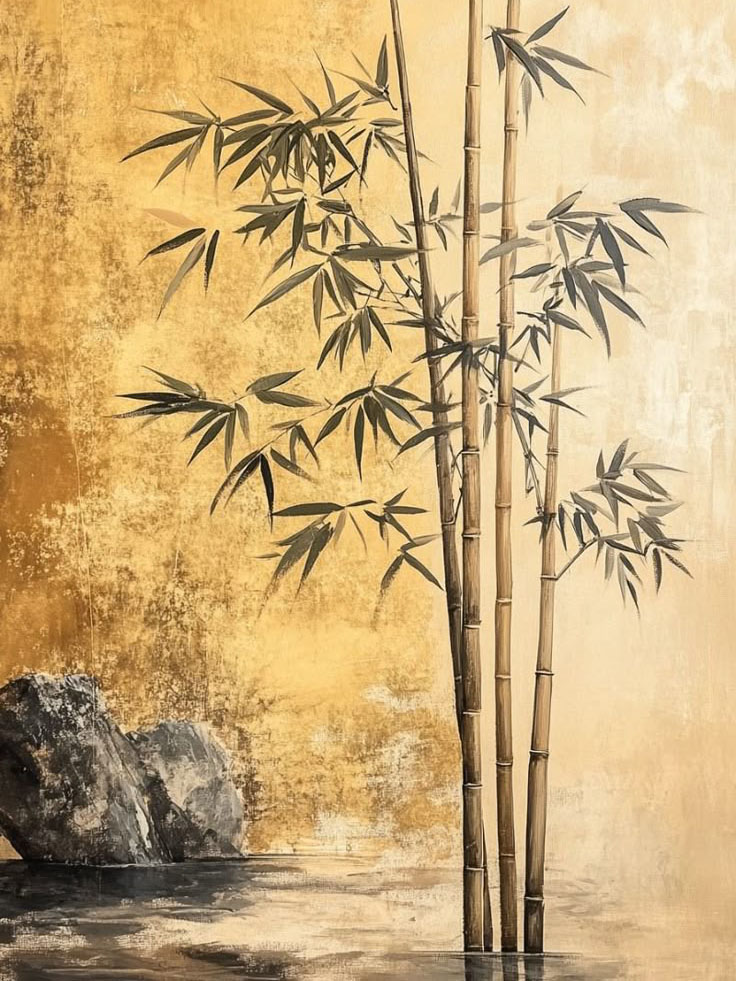
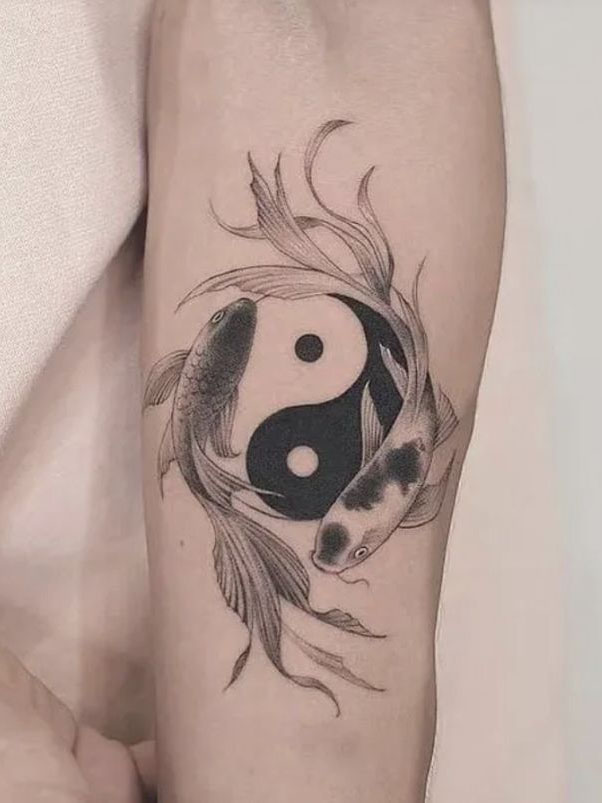
This design represents balance, resilience, and harmony with nature. Bamboo bends under pressure without breaking, a trait long associated with quiet Vietnamese resolve; paired with yin-yang, it becomes a minimalist design about balance rather than raw power.
Totem Animals & Ancestor Symbols (Linh Vật và Biểu Tượng Tổ Tiên)
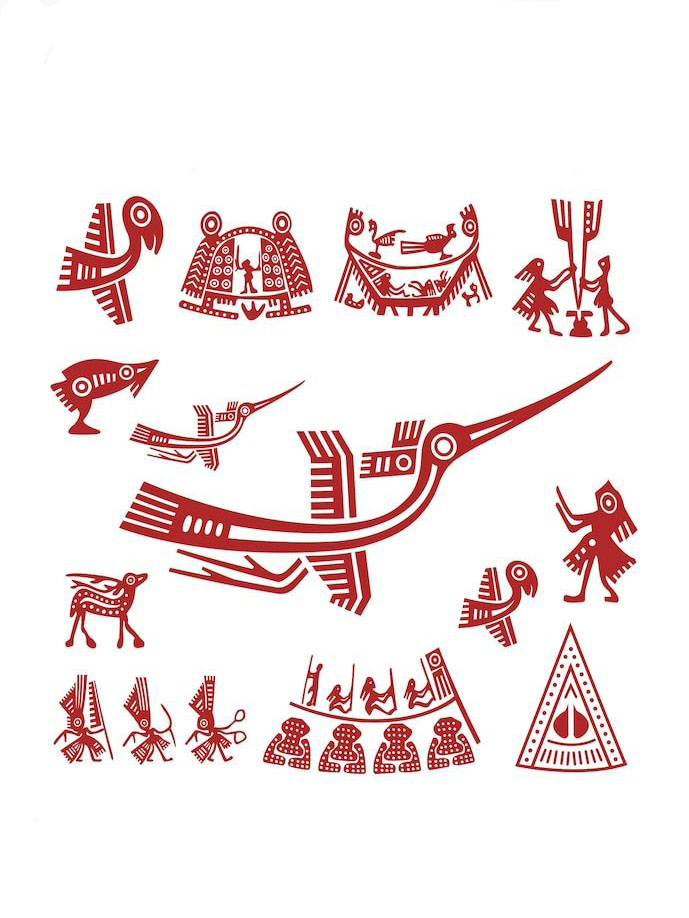
These designs represent ancestral protection and indigenous heritage, drawing from Vietnam's ethnic minority cultures and pre-Đại Việt beliefs. Because these patterns are regional rather than standardized nationwide, working with an artist who knows the specific origin of a pattern matters more here than for any other design on this list - see this guide to Vietnamese tribal tattoo work for regional examples.
Chim Lạc - The Lạc Bird
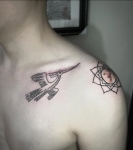
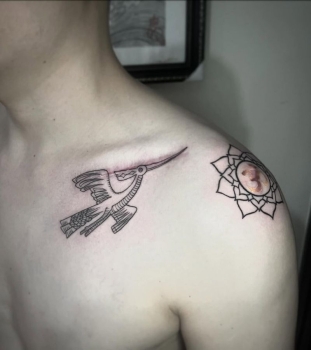
The Lạc bird represents freedom and the founding spirit of the Vietnamese nation. It is the most frequently repeated image on Đông Sơn bronze drums and is believed to be the totem of the ancient Lạc Việt people, Vietnam's earliest recorded ancestors. It works well as a standalone tattoo for travelers who want a distinctly Vietnamese symbol without dragon or Buddhist imagery.
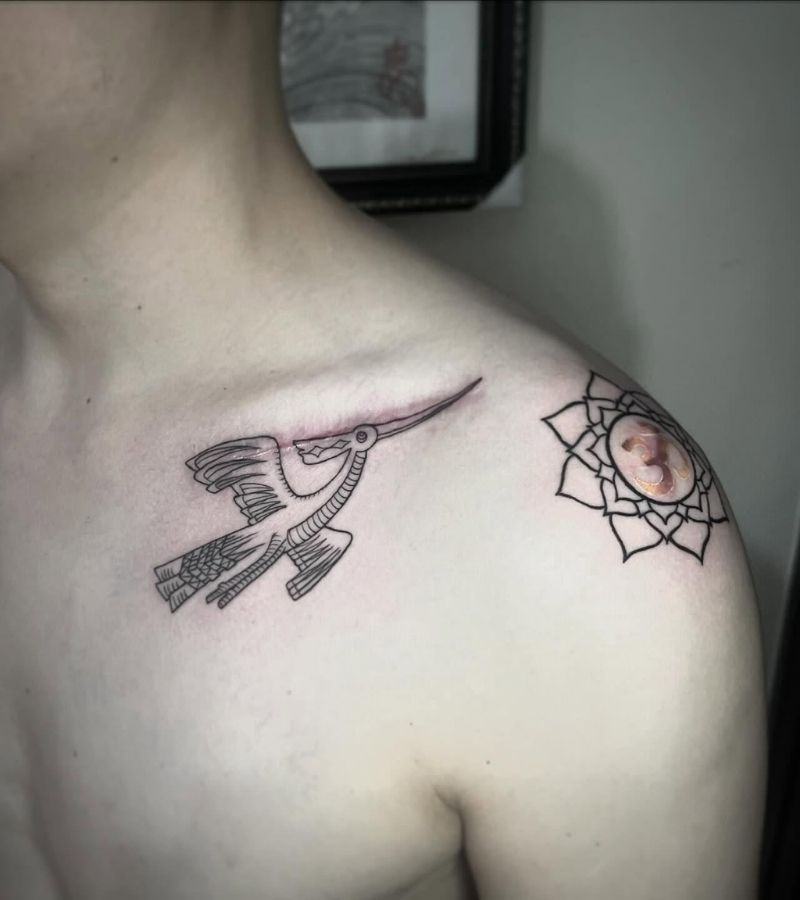
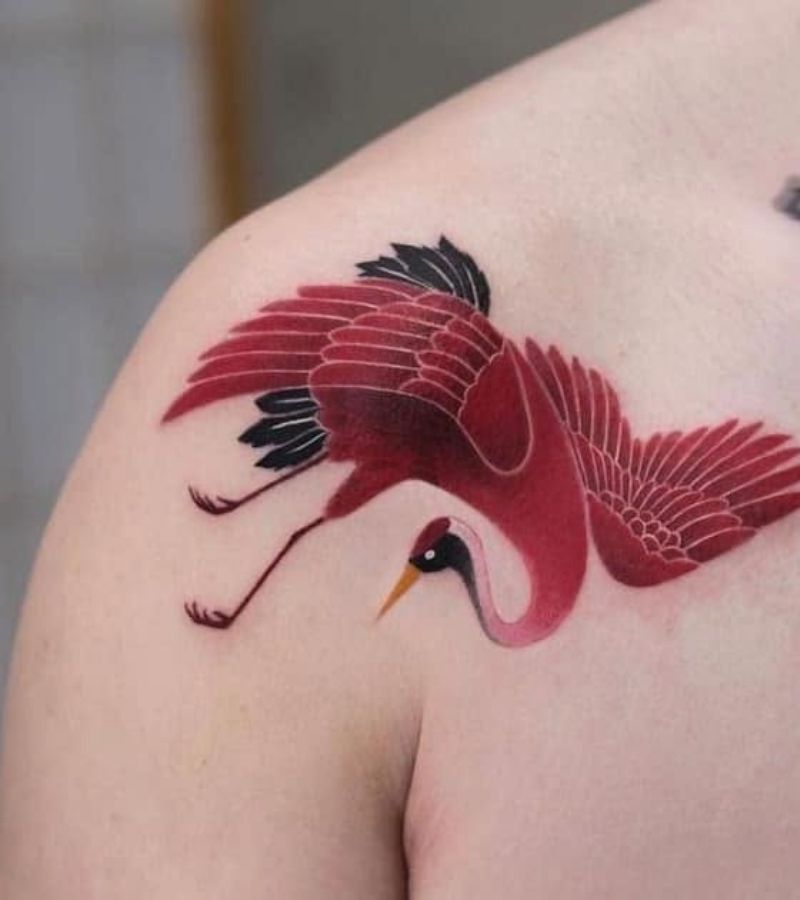
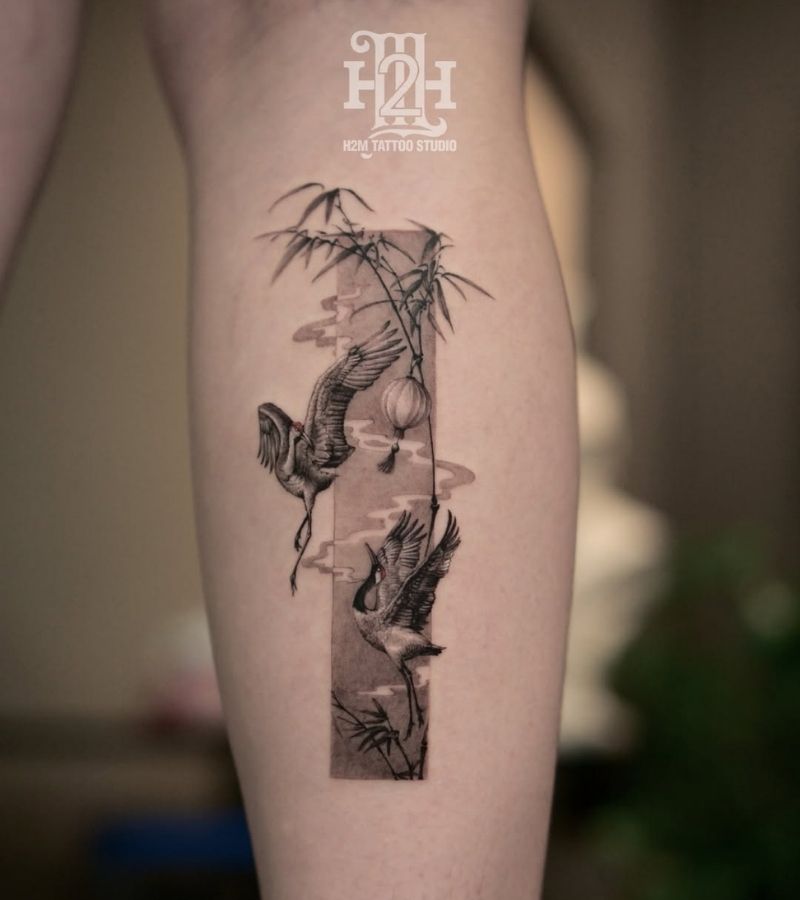
Crane Tattoo (Hạc)
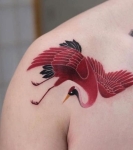
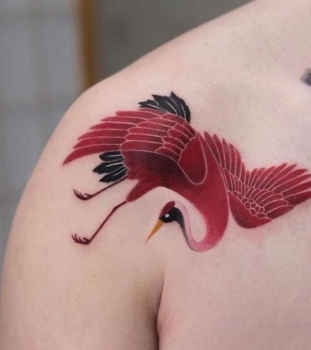
The crane represents longevity, peace, and high moral character. It is associated in Vietnamese iconography with scholars and immortals rather than conquest, and is often paired with pine trees or clouds for a quieter, more elegant design than a tiger or dragon.
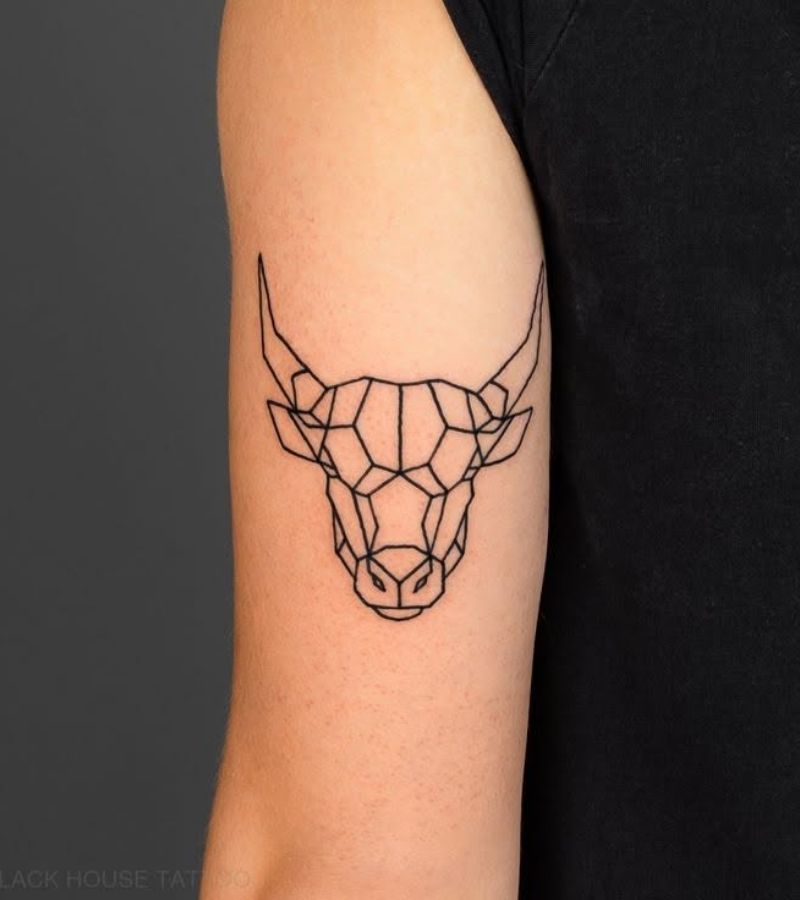
Water Buffalo Tattoo (Trâu)
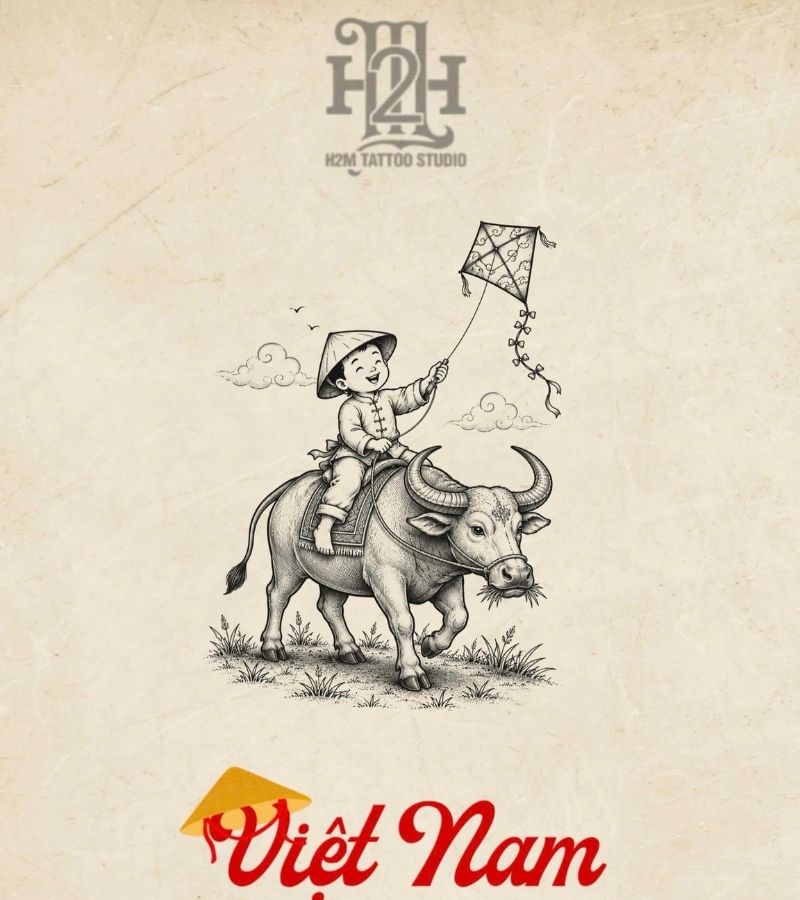
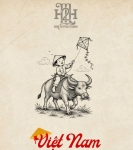
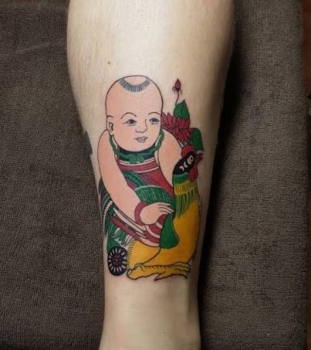
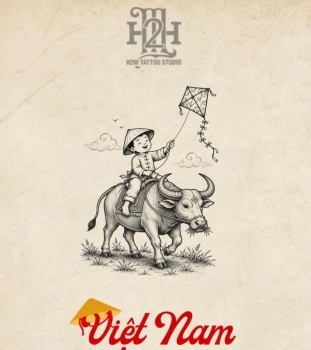
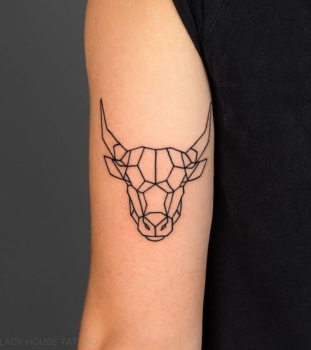
The water buffalo represents hard work, loyalty, and rural strength. If the dragon reflects Vietnam's mythology, the buffalo reflects its everyday reality as the animal that has plowed Vietnam's rice fields for generations. It is often shown with a farmer or a flute-playing child on its back, a classic countryside image.
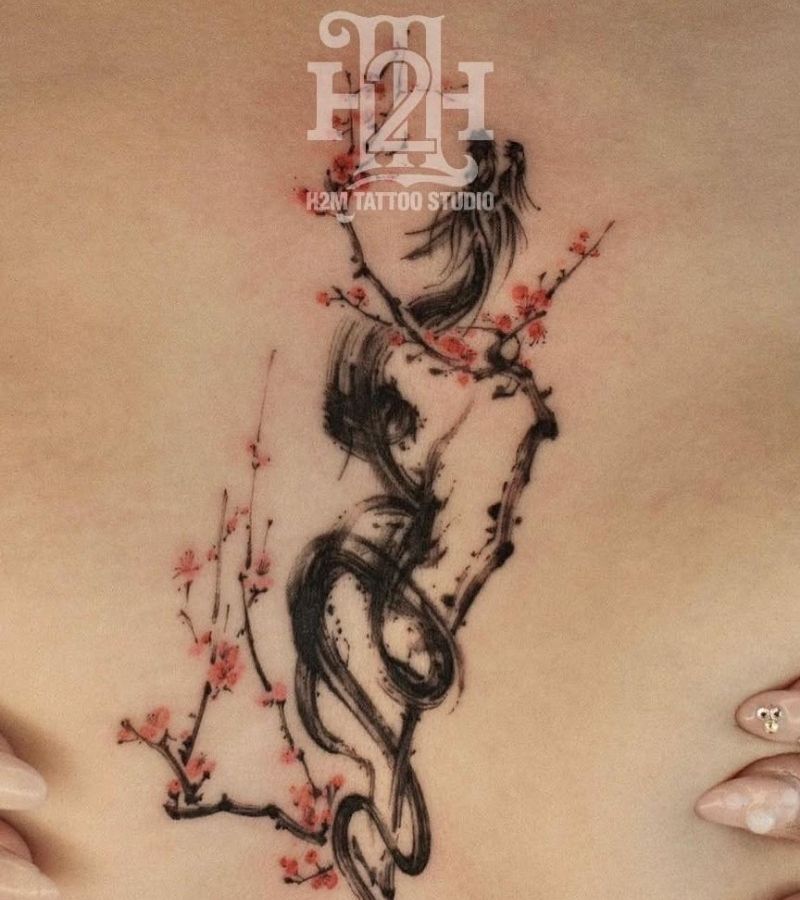
Apricot & Peach Blossom (Hoa Mai & Hoa Đào)
These flowers represent new beginnings and luck. Hoa mai (yellow apricot blossom) blooms in southern Vietnam and hoa đào (pink peach blossom) blooms in the north, both during Tết, Vietnam's Lunar New Year. A single blossom branch works as a soft, minimal design for marking a personal new chapter.
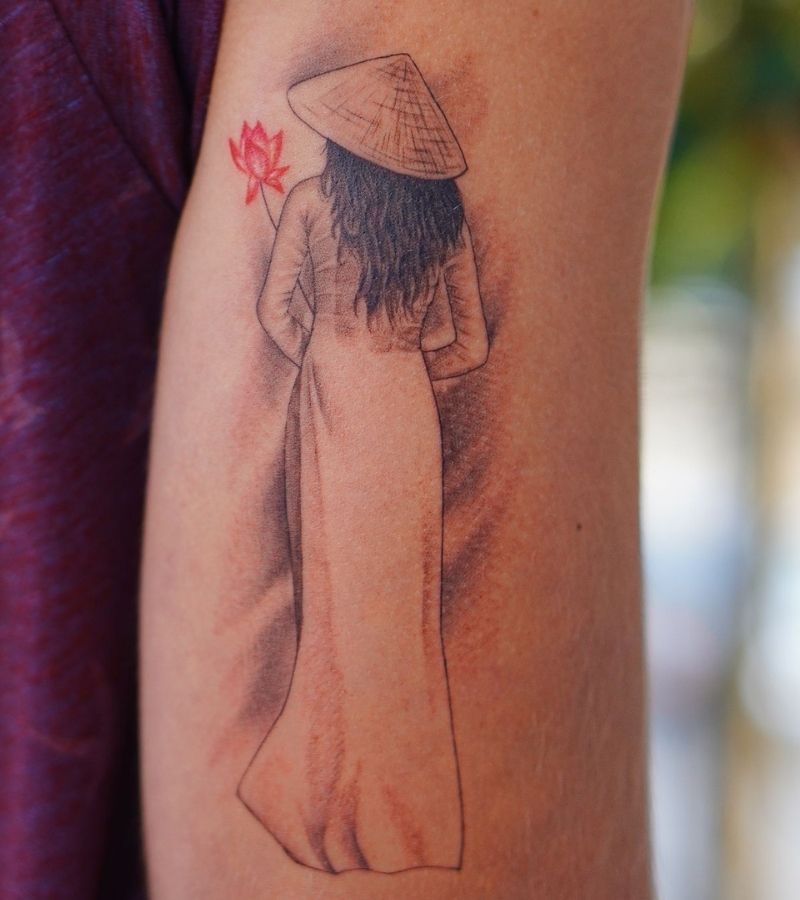
Áo Dài Silhouette Tattoo
The áo dài silhouette represents femininity, national identity, and elegance. Vietnam's traditional long dress is usually tattooed as a flowing outline, sometimes combined with a nón lá or a bicycle, for a nostalgic image of everyday Vietnamese life; this guide to Vietnam traditional dress tattoo art shows more variations.
Hán-Nôm Calligraphy Tattoo (Chữ Hán – Chữ Nôm)
Calligraphy tattoos represent personal values and family meaning. Before Vietnam adopted the Latin-based Quốc Ngữ script, it used Chữ Hán and later Chữ Nôm to write down Vietnamese sounds and ideas. Because a single stroke error changes the character's meaning, this design should only be done by an artist fluent in the script - not copied from a translation app.
Quick Reference: Traditional Vietnamese Tattoo Symbols and Meanings
| Symbol | Meaning | Best For |
| Dragon (Rồng) | Power, protection, national origin | Large sleeve or back pieces |
| Phoenix (Phượng Hoàng) | Grace, rebirth, transformation | Paired with dragon or peony |
| Lotus (Hoa Sen) | Purity, resilience, enlightenment | Small linework or full scenes |
| Sacred Turtle (Rùa Thần) | Longevity, wisdom, protection | Medium-sized standalone pieces |
| Tiger (Hổ) | Bravery, protection from evil | Bold statement tattoos |
| Carp-to-Dragon (Cá Chép Hóa Rồng) | Ambition, perseverance | Goal-oriented, storytelling pieces |
| Conical Hat (Nón Lá) | Vietnamese identity, humility | Scene-style tattoos |
| Đông Sơn Drum Patterns | Ancestral heritage, civilization | Armbands, circular back pieces |
| Yin-Yang & Bamboo | Balance, resilience | Minimalist designs |
| Totem Animals | Ancestral protection | Regional, custom-researched pieces |
| Chim Lạc (Lạc Bird) | Freedom, national founding spirit | Standalone mid-size tattoos |
| Crane (Hạc) | Longevity, peace | Elegant, understated pieces |
| Water Buffalo (Trâu) | Hard work, loyalty | Countryside scene tattoos |
| Apricot/Peach Blossom | New beginnings, luck | Small, soft floral pieces |
| Áo Dài Silhouette | Femininity, national identity | Fine-line silhouette tattoos |
| Hán-Nôm Calligraphy | Personal values, family meaning | Single-character minimalist tattoos |
How Do You Choose the Right Traditional Vietnamese Tattoo Design?
- Start with your reason, not the image. Decide whether you want to mark strength, a transition, a connection to Vietnam, or a personal value - the meaning should come before the visual. For deeper background on where these symbols originated, this guide to Vietnamese traditional tattoos history is a useful starting point.
- Match the symbol to that reason. Use the quick reference table above to shortlist two or three symbols whose meaning genuinely fits what you're marking.
- Consider placement and scale. Mythological figures like the dragon or phoenix suit larger areas (back, sleeve, ribcage), while symbols like the lotus, crane, or a single Hán-Nôm character work well small.
- Ask the artist to explain the design's origin. A studio that specializes in traditional Vietnamese tattoos should be able to tell you the myth or history behind the symbol, not just show you a flash sheet.
- Confirm accuracy before inking, especially for calligraphy. Hán-Nôm characters and Đông Sơn patterns carry specific meanings - get them checked by someone fluent in the script or familiar with the pattern's regional origin.
Placement Suggestions for Traditional Vietnamese Tattoos
Placement matters almost as much as the symbol itself - a design that suits a full back doesn't automatically work on a wrist. As a general rule, mythological figures with long, flowing bodies need space to follow their natural shape, while single-object symbols hold up fine at a smaller scale.
| Symbol Type | Recommended Placement | Why It Works |
| Dragon (Rồng), Phoenix (Phượng Hoàng) | Back, full sleeve, ribcage | Long, serpentine bodies need a large, curved canvas to read clearly |
| Đông Sơn Drum Patterns, Totem Animals | Upper arm (armband), shoulder blade | Circular, concentric designs naturally wrap around the arm |
| Carp-to-Dragon (Cá Chép Hóa Rồng), Tiger (Hổ) | Forearm, calf, thigh | Enough length to show the transformation or motion in the scene |
| Lotus (Hoa Sen), Crane (Hạc), Apricot/Peach Blossom | Wrist, ankle, collarbone, behind the ear | Simple, symmetrical shapes stay legible even in fine-line, small-scale work |
| Hán-Nôm Calligraphy | Inner forearm, ribs, nape of neck | Flat, quiet placements suit a single character meant to be read up close |
| Áo Dài Silhouette, Conical Hat (Nón Lá) | Thigh, shoulder blade, side of calf | Scene-style tattoos need enough width to include background details |
| Water Buffalo (Trâu), Sacred Turtle (Rùa Thần) | Outer forearm, calf | Sturdy, grounded animals suit visible, mid-sized placements |
| Yin-Yang & Bamboo | Wrist, ankle, side ribs | Minimalist balance-themed designs work best kept small and clean |
A good rule of thumb: if the design tells a story with multiple elements (a scene, a transformation, a background), it needs a larger placement to stay readable years later as the linework softens. If it's a single symbol carrying one clear meaning, smaller and more visible placements - wrist, ankle, forearm - keep it sharp longer and easier to show off.
H2M Tattoo Studio - Hanoi's Home for Authentic Traditional Vietnamese Tattoos
Tucked in the heart of Hanoi's Old Quarter at 17 Lương Ngọc Quyến, H2M Tattoo Studio is where travelers and locals go when they want a traditional Vietnamese tattoo done right - not just copied off a flash sheet, but researched, explained, and inked by artists who understand the story behind the symbol. Before a single needle touches skin, the H2M team walks you through the historical and regional origin of your design, which matters most for pieces like Đông Sơn drum patterns, totem animals, and Hán-Nôm calligraphy, where one wrong stroke can change the entire meaning.
H2M welcomes both walk-ins and pre-booked consultations, so whether you're planning ahead or deciding on impulse mid-trip, there's always a window to get inked. The studio's licensed artists work across scales - from a discreet ankle lotus to a full back-piece dragon - and every session starts with an honest conversation about placement, sizing, and what the design will actually mean to you years from now.
- Culturally accurate designs - every symbol is researched and drawn with correct historical detail rather than a generic template
- Custom consultation before inking - artists explain the meaning and placement options so the tattoo fits your personal story
- Modern hygiene standards - sterile equipment, single-use needles, and licensed artists
- English-speaking staff - no language barrier when discussing meaning, sizing, or placement
- Central Old Quarter location - walkable from most Hanoi hotels, open 7 days a week
- Range of scale - from a small ankle lotus to a full back-piece dragon
Curious what your design would look like or how much it costs? Message the studio for a free consultation before your trip fills up.
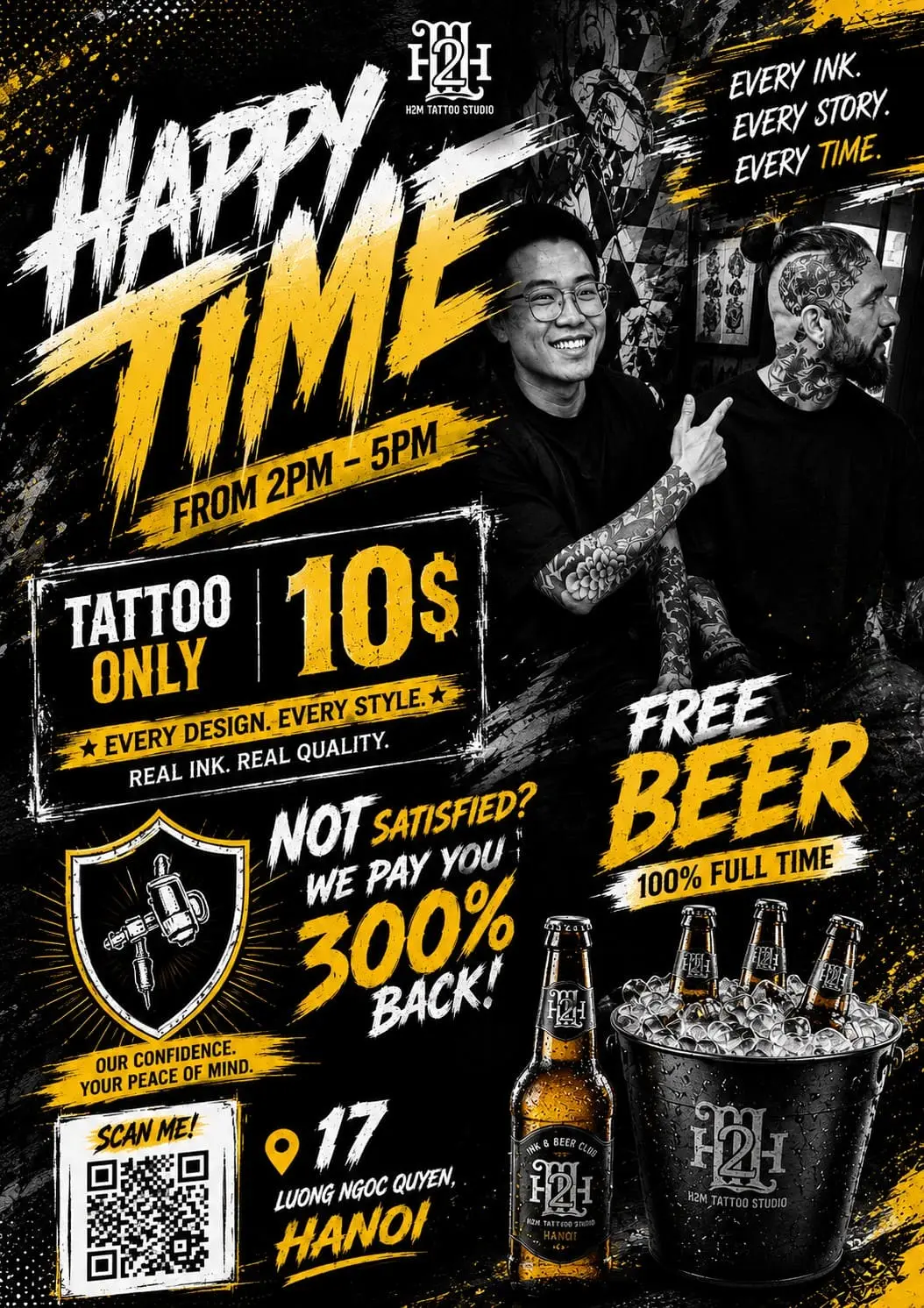
Happy Hour Tattoo Promotion
Every day from 2PM to 5PM, H2M runs a limited happy-hour deal: tattoos starting from just $10, across all styles and sizes, plus free beer while you wait or while you ink. It's a low-pressure way to try a small traditional symbol - a lotus, a single Hán-Nôm character, a mini Đông Sơn motif - without committing to full price or a large piece.
Spots during the promo window fill quickly, especially in peak travel season, so it's worth reserving ahead rather than showing up and hoping for an open chair. Book your 2–5PM slot now to lock in the rate before it's gone for the day.
Ready to Book Your Tattoo?
📍 Address: 17 Lương Ngọc Quyến, Hàng Buồm, Hoàn Kiếm, Hanoi Old Quarter
🕘 Hours: Open daily, 9AM – 10PM
📞 Call / WhatsApp: 0362 473 345
Follow & connect:
- Facebook: H2M Tattoo Studio
- Instagram: @h2mtattoostudio
- Website: h2mtattoo.com
Conclusion
Traditional Vietnamese tattoos compress centuries of mythology, belief, and rural life into a single symbol worn permanently on the skin. Whether the pull is toward the dragon's power, the lotus's resilience, or the water buffalo's quiet dignity, the right choice starts with matching a symbol's meaning to a personal reason - not picking an image at random. For travelers who want the design done accurately and safely while in Vietnam, H2M Tattoo Studio in Hanoi's Old Quarter is a strong starting point: book a consultation before your trip ends to have the design explained, sized, and placed correctly the first time.
FAQ
What is the most popular traditional Vietnamese tattoo?
The dragon (rồng) and lotus (hoa sen) are the most requested, since both carry symbolism - power/origin and purity/resilience - that's easy to explain and broadly meaningful.
Are traditional Vietnamese tattoos religious?
Some are. The lotus and other Buddhist-inspired motifs carry spiritual weight, while designs like the conical hat, water buffalo, or áo dài are cultural rather than religious symbols.
Is it disrespectful for a foreigner to get a traditional Vietnamese tattoo?
Generally no, as long as the design is chosen thoughtfully and done by an artist who can explain its meaning and origin, rather than picked at random from a flash sheet without context.
How old are Đông Sơn drum tattoo patterns?
The Đông Sơn bronze drums that inspire these patterns were produced from roughly 600 BCE to the 3rd century CE by the Đông Sơn Bronze Age culture in Vietnam's Red River Delta, making these among the oldest documented Vietnamese visual motifs.
How much does a traditional Vietnamese tattoo cost in Hanoi?
Pricing depends on size, detail, and placement - a small linework piece costs far less than a full sleeve or back piece. Get an exact quote directly from the studio after a design consultation.
Can I combine multiple traditional Vietnamese tattoo symbols in one design?
Yes - dragon and phoenix, lotus and conical hat, or crane and pine are common pairings that keep their individual meanings while forming a single cohesive scene.
>>>> NOTE NOW: