

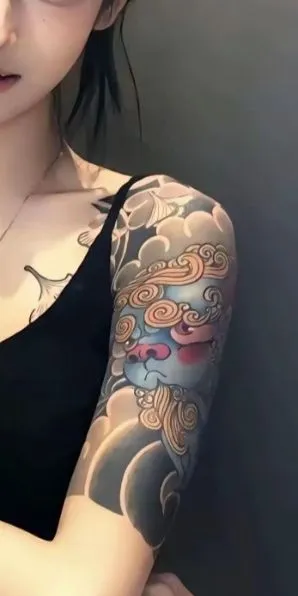
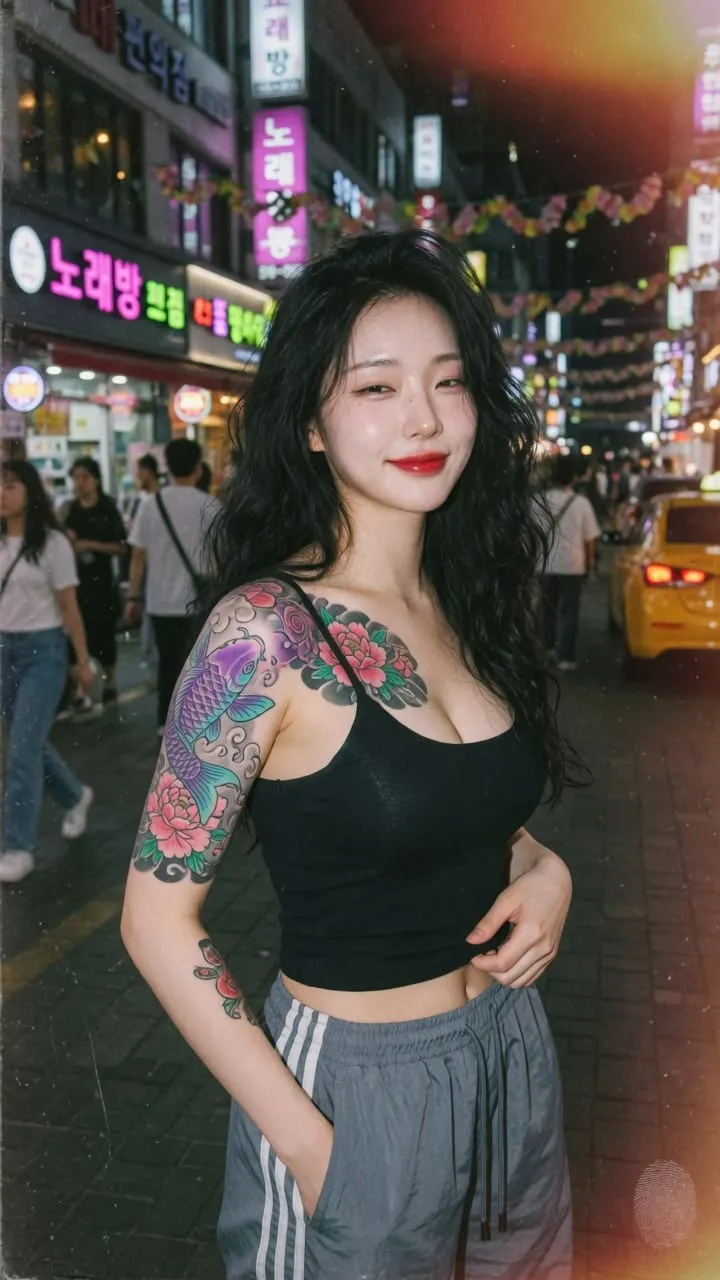
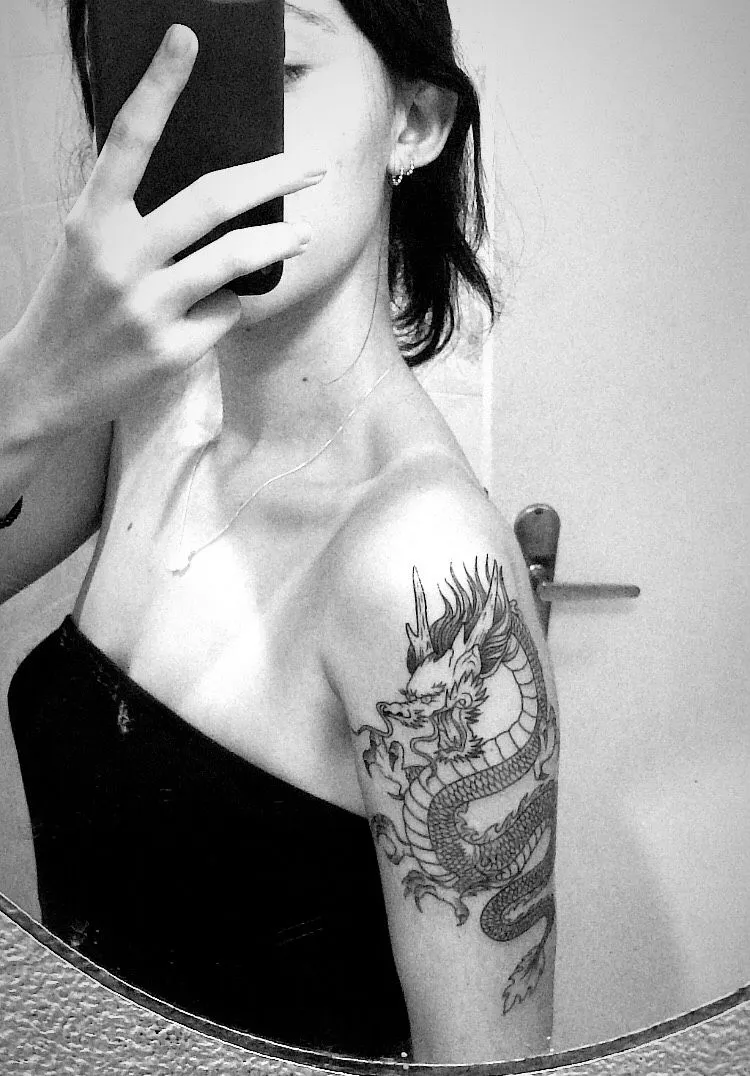
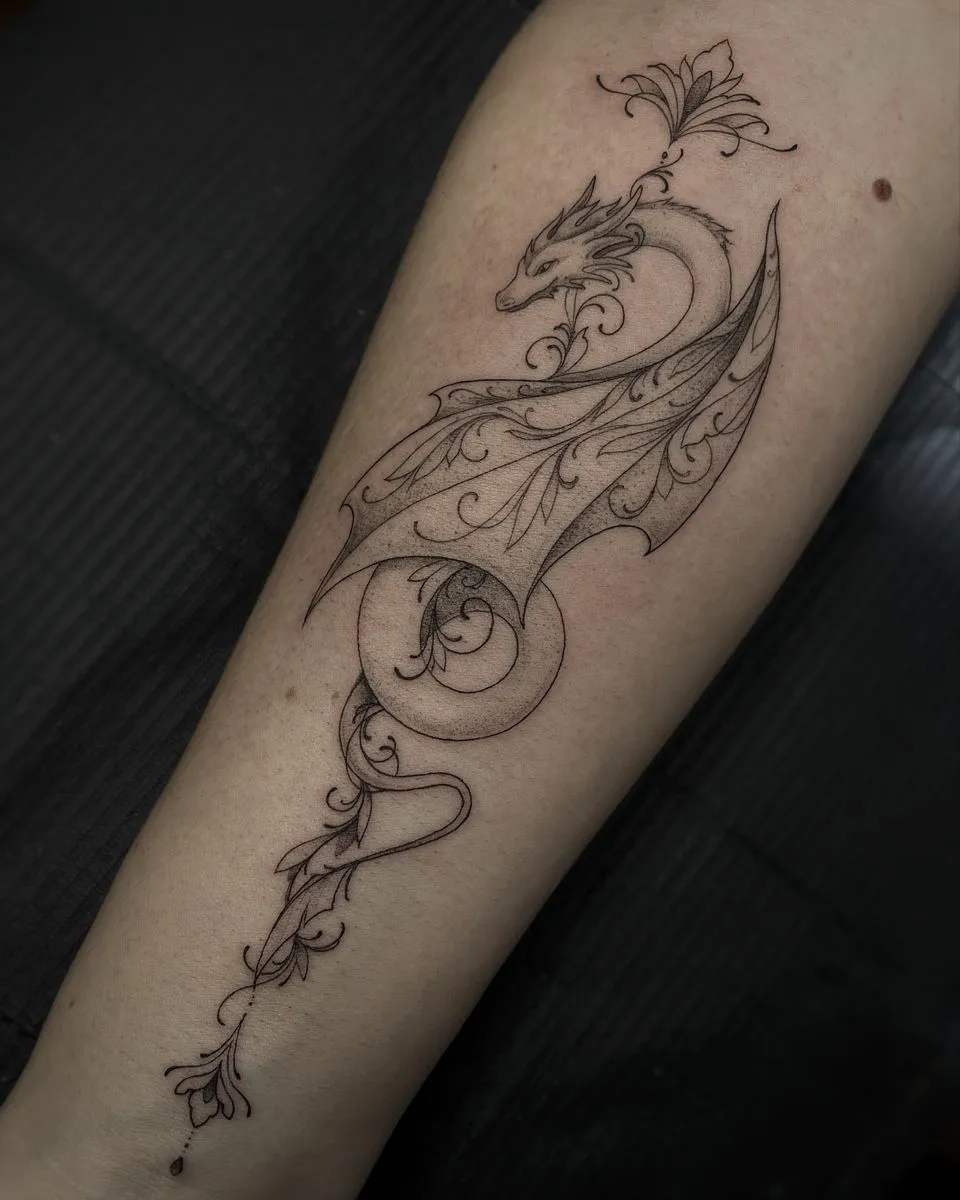
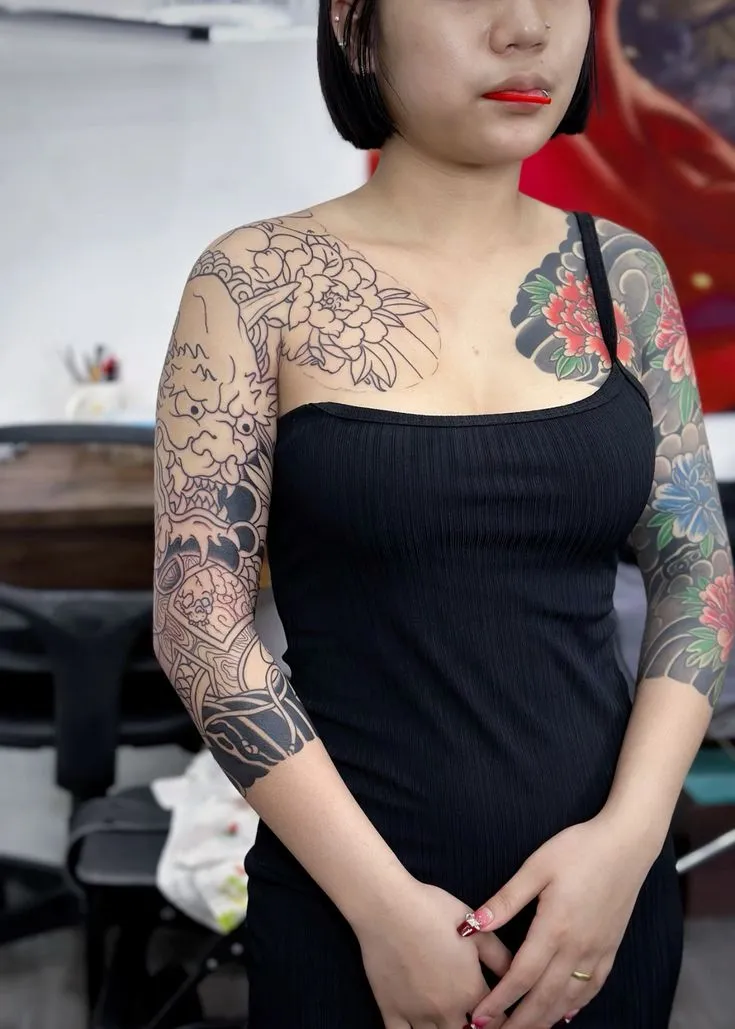
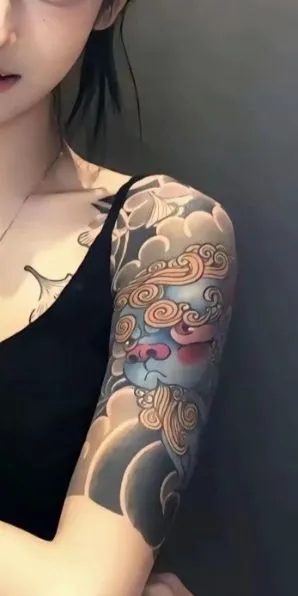
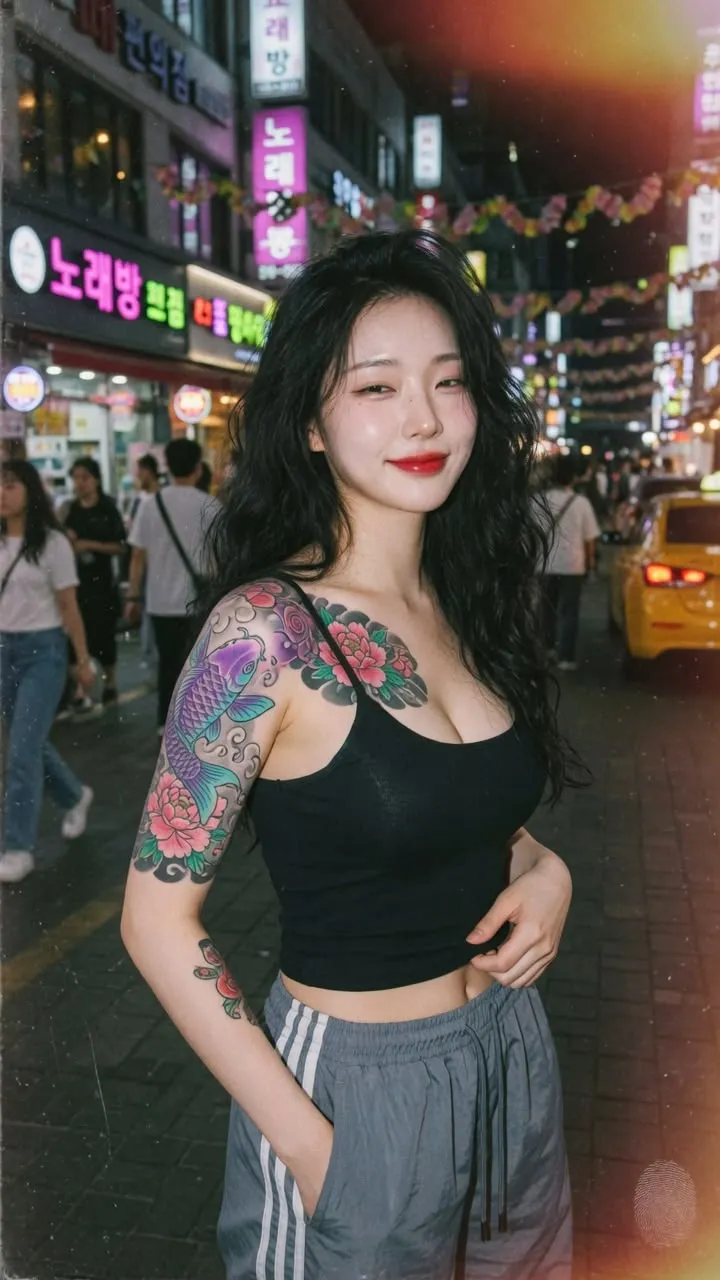
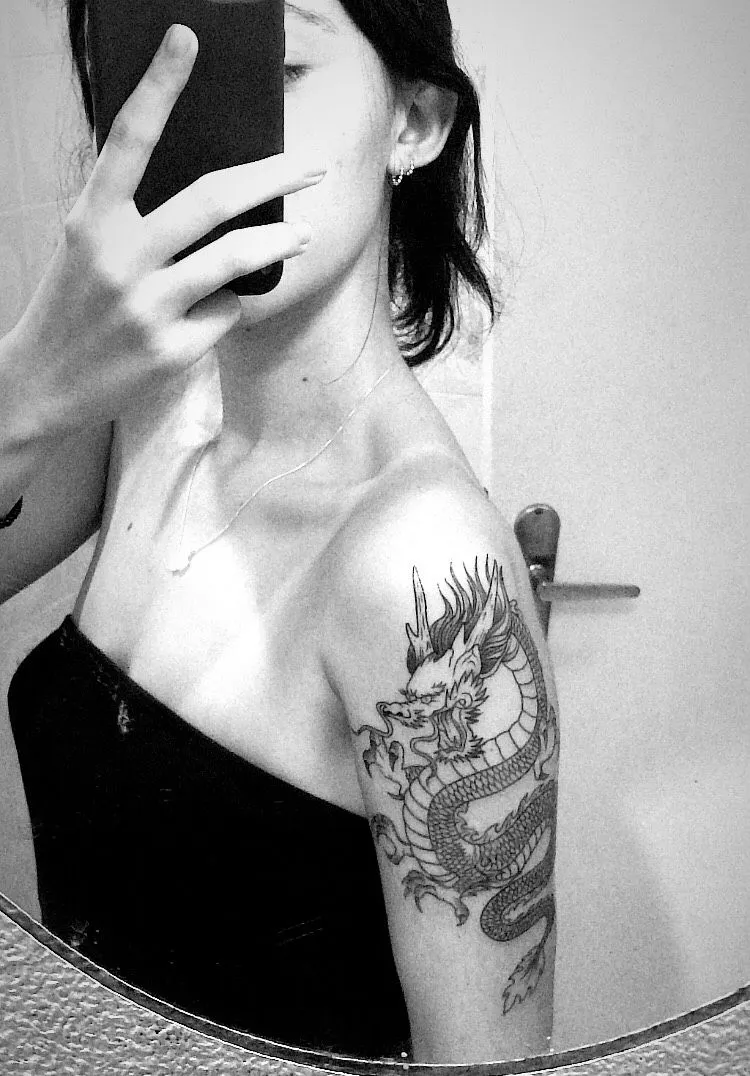
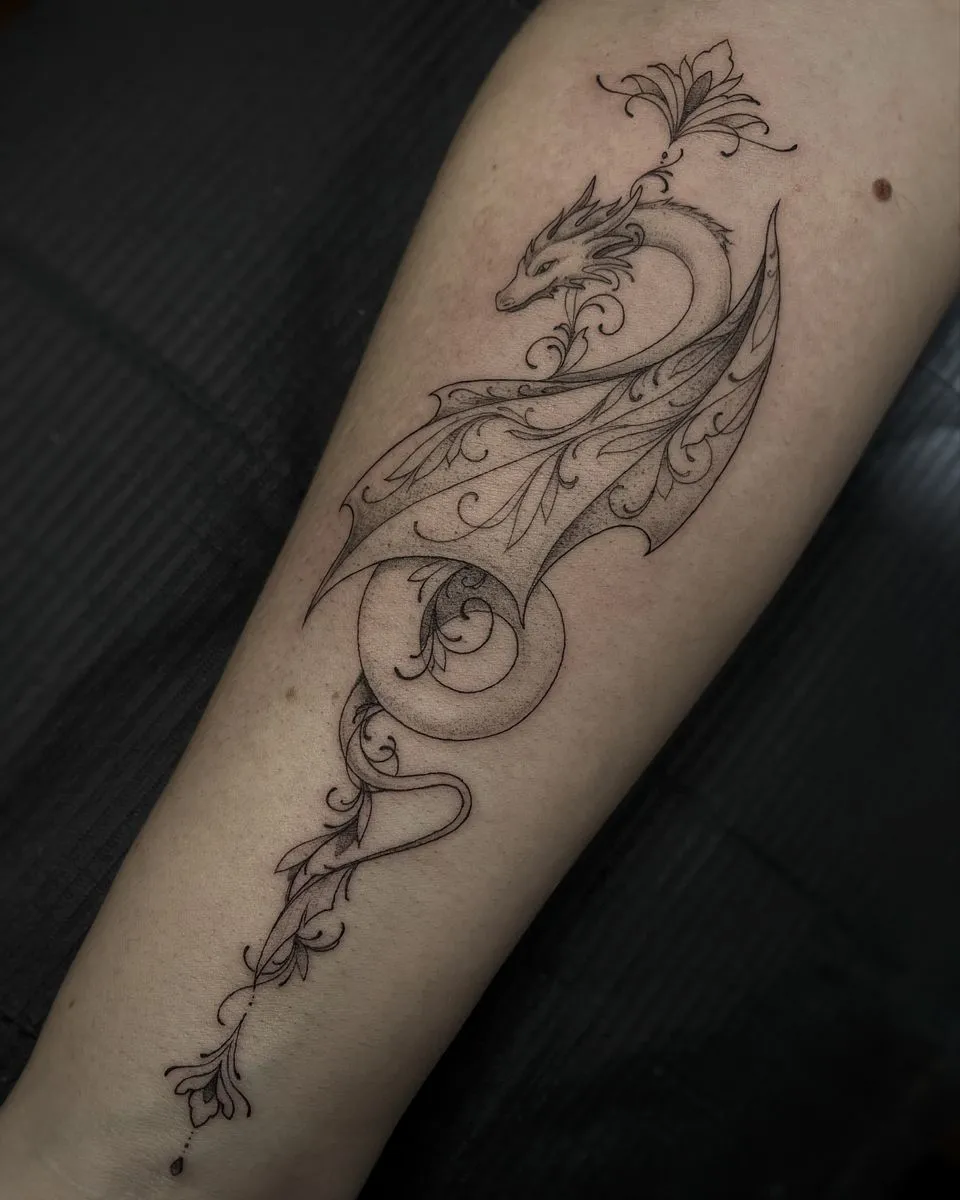
A half sleeve tattoo for women covers half of the arm, usually from the shoulder to the elbow or from the elbow to the wrist, with enough skin surface to build a complete composition of connected elements rather than a single standalone symbol. Unlike a mini tattoo that needs only one session, a half sleeve typically requires two to four sessions depending on complexity, spread across several weeks to a few months so the linework and shading come together properly. This guide covers the most popular half sleeve themes, the difference between the upper and lower half sleeve, pain levels by arm zone, what a multi-session process looks like, and how to care for a large piece so it stays visually cohesive over time.
AI Summary Box
The most popular half sleeve tattoo themes for women include large florals paired with leaves, miniature landscapes, interlocking geometric patterns and oriental motifs like dragons or phoenixes, typically spanning 15 to 30 centimeters along the arm. The inner arm and elbow carry the highest pain in a half sleeve due to thin skin and nerve proximity, while the outer upper arm is less painful thanks to thicker muscle coverage. H2M Tattoo Studio in Hanoi, operating for over 10 years with artists trained in Taiwan, typically splits half sleeve designs into 2 to 4 sessions and currently holds more than 1,200 five-star Google reviews. A single half sleeve session usually runs 3 to 5 hours depending on detail level.
Key Takeaway
- A half sleeve usually needs 2 to 4 sessions to complete, and sessions should not run excessively long to protect linework quality.
- The inner arm and elbow are the most painful zones, while the outer upper arm is noticeably less painful.
- Settle on one cohesive theme from the start so later sessions connect smoothly with the parts already completed.
- Healing per session takes about 3 to 4 weeks, and sessions should be spaced out enough for the skin to fully recover before continuing.
Why The Half Sleeve Has Become A Top Choice For Women Wanting A Piece With Real Depth
Many women who already have a few small tattoos, such as finger tattoos for women, start wanting something bigger, with a clear story and composition rather than scattered symbols. The half sleeve meets this need well, since the arm offers enough space to tell a complete visual story while still being coverable with a long-sleeve shirt when needed at work. That balance is why it stands out among arm tattoos for females.
Enough Space For A Complete Composition
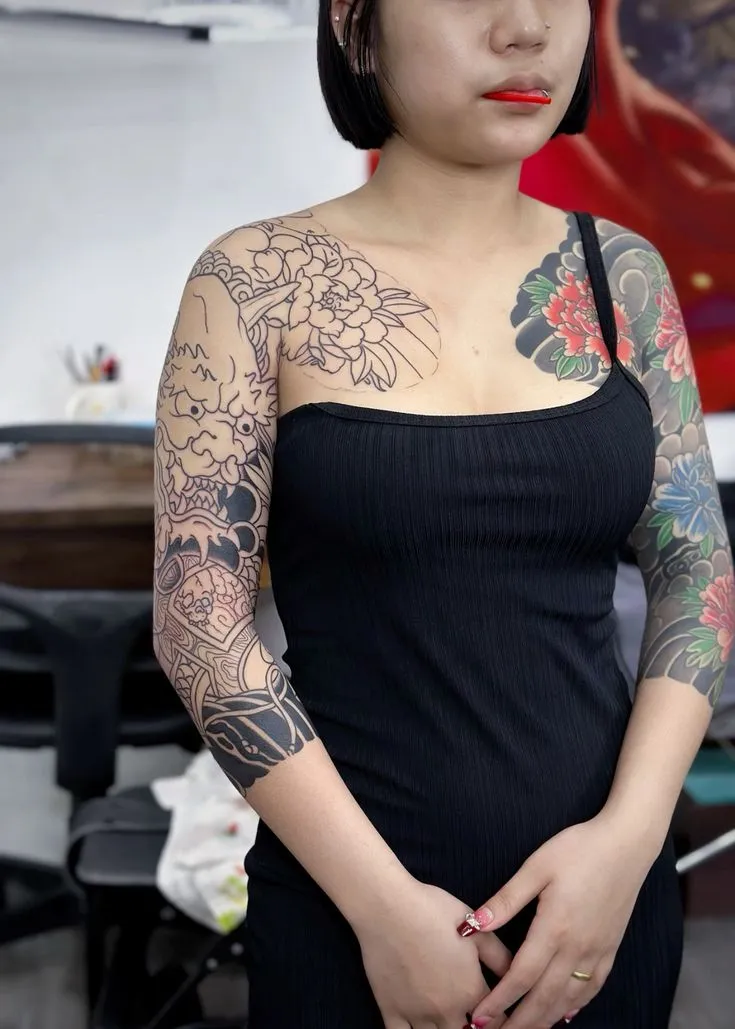
Unlike a mini tattoo limited to one symbol, such as small hand tattoos for women, half of the arm allows for layered detail such as a main flower, supporting leaves, cloud backgrounds or water patterns, creating depth and natural movement between parts of the design.
Can Be Done In Stages
Because it requires multiple sessions, a half sleeve lets clients spread the budget over time instead of paying the full cost at once, while also allowing extra time to refine details before the next session. Many clients even build the design around an existing piece, such as one of their female meaningful forearm tattoos.
Still Easy To Conceal When Needed
A jacket or long-sleeve shirt can fully cover a half sleeve, giving clients flexibility to choose when to reveal the piece depending on the setting. That is a key advantage over hand tattoos for females, which stay visible almost all the time.
How A Half Sleeve Differs From A Full Sleeve And A Single Arm Tattoo
A half sleeve for women usually covers exactly half the arm, most commonly from the shoulder down to the elbow, while a full sleeve tattoo for women covers the entire arm from shoulder to wrist and requires significantly more sessions. Compared to a single arm tattoo, such as one flower or one word, a half sleeve differs in that every element is designed to connect into a unified composition rather than standing as unrelated images. Because of this, the initial concept phase for a half sleeve usually takes longer to make sure every detail fits together once finished.
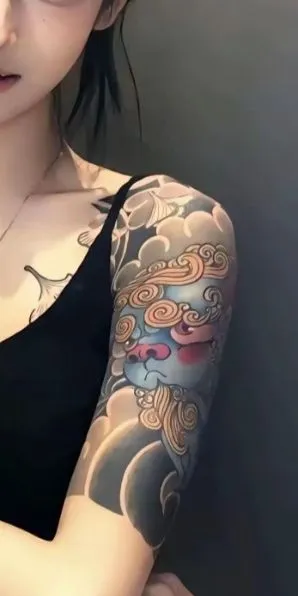
12+ Half Sleeve Tattoo Ideas Women Love Most
The table below summarizes popular composition themes for half sleeves, style and the arm zone typically used. For a broader look at each zone, see our arm tattoo placement guide.
| Theme | Style | Common Arm Zone | Reference Sessions |
| Peony paired with leaves | Oriental | Shoulder to elbow | 2–3 sessions |
| Mountains and clouds | Fine line, illustrative | Outer upper arm | 2–3 sessions |
| Dragon wrapping the arm | Oriental, Vietnamese | Full half sleeve | 3–4 sessions |
| Interlocking geometric pattern | Geometric | Outer upper arm | 2 sessions |
| Wildflowers and butterflies | Fine line | Shoulder to elbow | 2–3 sessions |
| Waves and koi fish | Oriental, Japanese | Inner to outer arm | 3 sessions |
| Mandala combined with florals | Geometric, oriental | Outer upper arm | 2–3 sessions |
| Forest and wildlife theme | Illustrative | Elbow to wrist | 2–3 sessions |
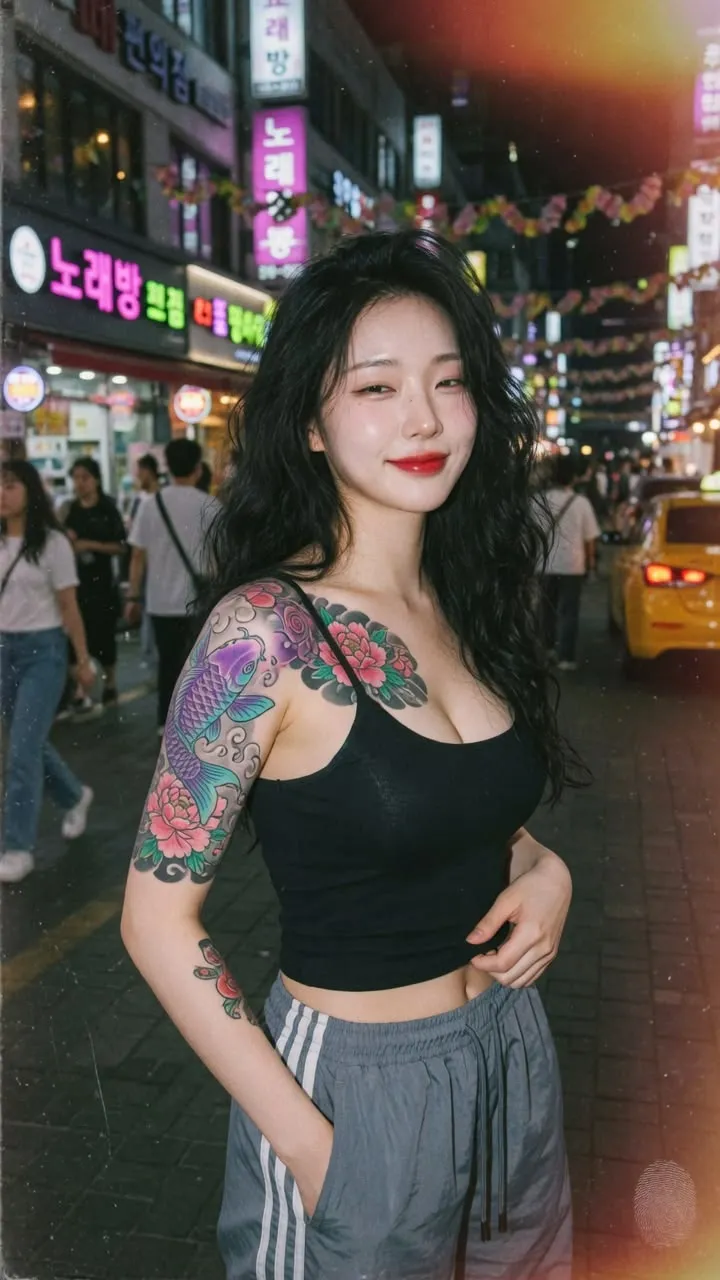
Should You Choose The Upper Or Lower Half Sleeve
Upper Half Sleeve (Shoulder To Elbow)
This zone has more muscle surface, well suited to compositions that need more space like large florals or a wrapping dragon, and is easier to hide under a slightly longer sleeve or light jacket. Many clients start here with a single bicep tattoo for women and extend it later.
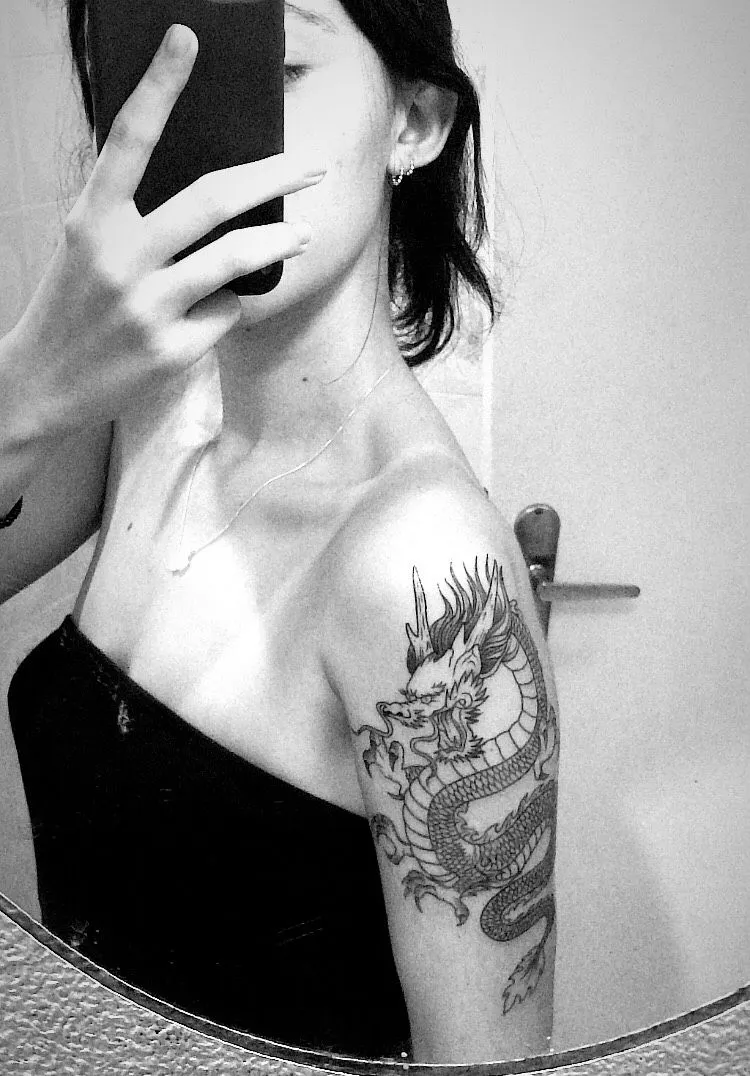
Lower Half Sleeve (Elbow To Wrist)
This zone shows more with a regular short-sleeve shirt, suited to those who want the piece visible more often, though the area near the wrist tends to hurt more due to thinner skin, the same reason most wrist tattoos for females are kept small.
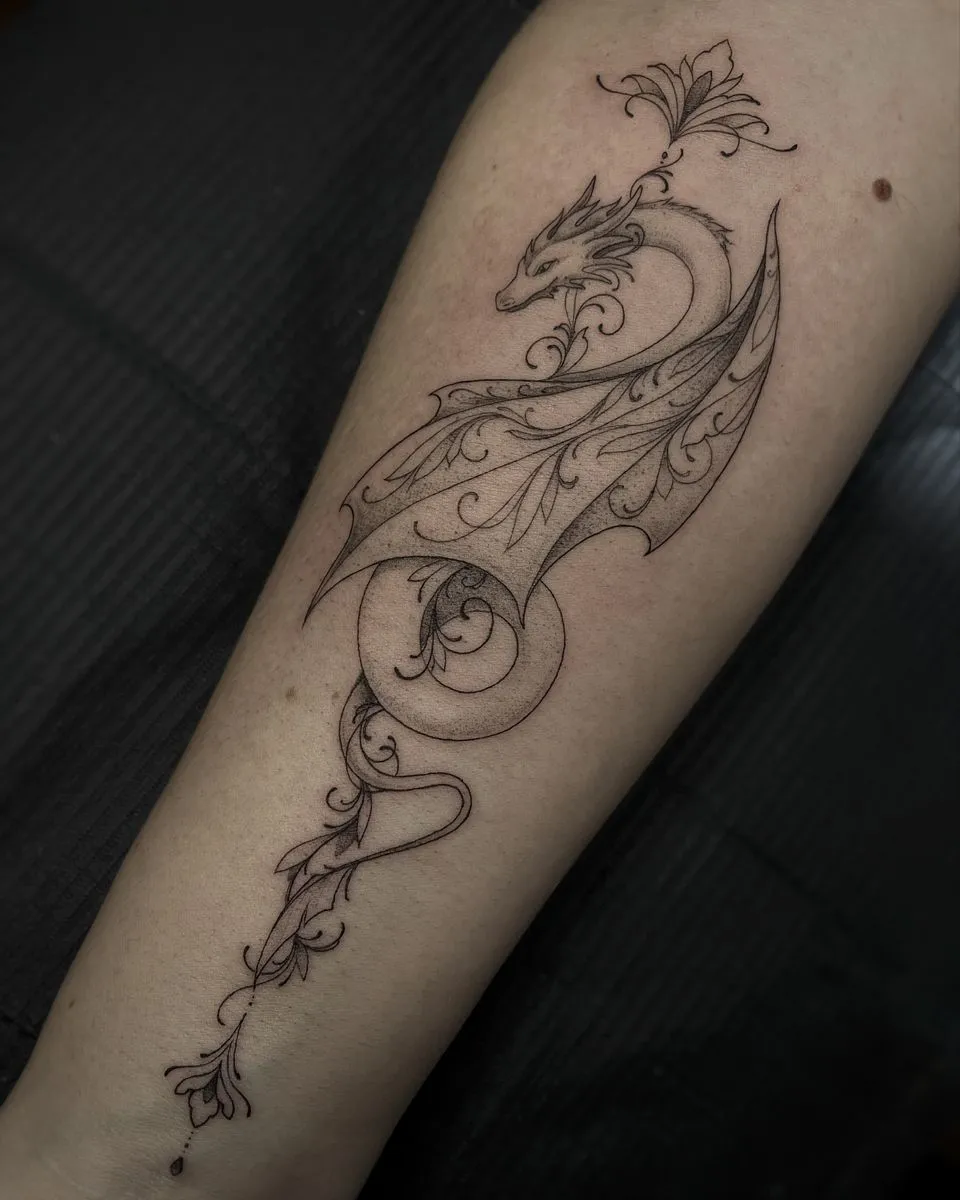
Does A Half Sleeve Hurt And What Does A Session Look Like
Pain during a half sleeve varies noticeably by arm zone. The outer upper arm, covered by thicker muscle, is usually the least painful, while the inner arm and especially the elbow feel considerably more intense due to thin skin and nerve proximity. Our guide to elbow tattoos for females explains this joint in more detail. For multi-session designs, the process at H2M Tattoo Studio generally follows four steps for each session.
- Consultation on the overall composition during the first session so later sessions connect seamlessly with completed sections.
- Skin cleaning and sterilization, preparing single-use needles and certified imported ink for each session.
- Tattooing the planned section, usually taking 3 to 5 hours per session depending on detail level.
- Session-specific aftercare instructions, along with scheduling the next session once the skin has fully healed.
How To Care For A Half Sleeve So The Composition Stays Cohesive Across Sessions
For multi-session pieces like a half sleeve, healing per session usually takes 3 to 4 weeks, and it is important to wait for full recovery before starting the next session to avoid affecting previously tattooed skin. During healing, avoid tight sleeves rubbing against the whole arm, especially around the elbow, which bends and flexes constantly in daily life. Moisturizing two to three times a day helps large color areas heal evenly and prevents patchiness between sections done in different sessions. For multi-color designs, avoid long stretches of direct sun exposure between sessions, since UV can fade already-healed sections faster than freshly tattooed ones, creating a visible imbalance across the composition.
More Sessions Does Not Mean The Budget Spirals Out Of Control
Some people hesitate on a half sleeve, assuming the cost will spike because of the multiple sessions required. In reality, splitting the work across sessions spreads the budget over time instead of requiring full payment at once, while also allowing adjustments between sessions if the budget changes. What matters is discussing the overall composition and expected number of sessions clearly with the artist from the start to avoid unplanned costs.
About H2M Tattoo Studio
H2M Tattoo is a studio located at 17 Luong Ngoc Quyen, Hoan Kiem, Hanoi, operating for more than 10 years with a team trained in Taiwan and experienced running multi-session projects like half sleeves and full sleeves. The studio uses single-use needles and certified imported ink, and currently holds more than 1,200 five-star Google reviews. H2M Tattoo always sketches the full composition before the first session begins, helping clients visualize the final result before committing to a longer-term project.
Conclusion
A half sleeve tattoo for women suits anyone ready to invest the time and budget into a piece with real depth, rather than scattered symbols. When starting out, settle on one cohesive theme and discuss the expected number of sessions with the artist, while considering which arm zone fits your need to conceal or show off the piece. Most importantly, choose a studio experienced in running multi-session projects with the ability to keep the composition cohesive over time so the finished piece achieves the unity you expect. If you are looking for a trusted studio in Hanoi for your half sleeve, reach out for a consultation on a composition that fits your personal style.
Frequently Asked Questions
How many sessions does a half sleeve tattoo for women need?
Usually 2 to 4 sessions depending on design complexity, with each session averaging 3 to 5 hours.
Which part of the arm hurts the most during a half sleeve?
The inner arm and elbow are the most painful zones due to thin skin and nerve proximity, while the outer upper arm hurts less thanks to thicker muscle coverage.
How far apart should half sleeve sessions be scheduled?
It is best to wait for full healing, usually around 3 to 4 weeks, before continuing to the next session to protect linework quality.
Should I choose the upper or lower half sleeve?
The upper half sleeve from shoulder to elbow is easier to conceal, while the lower half sleeve from elbow to wrist shows more with a regular short-sleeve shirt, depending on how often you want it visible.
Is a half sleeve much more expensive than a single tattoo?
Total cost is usually higher due to the number of sessions required, but it is spread out over time rather than paid all at once, making it easier to budget.
Can the design change between half sleeve sessions?
Small details can be adjusted, but it is best to keep the overall theme agreed on at the start so all sections connect cohesively.